Citizen Science: What, Why, and How

This is a post I’ve been intending to write for a long, long time.  It’s a lot easier to write about my day to day life as an ecologist and PhD student.  In fact, any time I turn my computer on to write something that isn’t about me or about my personal research, I get this super intense surge of imposter syndrome.  I’ll stop the unnecessary preamble there for now.  It’s just my attempt to keep my writing in this space authentic, as I think it’s important to be honest about the struggles we face, even if they are mundane (Ermahgerd, writing a blog?  What if someone *gasp* reads it?!)
____________________________________

Training citizen scientists out at Stebbins Cold Canyon UC NRS

 The term citizen science has been buzzing around in scientific circles for a number of years now.  When I first drafted this last week, the first annual conference of the Citizen Science Association was just wrapping up in San Jose, CA.  This conference showcased the amazing body of scholarly research concerning citizen science, which is telling us a larger and more coherent story about the practice every day.  I have had the pleasure of working with professional scientists and educators whose whole course of study revolves around the design and training of participants for these endeavors.  I will offer here the briefest of introductions based on my own reading and experience and a little anecdote about a citizen science group I help facilitate in my area.  For a peer-reviewed take on the matter, look to the fabulous overview by Bonney and colleagues’ from 2014 in Science (so it’s short and sweet) entitled, Next Steps for Citizen Science1.

What is Citizen Science anyway?


First things first, what is citizen science anyway?  Well, first of all, it is science.  That’s a major point to emphasize.  Data collected by these projects should answer scientific questions or test specific hypotheses.  Second, this is science being performed by individuals who are (in most cases) not formally trained as research scientists.  There is a huge variety within the citizen science genre, but, in my experience, most projects fall into three main categories:  atlas/survey, monitoring, and manipulative/experimental.  


Atlas or survey projects use the increased person power provided by citizen scientists to attempt to catalog all of something.  Whether it’s ants in your backyard, critters in a park, or bees in your garden, these sorts of projects tap into our collective observation skills to gather useful data about when and where things occur.  For me, personally, online games that help map things (proteins, neurons!!) fall into this same category.  Others might disagree.  These sorts of projects don’t generally ask you to make observations at any set interval, they just want to know what you saw.  Monitoring based citizen science projects are also observation based, but time and place are more important.  Most monitoring projects are hoping to capture any changes that are occurring over time.  These changes could be in timing of events, composition of plant and animal communities, or an indicator of environmental health.  Actual manipulative citizen science projects are more rare, and tend to occur in conjunction with specific researchers.  If anyone has cool examples of projects like these, put them in the comments below!  And, because things rarely fit into three neat little categories, feel free to share other examples.     


Wait, is Rachel out of a job now?


Expanding leaves. Photo Cred: Allie Weill,
hand model Rachel Wigginton
Some might ask the point of such a practice, as scientists, myself included, spend years training to do what we do.  I wanted to point out here at the get-go that there are many studies looking at the accuracy of data collected by citizen science projects (see 2, 3, and 4 for examples), and with proper training, data collected by these projects can absolutely be used to answer scientific questions1.  So, formally trained scientists are still needed to design the protocols, set-up sites, and perform proper training for volunteers.  I can tell you from personal experience, doing this is a lot of effort up front.  There are also the back end costs of coordinating volunteers, keeping citizens engaged in the project, and curating the data that is gathered.  That said, I’m clearly not out of job thanks to these projects, but why would I even bother?


There are a few really great incentives for scientists to make citizen science work.  First, and non-research related, you are doing some amazing outreach.  We all remember that moment during our scientific training when things started to click, and I can almost 100% guarantee you that “click” didn’t come in the classroom.  It came when you were taking your first baby steps into actually doing science.  By working with citizen scientists, you are allowing people who might never get to have a hands on experience with science to get up close and personal with a study system.  You will be amazed how quickly these citizens start thinking like scientists.  I can imagine few things more gratifying than having a volunteer tell you a project has changed how they look at the world.   


The second, and totally research related, reason to get involved in citizen science is the increase in data resolution these sorts of projects afford to us.  Certainly, myself and a few intrepid undergraduates will know a lot about native Spartina restoration in the SF Bay by the end of my PhD research (at least I hope!).  But when we attempt to scale up, both in time and space, it’s hard to get a handle one some questions without a bigger team.  Think about one of the oldest citizen science project, the Audubon Christmas Bird Count.  Obviously, no single researcher or even a team of researchers, could have maintained that many survey points each year or kept observations going all the way back to 1900!  And before you start poo-pooing all this data, return to my above comment.  With the proper training, citizen science data can be used for papers that get published in peer reviewed journals.  Take, for example, the 90 or so publications based on data from eBird1.  We need to stop seeing citizen science as just a way to pad a broader impacts statement and start treating it as a scientific opportunity.   


The inspiring folks of the CPP Stebbins
Case Study: California Phenology Project at Stebbins Cold Canyon


Now, I’ll be the first to admit that not every research question, or even every research program, has an appropriate place for citizen science to fit.  Like every tool, there is no need to make a round peg fit a square hole.  For example, I work in a very sensitive habitat type on plants and invertebrates living in the soil.  There are several endangered plants and animals in my system.  Getting citizens involved in a meaningful way isn’t in the cards for me, at least not yet.  So, here is my pitch for why, even if you can’t address your own research, you should still stick a toe in the citizen science pool.  


During the spring of the first year of my PhD program, I was working on a Conservation Management degree certificate.  This certificate entails taking some course work, which I was going to take anyway, and doing a group project.  Our group was approached by some staff from the UC Natural Reserve System, who had a bit of extra funding for a community outreach project.  We decided a citizen science project would fit that bill.  So, in the fall of 2013, a group of students and two faculty advisers (one ecology, one education) started meeting to discuss what sort of project would fit well at our nearby UC NRS site, Stebbins Cold Canyon.  Stebbins is unique for several reasons.  First, it’s one of the few UC NRS sites that is open to the public, with some pretty stellar hiking trails.  Second, one of the said hiking trails recently got listed on some online hiking forum, and the rate of visitation has gotten pretty high in the last few years.  Last, most of those visitors have no idea that this is a research site where science is actively happening.

We went through a large list of existing citizen science projects and also emailed all the researchers doing work out at Stebbins.  We really wanted to make sure any data we gathered ended up with a scientists at the other end.  There is already a complete species list for the site, so we nixed any atlas style citizen science projects.  In the end, we settled on starting a new site for the California Phenology Project, which is a subset of the National Phenology Network.  This project is part of a nation wide effort to capture changes in the timing of life events for plants and animals (ie: phenology) as they relate to climate change.  I think this is a prime example of the type of question that can really only be addressed with a literal army of data points.  


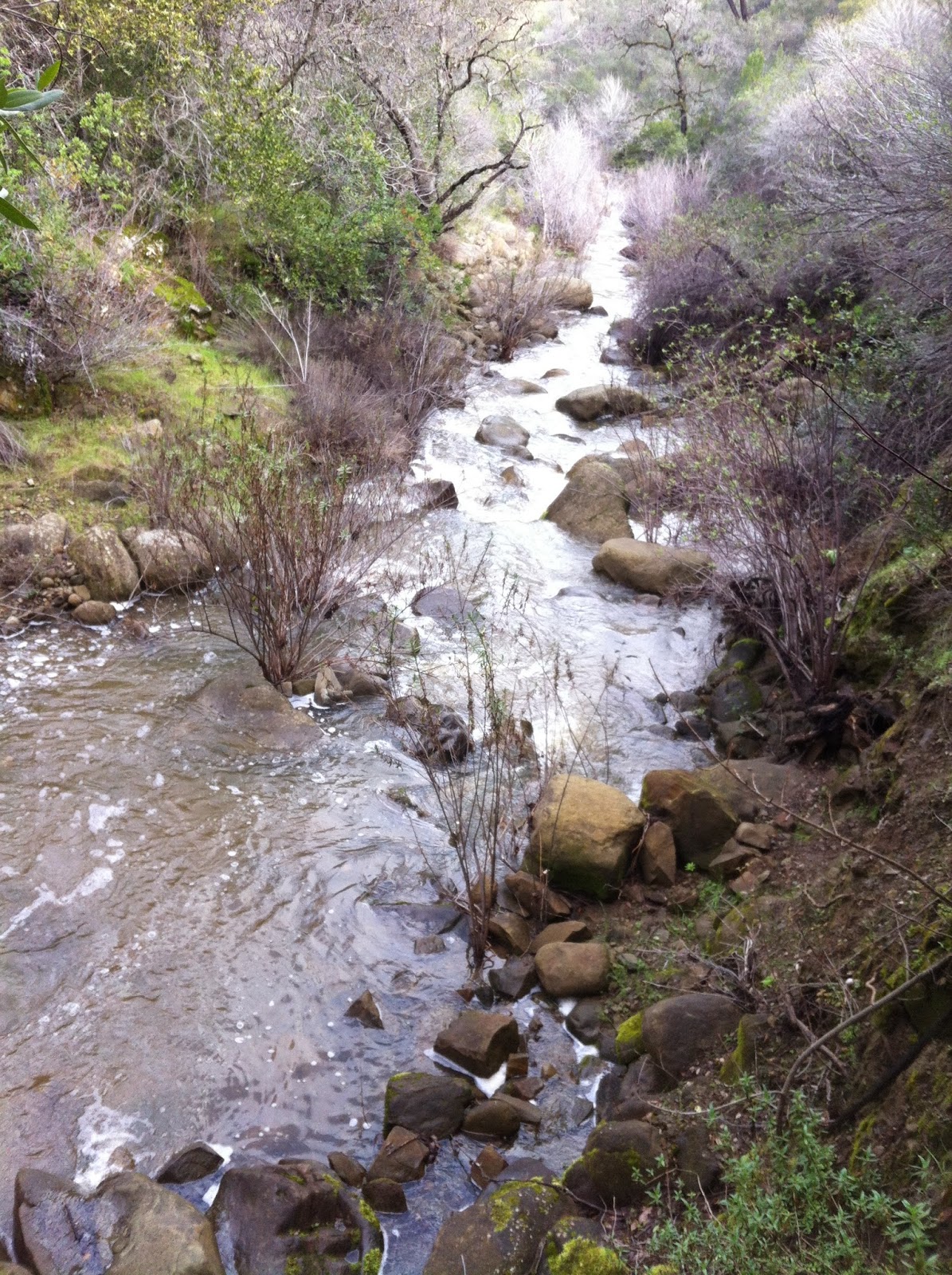
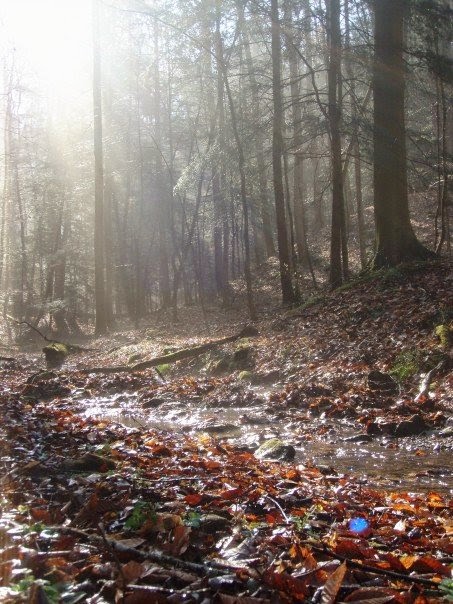
Water in the creek at Stebbins Cold Canyon UC NRS
If you foolishly think, like I did, that simply starting a new site for an existing project wouldn’t be that much work, you’re very wrong.  Because this is such a well thought out project, with some pretty specific scientific questions, the requirements for establishing a phenology trail are fairly in depth.  Then you have recruiting and training volunteers, making sure they are entering data, coordinating all the monitoring sessions, etc., etc., ect.    


And if you’ll recall, this isn’t even the system I study.  I don’t even really study climate change.  But you know what, being involved with this project has been one of the most rewarding parts of my graduate career to date.  First, I feel like I’m really addressing the needs of a land manager (UC NRS) by educating visitors about the scientific use of Stebbins.  Not only do our volunteers now know tons more about the site, but they are always telling us about conversations they have had with others on the trail.  More importantly, I absolutely feel like our team has helped to change the world views of all our volunteers.  I feel as though I have seen these people start to think and interact with the world like scientists.  They have told us they notice the differences in flowering times between locations.  They think about what our recent rain storm will mean for the phenology of the plants up at the canyon.  They note the differing amounts of pollinators on plants at different phenological stages.  I could go on.  It’s magnificent.  And very, very humbling.  Because sometimes, I forget to be awed by the first Toyon berries of the year, then we get an email from a volunteer, who is so excited to be the first one with a “yes” data point in the ripe fruit column.  


We have started to see conference presentations utilizing the NPN and CPP data sets.  This is real science ya’ll.  


Sold.  How can I get involved?


As a scientist, you can start your own citizen science project to assist you with your research!  Look for the standards and best practices explained by the Citizen Science Association.  Or, you can do like we did, and expand an existing project.  If you are an interested citizen, look for a project going on in your area.  Zooniverse is a great online repository of the many, many projects going on right now.  There are all levels of involvement, from coding video from the comfort of your own home, to hitting the trail with a data sheet after a weekend of rather intense training.  


And hey, if you are a scientists or a citizen who wants to get involved with the CPP at Stebbins Cold Canyon, check out our website and shoot us a line!  We’d love to have you on our team.

1. Bonney, R., Shirk, J. L., Phillips, T. B., Wiggins, A., Ballard, H. L., Miller-rushing, A. J., & Parrish, J. K. (2014). Next Steps for Citizen Science. Science, 343(March), 1436–1437.
2. Crall, A. W., Newman, G. J., Stohlgren, T. J., Holfelder, K. A., Graham, J., & Waller, D. M. (2011). Assessing citizen science data quality: an invasive species case study. Conservation Letters, 4(6), 433-442.
3. Delaney, D. G., Sperling, C. D., Adams, C. S., & Leung, B. (2008). Marine invasive species: validation of citizen science and implications for national monitoring networks. Biological Invasions, 10(1), 117-128.
4. Galloway, A. W., Tudor, M. T., & HAEGEN, W. M. V. (2006). The reliability of citizen science: a case study of Oregon white oak stand surveys. Wildlife Society Bulletin, 34(5), 1425-1429.
5. Gardiner, M. M., Allee, L. L., Brown, P. M., Losey, J. E., Roy, H. E., & Smyth, R. R. (2012). Lessons from lady beetles: accuracy of monitoring data from US and UK citizen-science programs. Frontiers in Ecology and the Environment,10(9), 471-476.

Part 1: A Totally Expected Journey

How We Came to be Here – A Story in Three Parts

This week, myself, Meridith, and a guest author, will be sharing our stories of coming to careers in STEM fields.  We hope we can offer three different perspectives on finding your career path, navigating higher education, and deciding how and when your journey needs to change.  We’d love to hear any and all of your stories about finding your calling or your struggles/victories if you’re still trying to figure it out right now.  Please share!  It’s important for all of us (especially those in high school and undergrad) to know that there is no single, best way to approach this crazy adventure.      

“It is not the only or the easiest way to come to the truth. It is one way.” – Wendell Berry


Part 1:  A Totally Expected Journey


When applying for my PhD program, my soon-to-be mentor offered up some solid advice about writing and entrance essay to an ecology graduate program, “For the love of God, don’t tell us how you were a little kid with a bucket on the beach.”  Good advice for standing out in the pile of 100 essays written by little kids playing in the sand who grew up to become would-be scientists playing the sand.  I am, now, going to completely disregard that advice.  Here, making our point this week, I think it’s important.


I was introduced to the natural world, bare feet first, on my family farm in rural Kentucky.  My parents are both trained scientists, a plant pathologist and a horticulturist.  However, when I was young, my father worked as a control room operator in a factory and mother ran our family farm.  We grew tobacco and various crops for sale and subsistence.  I grew up working our fields, learning about photosynthesis from pea plants, and cataloguing crayfish in the aquarium (or five) my parents let me keep on the front porch.  I poked, I planted, and I was taught the names of trees before I knew the names of all the states.  My first celebrity crush was Jeff Corwin.  My brother has a degree in Aquatic Biology and my sister is working on her MS in Ecology and Ecosystem Sciences.  To say we never had a chance to be anything other than science nerds is, likely, the understatement of the year.         
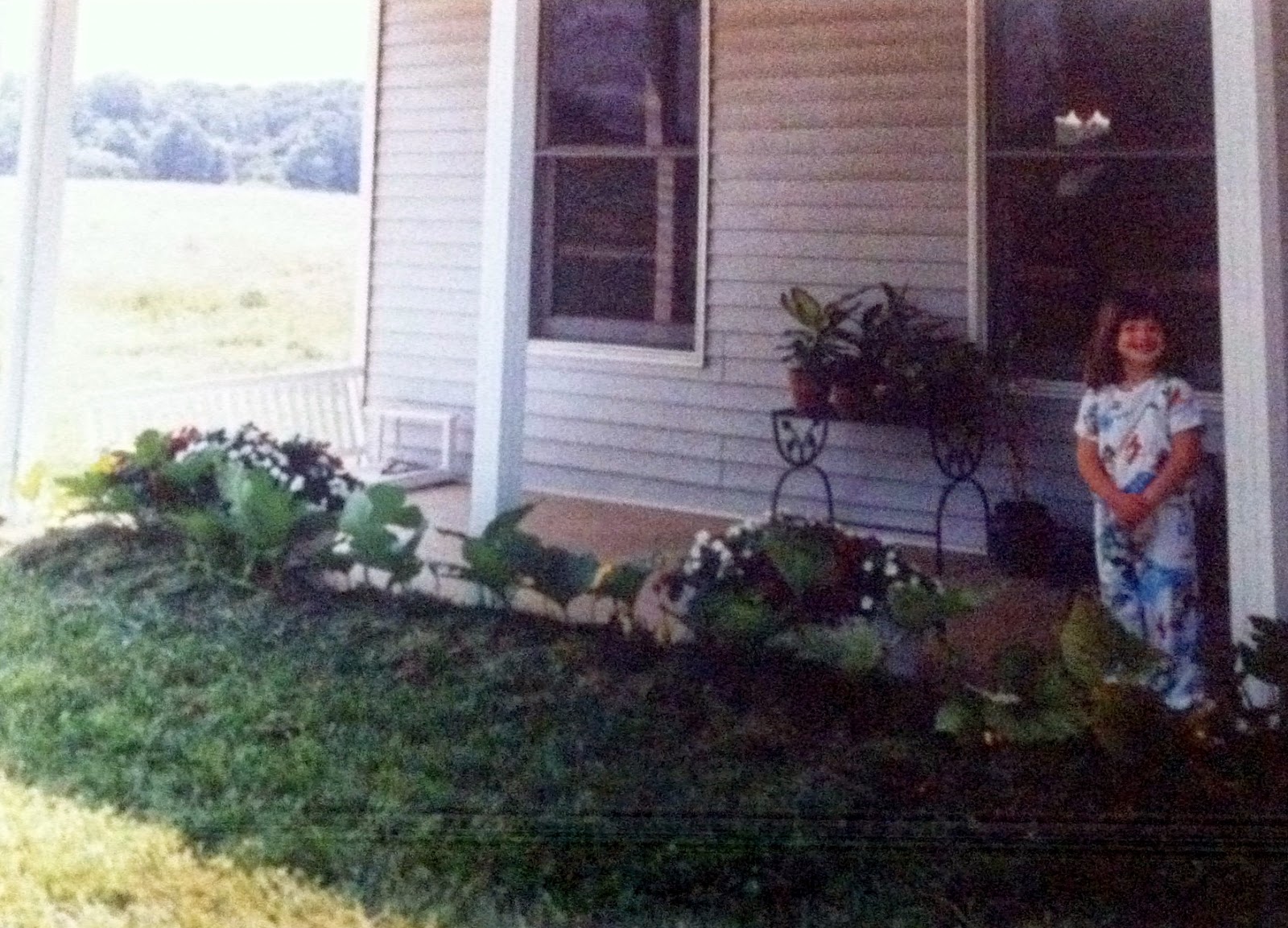
Evidence 1:  I planted that watermelon.  I was over the moon when it started to grow.  I think this image says a lot.


Despite the fact that I told people I wanted to be a field biologist when I was 10, I lost sight of that ideal during high school.  Career tests don’t usually turn up “ecologist” as an option.  Lucky for me, in the spring of my freshman year, the second half of the intro bio series for majors focused on biodiversity, conservation, and ecology.  And, here was a person instructing the course who seemed to be making his career out of asking questions about the way nature worked!  I’ve been exceedingly lucky to have amazing mentors in my life, and Dr. Mike Stokes was the first.  Before the semester was out, he had helped me secure a position working in the Aquatic Ecology Lab with Dr. Scott Grubbs.  I spent the summer in streams and rivers all over western Kentucky.  I stopped thinking about Jeff Corwin and started day dreaming about Raymond Lindeman and EO Wilson.  

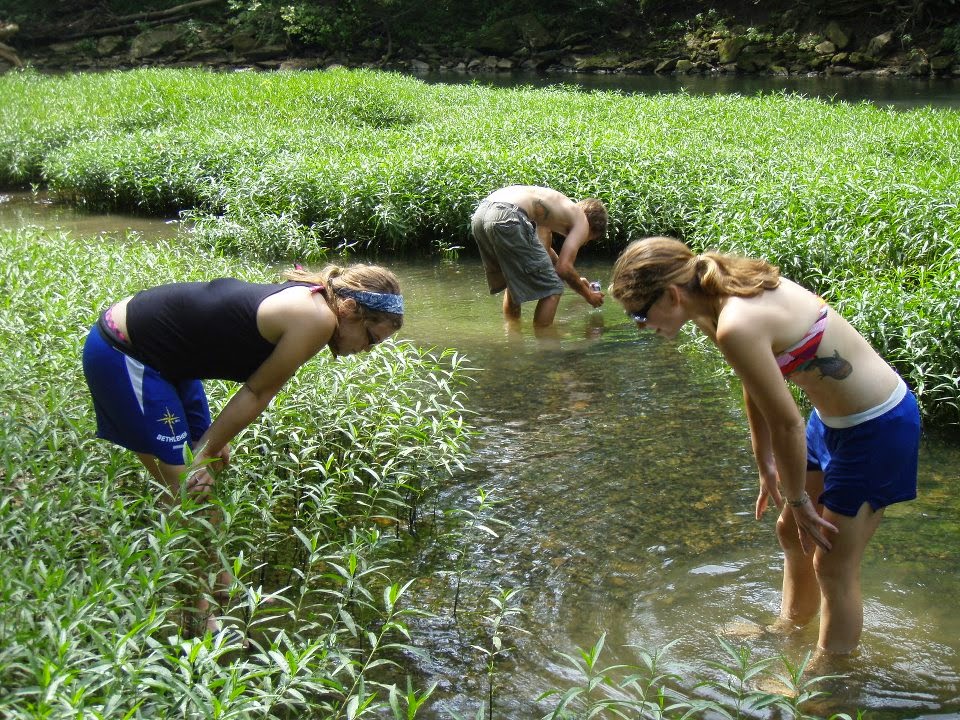
Evidence 2:  The adult Wigginton siblings, turning over rocks.
This was also the summer when Meridith decided to be my best friend.  I mention this because I’m super duper shy, and the way I remember the start of our relationship goes something like this:  Mer – “Can I come over to your house and watch a movie?”  Rach – “Sure, if you don’t have anything you’d rather do.” *proceed to drink leftover keg beer out of milk cartons and sing Moulin Rouge songs* (Editor’s note: Rachel’s the cutest if she thought I wasn’t going to add THE picture of this night. See below.) I don’t just bring this up to talk about how adorable we are (though, obvi), but because having another young, female friend who was very serious about becoming a research scientist was fundamental to my success.  Meridith has always inspired me.  And, she introduced me to her, and soon to be my, undergraduate mentor, Dr. Albert Meier.  I told Albert about myself and my interests, and he told me I should get a PhD.     


Falling in bestie love.

Fast forward four years, and I had written an honor’s thesis, which was difficult, done research in several countries, which was a blast, and applied for lots of fancy scholarships to get my graduate degree overseas.  I don’t get any of them.  I was pretty disappointed, so taking a year off from school seemed like the best plan.  Unfortunately, it was 2008, and around January 2009 I realize that trying to find a job right then was going to be the literal worst.  


When people ask how I ended up studying tidal marshes in California, I usually say that I wanted to translate my aquatic research experience to a marine environment, and I wanted to move to California.  That’s true.  There were also very few graduate programs still accepting applications when I decided “Oh yeah, I should do that.”  I have never been luckier than when I emailed Dr. Christine Whitcraft and asked if she had a place for a Master’s Student that fall.  What seemed like a very short amount of time later, I was moving all my belongings over 2,000 miles away from the place I had spent my entire life.  But I loved it.  My MS experience was challenging, there were absolutly times I hated it, but I mostly remember having so much fun!  Having a young, female mentor and a lab full of aspiring (almost entirely) female ecologists was so inspiring.  
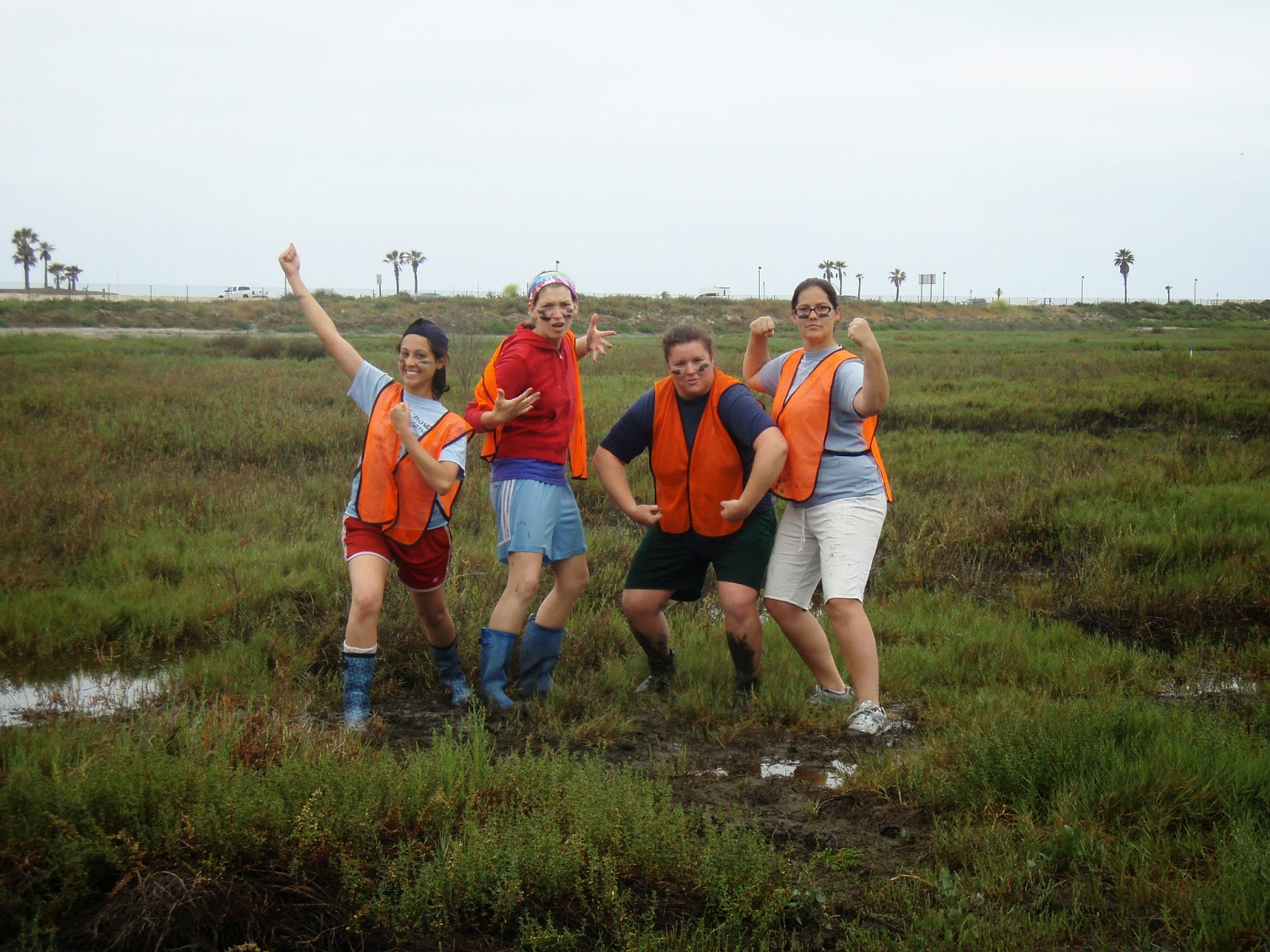
Evidence 3:  The women of the Wetland Ecology Lab.  Class, class, class.


For me, getting my MS ended up as a way to get more experience so that I could go into my PhD program prepared.  I think I really lucked out that I ran out of time to apply for PhD positions in 2009; I don’t think I would have made it if I’d even been accepted.  But, post-MS, I felt prepared and excited.  Choosing a PhD program was difficult and simple all at the same time.  UC Davis was my top choice because it kept my partner and I in California and the program seem to suit my personality and career goals.  I cast a wide net, but ended up moving up the California coast to start my PhD right after finishing my MS.  

Which leads me to…here, where I am now.  I’ve been in school from the time I turned 5, I’ve always known what I wanted to be, and when I was 19, someone finally put a name to that ideal.  Ecologist.  Of the three stories you will read this week, mine is probably the most boring.  I wanted to be an ecologist, someone told me I should get a PhD in ecology to be and ecologist, and now I’m doing that.  

I won’t say there haven’t been times when I thought about quitting (my first field season for my PhD was very, very rough) or instances where I’ve let my personal life and relationships lead my career decisions (there is a long list of schools I didn’t even apply to because the locations didn’t work my partner).  However, I’ve always had a very strong idea of what my goal was.  Recently, I’ve come to realize that my degree goal isn’t actually an endgame.  There are so many ways to “be an ecologist,” and I’m currently giving a lot of thought to how, where, and why, I want to practice my science.  I’m excited for my very linear life trajectory to get a little more twisty in the years to come.         
Exactly how I remember my first year of getting paid to do ecology.  2006.
   

What’s in Her (Field) Bag

Summer is a funny time for an ecologist.  As a student, my classes have all wrapped up (I’m actually all done with class now, forever!!).  My social media is full of people’s summertime adventures.  My partner, who teaches communications courses at community college, is in full on vay-cay mode.  Me?  This is my busy season.  I have been up to my eyeballs in marsh mud for most of the month, and for the month before that I was prepping.  
China Camp State Park.  Maybe my favorite site.

Ah, the field season.  The first day of the each sampling period, I’m always a huge stress ball.  By the time I visit my last site, I feel like Queen of the Marsh.  One thing I always do to minimize my first day jitters is prepare a packing list for each project I’m working on.  This helps minimize those “Oh crap, I left that sitting on the lab bench” moments.  This packing list is mostly full of project specific items (thermometer, pH probe, redox meter, etc.).  In addition, I have a mental checklist of things I never like to don my waders without.  These items reside in my trusty field bag, and today I’m giving you the grand tour!

I know we have an eclectic readership, from PhDs, fellow students, teachers, and amazing high school science enthusiasts.  Though you might not all be headed out to do field work anytime soon, I hope a look at my “must have” items gives you a taste for what a day in the life of a field scientist can be like.  Think of this as the field biologist’s version of those posts by lifestyle/mom bloggers about what they keep in their purses/diaper bags.*


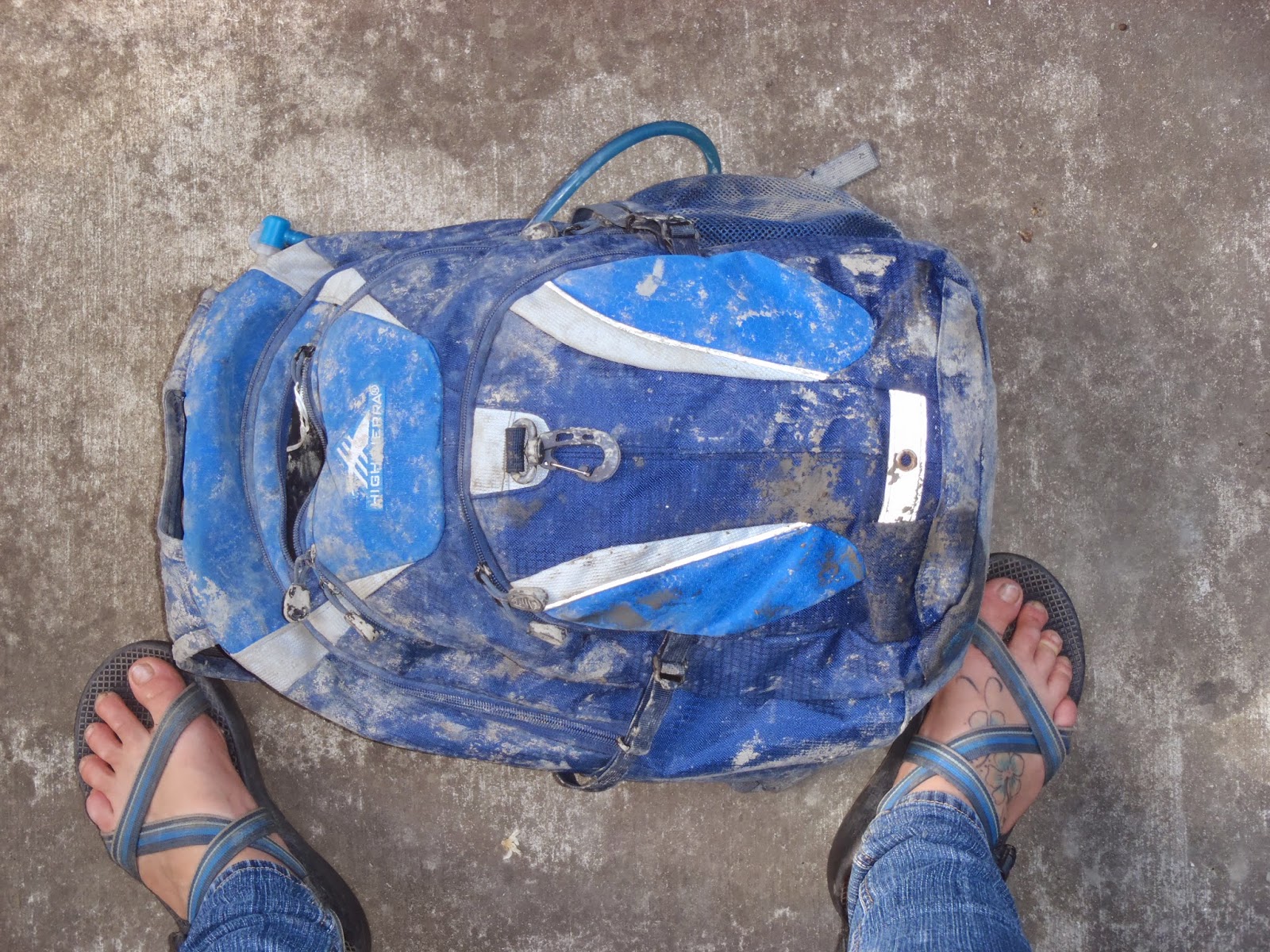
Trusty field bag!
For Real Essential Things
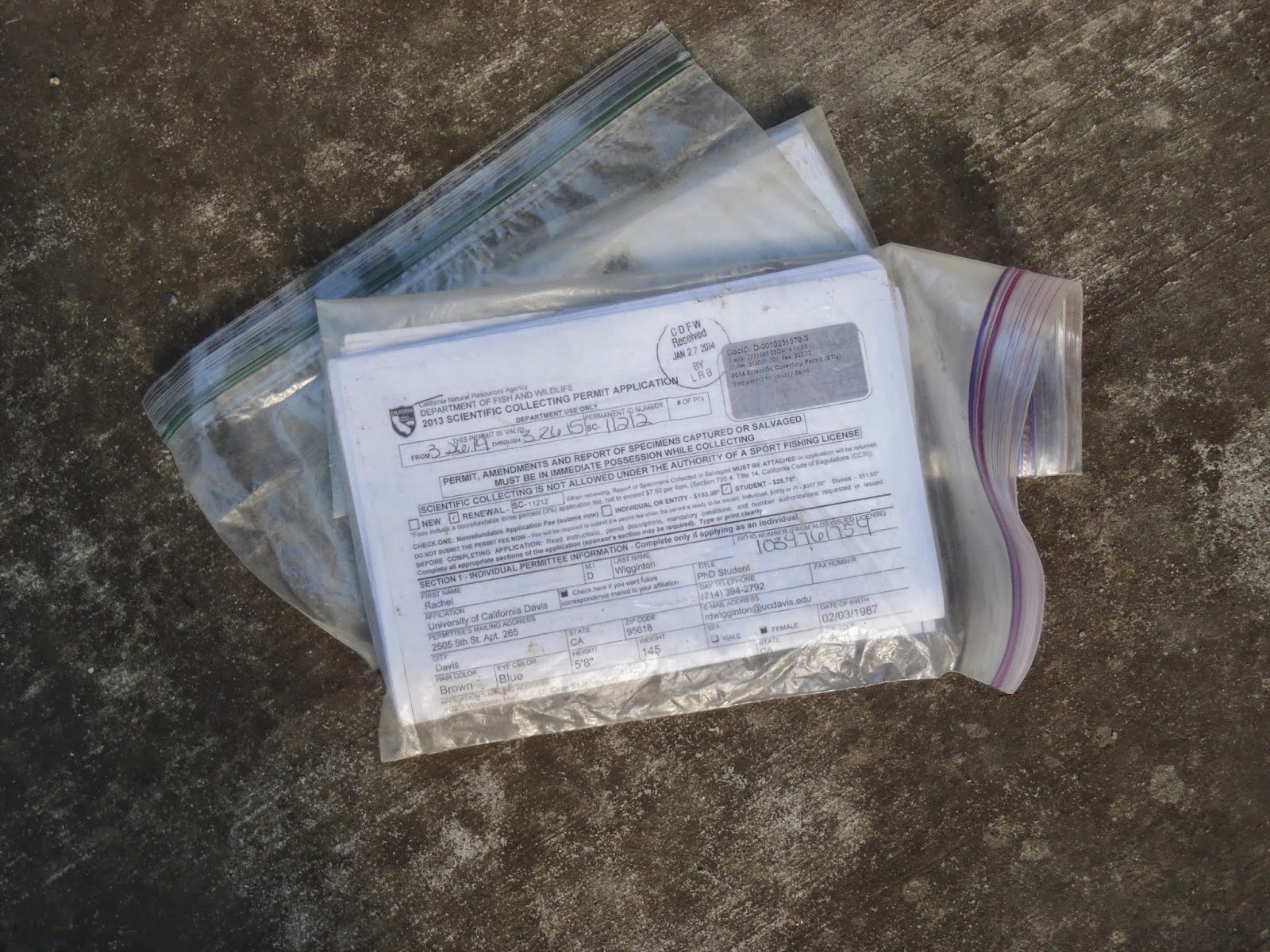
Most of the things in my bag are things I find randomly useful, or things that keep me safe and comfortable while working.  There are a few absolutely, 100%, totally essential things in my bag.  All my official permits live in their own protective plastic baggie.  I’m not trying to become a marsh bandit, so I want to have proof of my officialness.  Next, for those just starting their ecology journey, field notebooks are your friends!  I have two, both made with write-in-the-rain paper (necessary).  You can even buy special write-in-the-rain pens that will write on the paper under water.  My former lab mate and I may or may not have spent a good 20 minutes doing this in the sink when I was gifted one of these pens.  Pencils work too, and you should have several!  Also, permanent markers.  Always, always, permanent markers.
Stuff to Keep Your Stuff Clean
In case you can’t tell by the state of my bag, I work in the mud.  Mud means water.  In addition, my muddy water is salty.  So, even though I don’t bring anything out into the marsh that I’m not willing to risk destroying, I like to take a few precautions.  A tarp allows me to place bags and equipment on the mud, not the vegetation, but keep them clean and dry.  I purchased that blue dry bag when Meridith and I were about to hike the Narrows at Zion National Park.  I usually keep my lunch in there, but it’s just a good thing to have on hand.  Occasionally, one of my undergrad crew will realize they tottered out on the mud with something electronic, and I’ll toss it in there for safe keeping.  On top, you’ll see my Lifeproof iPhone case.  I always bring my phone into the field with me for safety reasons.  Also, marsh selfie reasons.  I’ve been really happy with this case overall, though it does make the keypad a bit less sensitive and it can make charging difficult, depending on the charger.  Thus, I have a non-field case for daily use.  Apparently you can literally dip this case in the water and take phone pictures, but I just can’t live that life.  I think my camera itself also fits in this category.  I sport an Olympus digital camera.  This sucker is shockproof, waterproof, freezeproof, and dustproof.  Basically, Rachel-proof.  I bought an older version of the camera I have now when I broke my previous digital cammy by dropping it from a height into water.  I’d say each one I’ve purchased has lasted about 3 years.  Not trying to give a product review here, but that is three years of snorkeling, being dropped on the floor of canoes, hiking up mountains, and generally marinating in mud.  They aren’t the best cameras for capturing vibrant colors, but I’m still a huge fan.      
  

Safety and Well being Essentials
 

The next group of things living in my bag are there to keep my happy and safe during the whole day.  My Platypus hydration bladder was also purchased when Mer and I were on our road trip.  This system  makes it easier for me to carry enough water to actually stay hydrated all day.  A water bottle or two just doesn’t cut it for 7 hours of physical labor.  Sunscreen is also essential for a long day.  I usually have the lotion kind to apply first thing in the morning and the spray kind for reapplication when my hands are covered in mud.  It’s also a good idea to have a chapstick with sunscreen in it, as the skin on your mouth can easily get burned too! Bug spray, enough said.  Mosquitoes love me, but it’s not mutual.  The first aid kit I’ve put together is by no means extensive, but I think it has most of the essentials.  I love the spray antibiotic ointment (thanks Meridith’s mom!) especially.  It’s good for after you have a chance to wash off, usually in a gas station bathroom, and you notice all the wee cuts that were covered in dirt.  I also always have a headlamp with me, just in case.  The last, and maybe most awesome, thing isn’t pictured…because I thought that might be weird.  This is a lady specific item, called the p style.  Basically, it allows women to pee standing and without having to totally drop trow.  This is 100% amazing for me as I work in a system with zero trees, and my sites are often ringed by running trails.  Maybe you think it’s weird, but don’t knock it till you’ve tried it.  My sister, who hiked ~300 miles of the AT last summer, was gifted one by yours truly and told me it was amazing to be able to pee without having to take off her heavy pack each time.  You’ll thank me for this one day.


Things I Need Surprisingly Often
This is the category of odds and ends things that I often need, but I’m never really sure what I’ll need them for from one day to the next.  These are maybe a bit specific to my own work, so I’d love to hear from other scientists about the odds and ends that are always randomly helpful to them!  I carry a trowel for digging up things.  I also have a hammer, usually for banging PVC into the ground.  Spray paint is great for marking the ends of the PVC that show where your study areas (transects, blocks, etc.) begin and end.  White PVC seems so visible when you first put it in the ground, but when you come back months later and the grass has grown, and your PVC is dingy, a little red spray paint can really help you find things.  Rubber bands (or zip ties depending on what you have), extra ziplock baggies, tape (electrical pictured, but duct tape is awesome!), and a ruler are great things to have on hand.  I literally cannot even list all the uses of these items.  Last, I think every person who works in the field should own a good knife, preferably a multitool.  Seriously, so many uses!


On My Person (but sometimes in my bag)
Lasty, there are a few things that are sometimes in my bag, but usually just on my person.  I almost always wear a hat or a bandana.  I also generally have on polarized sunglasses.  Your retina can get sunburned too!  Additionally, polarized lenses help you see through glare.  Layers are essential as well.  Even in the summer I have a tank top, a light shirt, a long sleeved shirt (or sweater in the cooler months), and a waterproof layer.  Last, always always wear a watch.  You need to know when the tide will be coming back in, or how long till sundown, or how much longer to leave that instrument in place to get a reliable measurement.  A waterproof watch with seconds displayed will only cost about 20 bucks, and it’s totally worth it.
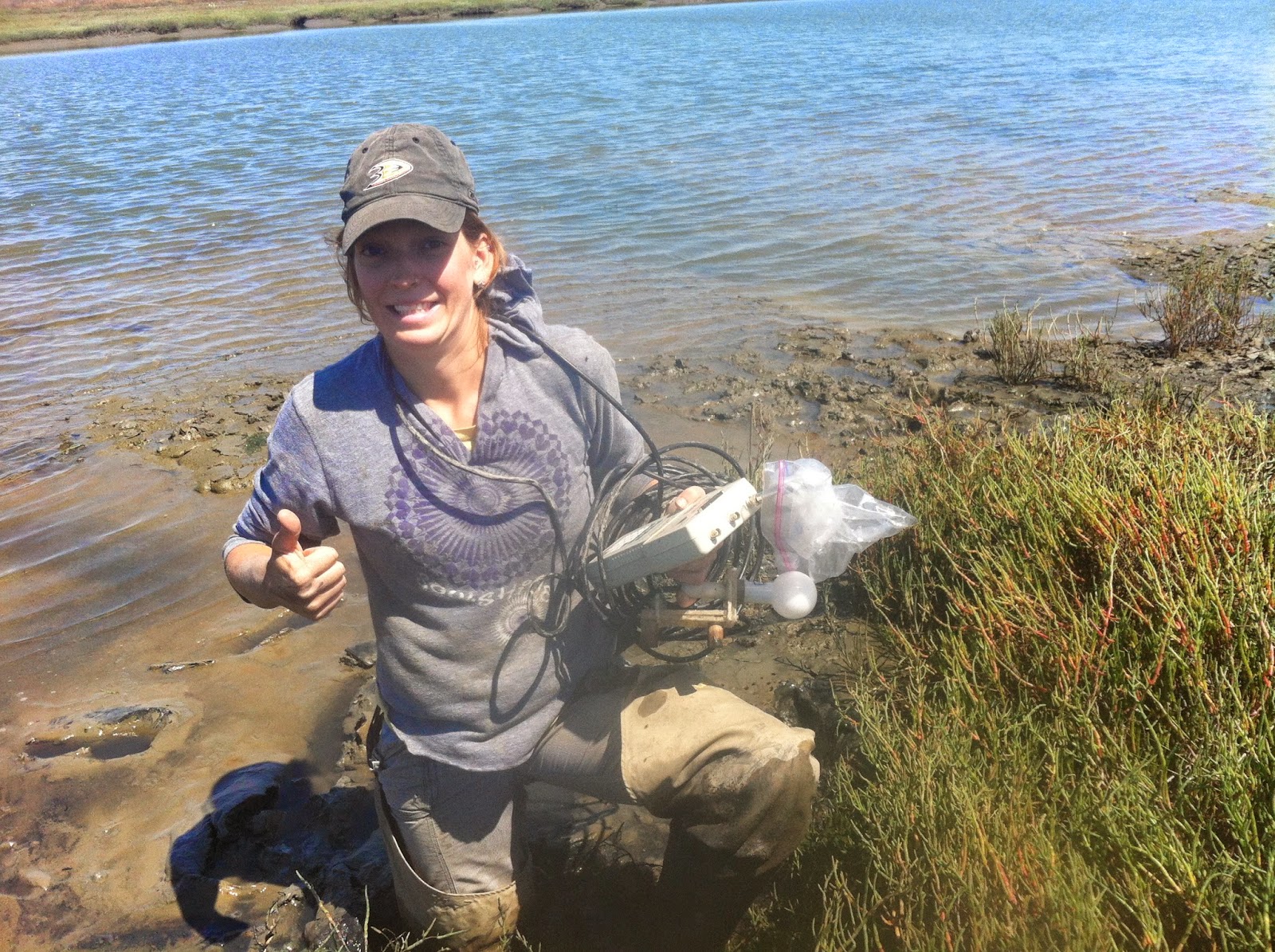
I’m not kneeling, I just have one leg sunk in mud up to my knee.
Shew, so you have gotten this far and you are now wondering “Holy crap, Rachel why do you carry around so much stuff?!”  True story, one time I got lost in the woods.  My little sister, my college roommate, and I went on a short hike that turned into a 15 mile hike.  It made an impression on me.  While lots of the stuff detailed above is to help me with my work, there are a few things that I now refuse to go without if I plan to be outdoors for more than an hour.  So, for those who maybe aren’t as obsessively over prepared as me, here is the Reader’s Digest Version of what I think must go in your field bag/day hiking pack.


Don’t Hit the Trail Without    
– Enough water to hike twice as far as you plan to go
– Several energy dense snacks
– A headlamp
– A watch
– A map
– A first aid kit containing at least a compression wrap for sprains and an emergency blanket
– Your phone.  Maybe you won’t have service, but maybe you will.


And there you go.  A full tour of the inside of my field bag!  I’d love to know what you keep in yours.  Any hikers or backpackers out there?  What do you refuse to venture out without?
* True confessions.  I adore both lifestyle and mommy blogs.  Sorry, not sorry.