Sweet Link ParTea (November 2018)

We hope everyone had a delightful Thanksgiving break and was able to relax and refresh with friends and families. We each did a little bit a traveling but now it’s back back to the Big Push to the end of the fall semester! This can be a tough time with lots of finals-related stress, seasonal depression, societal expectations of mass consumerism, or maybe just that one house that never shovels the sidewalk when it snows. We hope everyone is taking care of themselves and invite you take a quiet moment to sip some tea and peek at some of our favorite links from this month. 

Our first article seems like it might be a pretty divisive one. With the current #STEMmeToo movement working to address sexual harassment and abuse within academia we must figure out whether we can support the research and not the researcher. This opinion article attempts to answer “Do we still keep citing the scholarship of serial harassers and sexists?”. Do you agree with their conclusion? Let us know what you think in the comments below!
Image

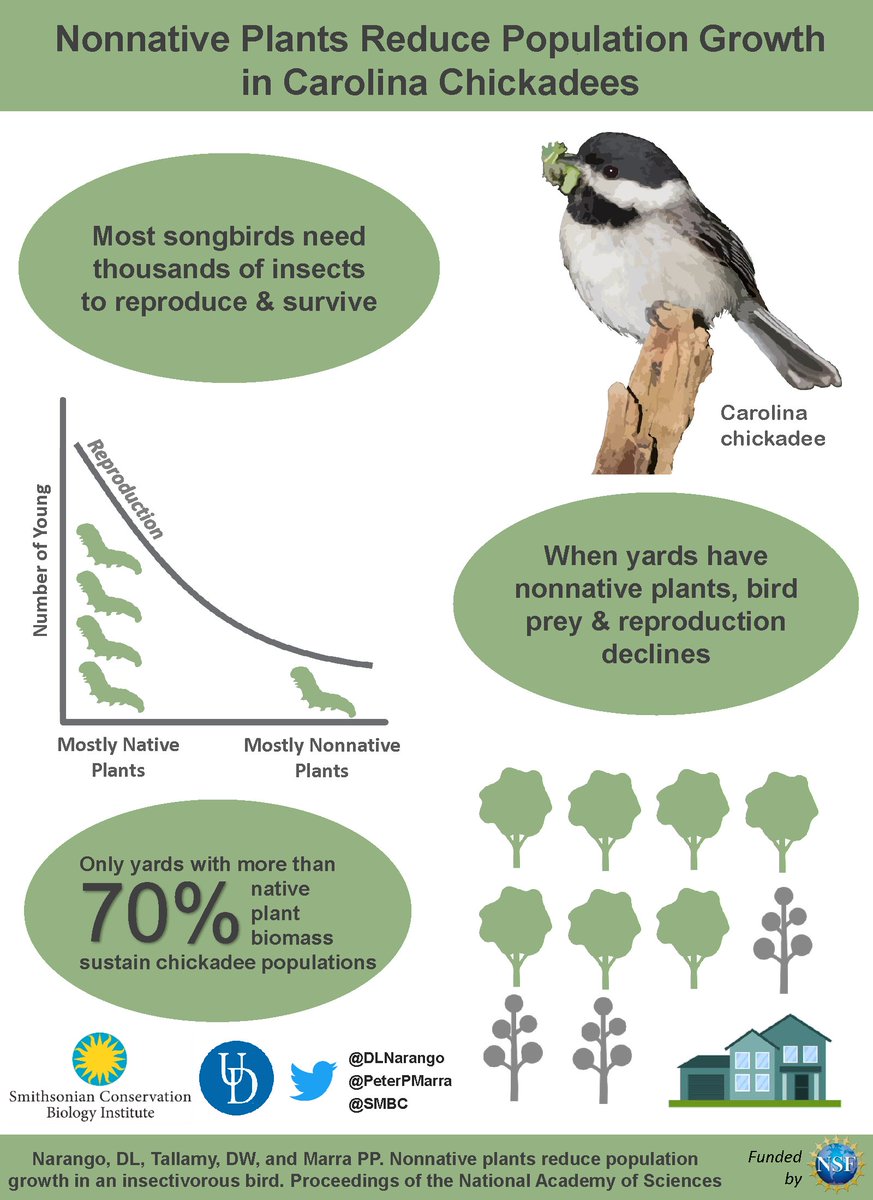
So many levels of excitement about this Smithsonian article about a recent paper using community science to explore the three way interaction between plants, arthropods that eat those plants, and insectivorous birds in residential areas leading to the recommendation of planting native to help the ecosystem. It’s delightful to have such a nice #scicomm story out of a research project. This work was done at the Migratory Bird Center in DC and Fun Fact: Meridith just submitted a research fellowship application to do stats-y bird migration research with them! 

Continue reading “Sweet Link ParTea (November 2018)”

Checking Boxes: A Statistician in the Field

For nearly my entire life, I have lived within the home range of the Southern Flying Squirrel. However, if you asked most folks I grew up with or people around central Pennsylvanian, you’ll find is it rare to find anyone who has seen or even heard one. It’s likely they had no idea it was even a possibility! Growing up, I certainly never hear of any Southern Flying Squirrels in the woods surrounding our home. And perhaps it’s all this newfangled statistics knowledge making room in my brain by dumping stuff from undergraduate courses, but I also don’t really remember talking much about them in the Mammalogy course Rachel and I took where we were supposed to be able to ID EVERY Kentucky mammal. That course was a doozy – do you know how many little brown bats there are?! (Editor’s note: So many.  But they are in danger!)

Earlier this year instead of spending my day as I typically do (on campus working on research) I was able to join a fellow #StatStud graduate student, tagging along with her father out in the local wilderness. Steve Eisenhower is Regional Director for Natural Lands’ New Jersey preserves but since his daughter has joined the statistics department he has also expanded his work in New Jersey monitoring flying squirrel and kestrels into central Pennsylvania. These additional boxes have been added through his own personal volunteering efforts, in partnership with Shaver’s Creek, a resource for the community, and as a field laboratory for Penn State students to get hands-on experience teaching about the natural world. The extra opportunities to observe these species add to the general knowledge for conservationists, an they are a great opportunity for science outreach in these areas.

IMG_4265.jpg

Continue reading “Checking Boxes: A Statistician in the Field”

Persuasion 101 for Science Communicators

Look out, it’s another hot take!

Many of you probably saw the recent article from Scientific American.  It’s another in a long line of opinion pieces talking about how scientific communicators are probably doing it wrong in one way or another. We will get to my own hot take in a bit, but this article bothered me in particular because it’s thesis statement was, “…are we leading audiences to rely less on data than emotion?” I agree with the author that unscrupulous emotional appeals aren’t the best way to gain the public trust, but the Op-Ed left me with the impression that data driven argumentation is the one good way to do science communication.  That’s a premise I do not support.

I think the real problem is many folks giving advice to scientific communicators have a real misunderstanding about what persuasive communication actually is. If we are seeking to persuade audiences, and as scientific communicators our basic goal should at least be to persuade folks that our work is interesting and worthwhile, we need to understand how persuasion works from a communications perspective.

What I’m not saying in this essay is that using data to drive your scientific communication is wrong.  I think data driven communication efforts can be effective and compelling! I am saying persuasive communication is a flexible tool and we, as a scientific community, are doing ourselves a disservice if we don’t understand all the different ways we can use it.

Like in so many instances, we ignore the wisdom of the Social Sciences at our own peril.

Buckle up buttercup.  Get ready for Persuasion 101 in 500 words**.     

IMG_0665

Persuasive Communication 101

Continue reading “Persuasion 101 for Science Communicators”