Day One: In Transit
As is my general practice in life, I took the spring quarter down to the wire. I had a paper due at 5:00 pm on Tuesday which I turned in, literally at 5:00 pm. I have trouble letting things go. I just like to mess with them till the last possible second… Then I had a lab meeting on Wednesday, and class on Thursday, and BBQ on Thursday, and a date night on Friday. Things got busy and all of a sudden it was Saturday, and I needed to leave the house at 4 pm and I hadn’t packed, scooped the kitty litter, or anything! Lucky for me, at this point I’m very good at packing and my boyfriend is very good at keeping up with the laundry.
 |
Is this real life? An empty
middle seat? Praise be. |
I was able to quickly zip up my suitcase and my backpack (with minimal work stuff actually, which was nice),
made sure to grab my reusable mug, my water bottle, and some airport snacks, and we were out the door. We had just enough time to stop by the
Co-op on our way out of town so I could grab some coffee and a few more snacks. I’m sort of obsessed with our local foods co-op. They have an amazing section of bulk foods and, as luck would have it, one of their awesome bulk trail mixes was on sale. Score. I’ve written before about
the importance of bringing snacks with you when you travel. When you are trying to have a small impact, being able to source the products you consume is very important. It’s a lot easier to do this when you make your purchases from sources you know and trust than when you are rushed and hangry (hungry plus angry) at the airport. Bonus points, when you plan ahead, you can make sure the snacks you choose come with minimal unnecessary packaging. I put my trail mix in a little paper bag and my coffee in my to-go mug and we were on our way.
As I’ve said previously, I live between Sacramento and San Francisco, so I have the choice to fly out of either airport (plus Oakland!). It’s true that Sacramento is a lot closer, but SFO is generally cheapest because it is the largest hub. To minimize the driving time, both for convenience and so we aren’t burning a whole bunch of gas in a nearly empty car, D Lo and I generally drive one another to the nearest BART (Bay Area Rapid Transit) station and take public transit the rest of the way into the city. Saves major gas when you miss most of that city stop-and-go traffic! The BART ride was actually pretty eventful. About 15 minutes before arriving at the station I checked my BART app. and saw that there were some pretty major delays on my line due to track maintenance. The train I wanted to catch was leaving very soon and the next train would get me to the airport on time, but I wouldn’t have time to check my bag (which had a few hefty liquids in it), and that was before the delays…Great. Now I REALLY needed to make this train. Cue me running through the BART station. But I made it and this train, plus delays, got me to the station at the same time the later train (the one I had been hoping to avoid taking) would have originally. Phew.
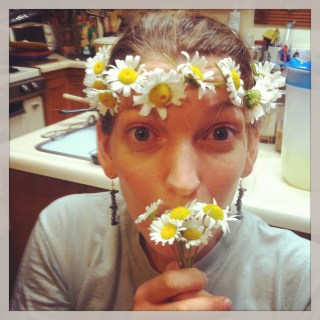 |
My sister-in-law made me this most excellent flower crown
upon arrival. Sorry for iPhone photos. |
However, this meant I could no longer check my bag, at the last transfer point I filled two small travel containers, which I just happened to have with me, with coconut oil (for
face wash) and contact solution. I ditched the bottle of contact solution (sad face), but just couldn’t seem to bring myself to throw away that nice, glass, organic jar of coconut oil. I boarded the SFO bound train with several other very nervous looking passengers. Seems everyone had been delayed and was now pushing it. I asked the young couple in front of me if they would have time to check their bags and if they wanted a half a jar of coconut oil.
“It’s organic.” The girl looked like she was considering it, but the guy gave me a “are you nutty” face and said no thank you. My little sister later informed me that this was extremely shady pre-airport behavior. Good point. Thus, I had to just toss the bottle of coconut oil and my toothpaste, rely on the kindness of strangers to get me to the front of the security line, and rush to my plane. Cue me running through the airport. Again, I just barely made it. I guess a strange low impact tip would be
make sure you have plenty of time so you don’t have to ditch a bunch of your stuff. It’s lame on many levels. So is having to run to catch any form of transportation.
On a positive note, this was the first time I was ever able to check into a flight on my smart phone and avoid printing off a ticket.
Etickets for life. This is the first plane ride EVER where I have totally avoided buying snacks. I didn’t even get lured in by that post-nap sip of soda in a plastic cup that they offer you. No sir. I had my own healthy snacks and my water bottle (which I refilled at the layover). It felt really good to not spend an obnoxious amount of money on stuff I didn’t even really want. So good that I slept very soundly all the way through my red-eye flight to Nashville.
Days Two, Three, and Four: Chilling on the Farm
 |
| My mom in her mid-twenties. Backpacking around Lake Superior. |
My little sister and her boyfriend picked me up at 5:30 am at the Nashville airport, and we drove back to my parent’s farm. There aren’t really any public transit options available to shorten this drive, unfortunately. These were very chill days. My sister, her boyfriend, and my sister-in-law all came down to the house and we just sort of hung out, drank coffee, and napped a little bit. My little sister had to leave the house at 6 am on Monday morning to go and do some field work for her
internship, which was a bit of a bummer, but she planned to be back in town by Thursday evening and back at the house by Friday morning. My sister-in-law pulled out of the house on Monday mid-morning, leaving just the parental units and myself to hang out for the rest of that day and the next. So relaxing! It’s also so inspiring to be around my parents because they are both so thrifty and eco-friendly. My mom and I schemed about potential science experiments to run in her 6
th grade science classroom and eco-friendly summer projects. It was great. We also looked through some old slide from when they were young (a little bit younger than I am now). It was so fun. My favorites were the ones of them on a backpacking trip in Canada. Can we talk about how my mom is apparently my twin? I had no idea.
Day Five: Boat Floating and Car Driving
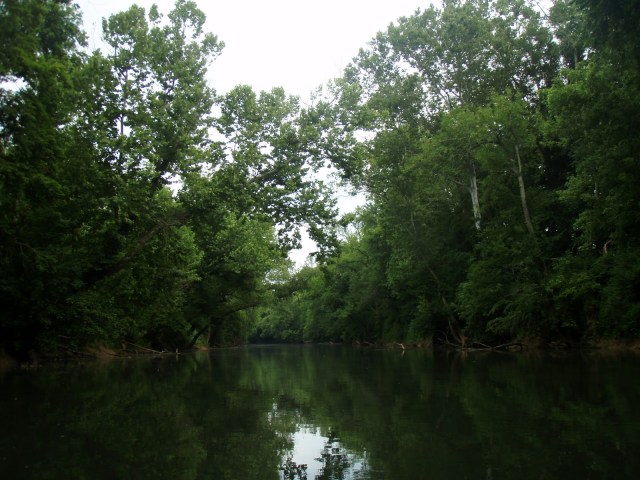 |
| The Nolin River, KY |
Wednesday was a very good day for myself and the men in my family. I grew up playing in the creek that marked the back side of my parent’s property. I had a set of aquariums living on the front porch of our house for most of my childhood. In these aquariums I kept tadpoles, crayfish, and many other creek captives. I observed them, I studied them, and I feel in love with biology. This fed into my love of rivers, streams, and all aquatic and marine habitats. During this same period of my childhood, my cousins moved to a house right on the Nolin River in Kentucky. I think I was about 12 years old when my cousin, D, started taking us on floats down the Nolin River to remove tires and trash. My mom still has a picture on her fridge from the first “tire pull” when our two families, including the 5 kids, removed over 100 tires from the short stretch of river between the local church and the banks that transitioned into D’s backyard. We jokingly call this “the cleanest stretch of river in the state,” and it might well be. This last year when my father and D headed out on the annual low water float they broke the john boat trying to remove and old refrigerator.
On Wednesday morning, my dad and I jumped into the car and headed over to D’s house. He had left us his truck keys with a canoe, paddles, and life jackets already loaded in the bed. We drove just a little way down the road, and dropped our canoe into that familiar body of water. The cleanest stretch of river in the state. The float doesn’t take long, maybe 3 hours with light paddling, which really shows how dense the tiers and other trash once were. My dad is a quiet guy, and it was such a gift to spend some time alone with him watching birds, scanning fallen logs for turtles, and shooting a few “rapids.” It was a really relaxing and wonderful morning. When I have experiences like that, it always strengthens my resolve tonot only protect nature but deeply and truly enjoy it.
 |
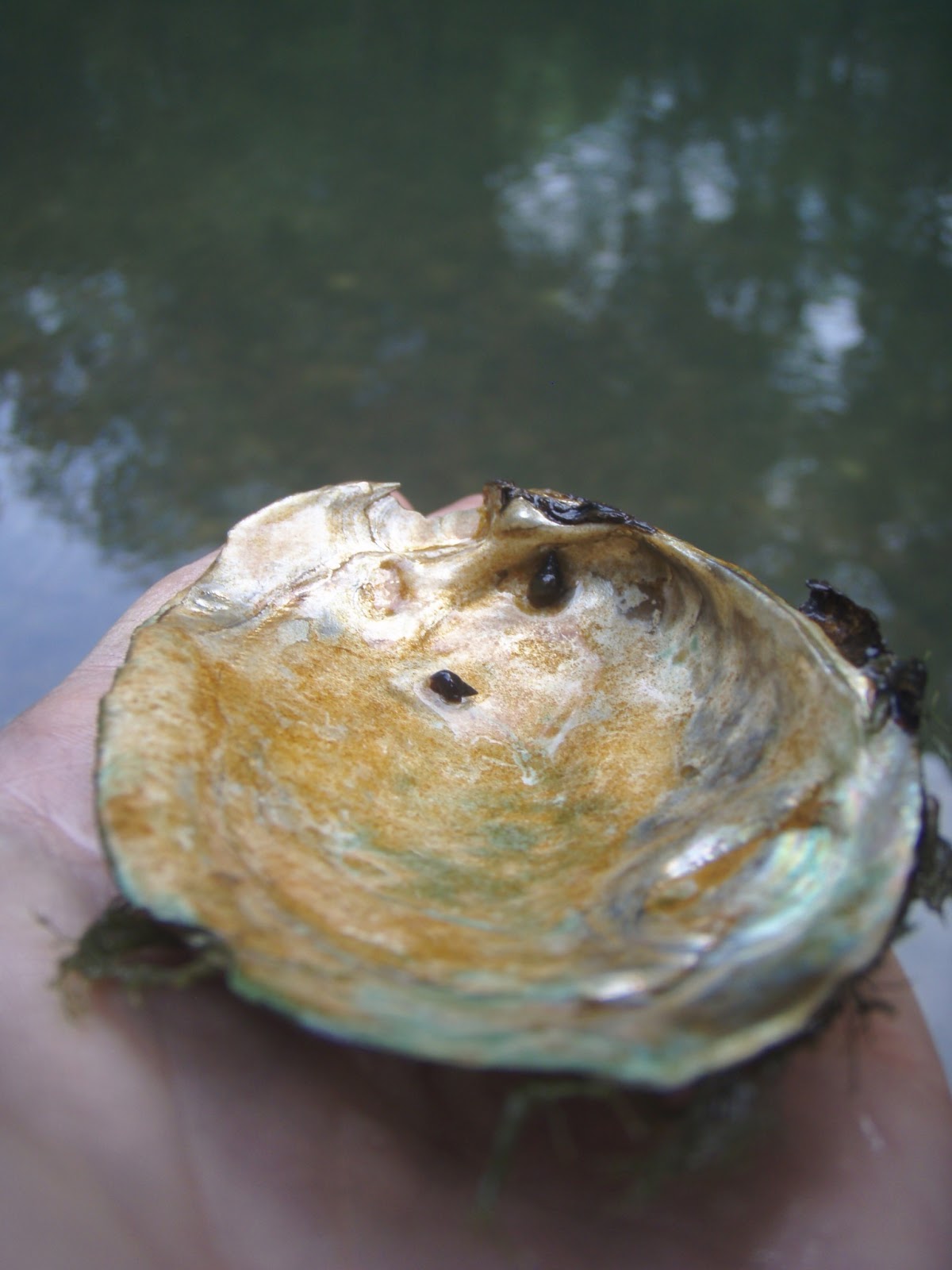
Some snails inside a spent
freshwater mussel shell. |
We finished our float and scampered on home because I needed to get on the move again. My brother is currently in Morehead, KY with no way to get down and visit me. Unfortunately, with no public transit, that meant that I needed to drive the 3 hours to see him. Luckily, my sister-in-law is living at the halfway point. She and I met up and had an amazing lunch at the
Lexington Good Foods Co-op. Their hot bar is full of amazing food! Seriously, I wish I had taken a picture. So good. From there,
we were able to carpool the rest of the way to Morehead. The car trip was totally worth it to see my brother. I miss him dearly, and it was great to be together. Cue me getting home at 12:40 and falling straight into bed.
Day 6: Talking Nerdy
On this day, I mostly chilled out at home. My dad made a pot of his homemade marinara sauce (so tasty, and an easily plastic-free recipe!) and my mom modified her eggplant parmesan recipe to make it vegan for me. They were really accommodating of my diet, which was very sweet. After dinner, my cousin who is the closest to my age (we grew up living next door to one another, it ruled) came over to hang out and chat. He is a recently graduated and seriously talented engineer and had received the awesome news that day that he had received a job! I was so excited for him, even if he did have to slowly explain (twice) what it was he would be doing. To my understanding, he is taking 2D drawing and turning them into virtual 3D models that can then be used for production. Pretty cool no?
 |
| There is a turtle in this one, I swear! |
At this point, my mom came into the kitchen to chat. The content for her subject and grade had recently been revised and there was more emphasis on engineering concepts. Lucky for her, she knows one. The conversation naturally turned to science and science education. My cousin expressed that he would like to return to school someday…maybe. However, he felt that the more he learned about the world’s problems the harder it seemed to deal with them. After all, you can never “un-know” something. I took that moment to explain the basics of the science behind global warming (sensitive I know) and we talked about that for a bit. I’m so happy that I have so many science minded family members. It’s really cool. It also gives me a really good forum to practice my scientific communication skills. Sure, my cousin is a scientist, but he’s an engineer and I’m an ecologist. We do really different things. It’s good practice to explain things to people who have some training before trying to break it down for a complete layperson.
Day 7: Party!
I went and got my sister at
Mammoth Cave National Park, where her internship is based out of, after her field work was over. We got back to the house and helped my mom clean up and prepare for the cook-out we were having that evening in honor of my little sister’s birthday! Mostly we cleaned while my mom whipped up a mess of homemade food. I think I get my love of home cooking from my mother, and I know
I get all my tips for how to make my cooking as environmentally conscious as possible from her. My sister and I also took this time to get a bunch of her stuff together for her upcoming hike along 600 miles of the Appalachian Trail! I know. I’m jealous too. I’ve been told there might be a possible guest post or two in the works. “Tales from the AT” perhaps?
A mess of my cousins, my aunt and uncle, and my sister-in-law all came over. It was a lot of fun and all the “kids” played board games well into the night. I was so happy that everyone came to celebrate with us! I was, honestly, not ready to leave the next day.
Day 8 and 9: Lost in Transportation
 |
View from the Amtrak. Sorry for
iPhone photos. |
I planned to get back to SFO on Saturday evening, just one week after I left. Problem, D Lo ended up going down to SoCal for a wedding that day. The BART ran to the Amtrak station that evening, but I would miss the last train. No big deal, I’ll get someone to fetch me at the BART station…but all of my friends in Davis are ecologists and 99% of them are out of town for their field seasons and the ones who were around were otherwise engaged. No big deal…I have friends in the City but they were all out of town. No big deal…I’ve slept in airports before (sigh). So, I spent Saturday morning chilling out with my family before leaving with my Mom and Dad for the Nashville airport. Again, I wish there were a public transit solution, but there just isn’t.
 |
View from the Amtrak. Sorry for
iPhone photos. |
I checked in to my flights on my phone and, once again, used etickets to get to my gate. I didn’t make it all the way through the trip without buying food this time because I needed dinner. Thanks bartender at the Dallas airport for knowing what a vegan was and hooking me up with a sweet margarita. I rolled into SFO around 10 pm PST and settled into one of the more comfortable nights I’ve ever spent in an airport. There was free WiFi and some legitimately comfortable seating. I considered this an overall win. I also watched two period romance films on Netflix. I mean, what else was I supposed to do?
I woke up the next morning and treated myself to a green juice and a soy latte from
The Plant cafe in the SFO airport. Legitimately delish, and just what I needed. The juice did come in a plastic cup, but it was that biodegradable plant plastic, which is at least marginally better.
The latte went in my travel mug. I took these treats and headed to the BART station that is attached to the airport. I took that train to the Amtrak station in Richmond. Unfortunately, the Amtrak app. (there is literally an app for everything) is a little bit of a liar and told me that a train was coming that never came. The next one, however, did come and I hopped aboard,
showed the conductor my eticket, and enjoyed the ride by looking at the marshes as we left the Bay and headed inland toward home. I hopped off the train and took the 20 minute walk back to my apartment. Nothing feels better after a night sleeping in an airport than your own bed. For serious, it was amazing.
 |
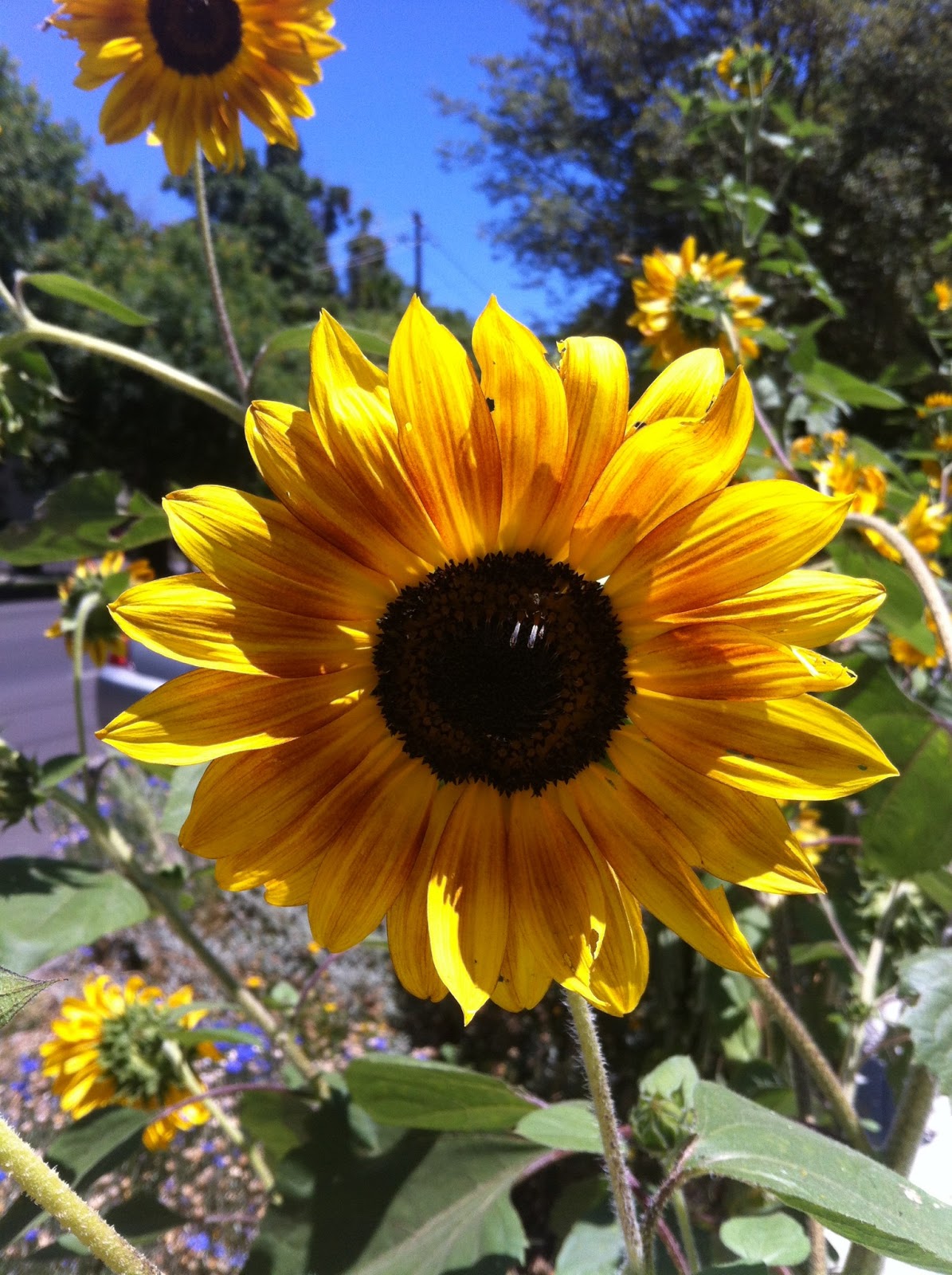
Stopping to smell the flowers on my
walk home. |
Last Word: I know I wrote in part one about how conflicted I was about airplane travel, but I really won’t trade being able to see my family for anything in the world. I’m just glad that I can make a conscious effort to make all these little choices that, I hope, will add up to big impacts one day. This is installment number one of my summer travels. Who knows were the next one will take us…
What do you think? Do you think small changes to our behavior when we travel make a difference? Do you like these sorts of travel/adventure posts?


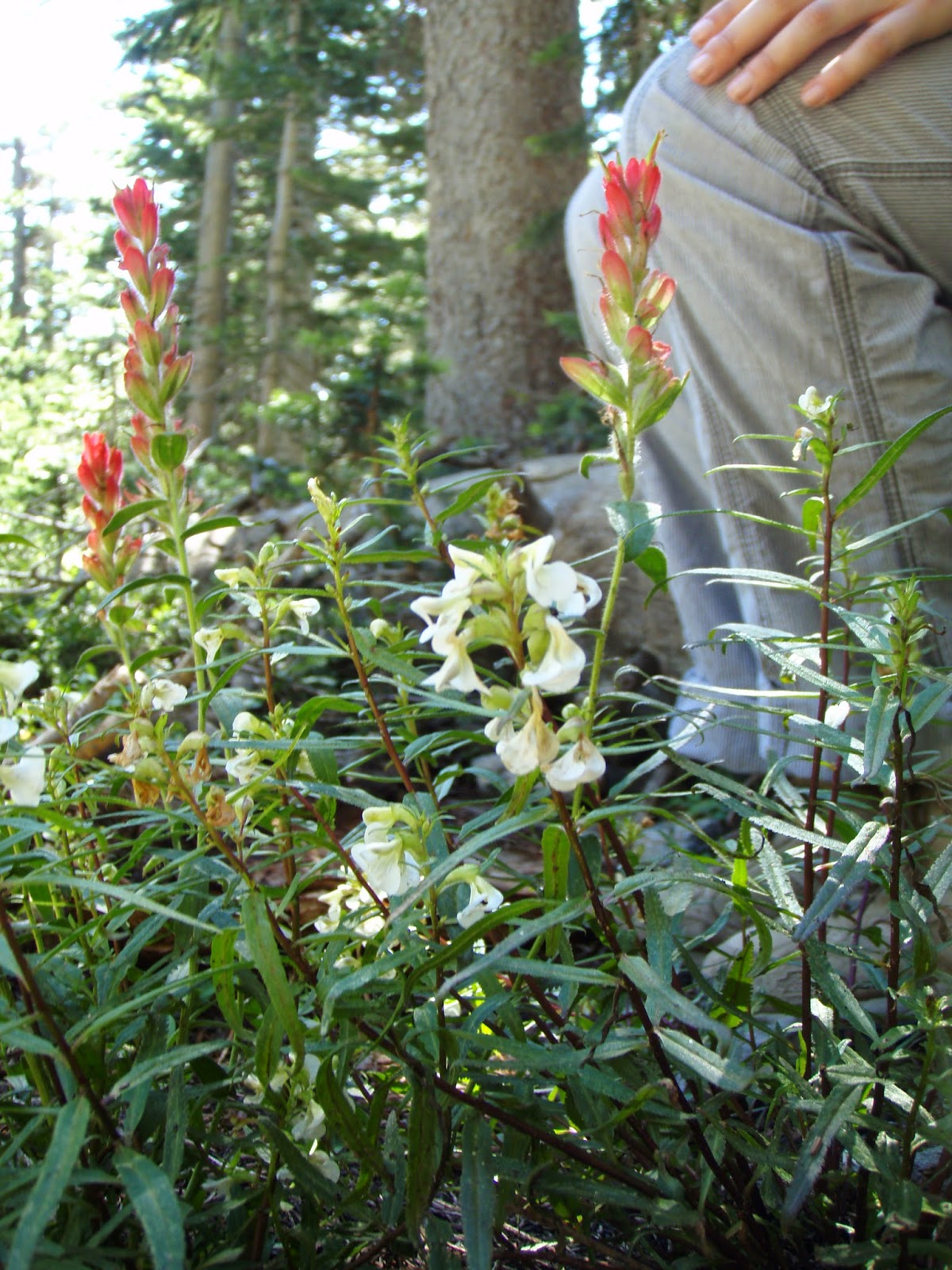


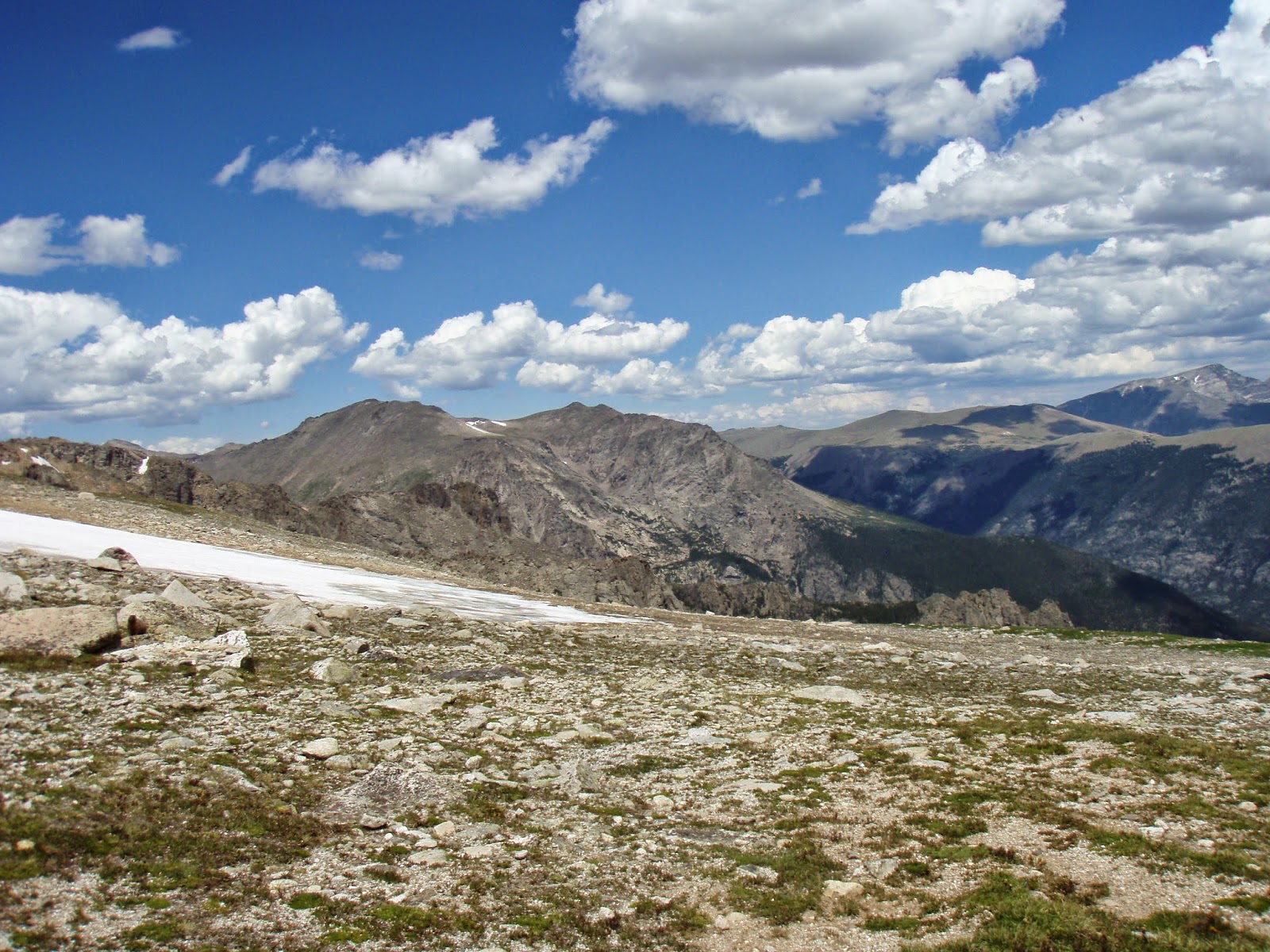
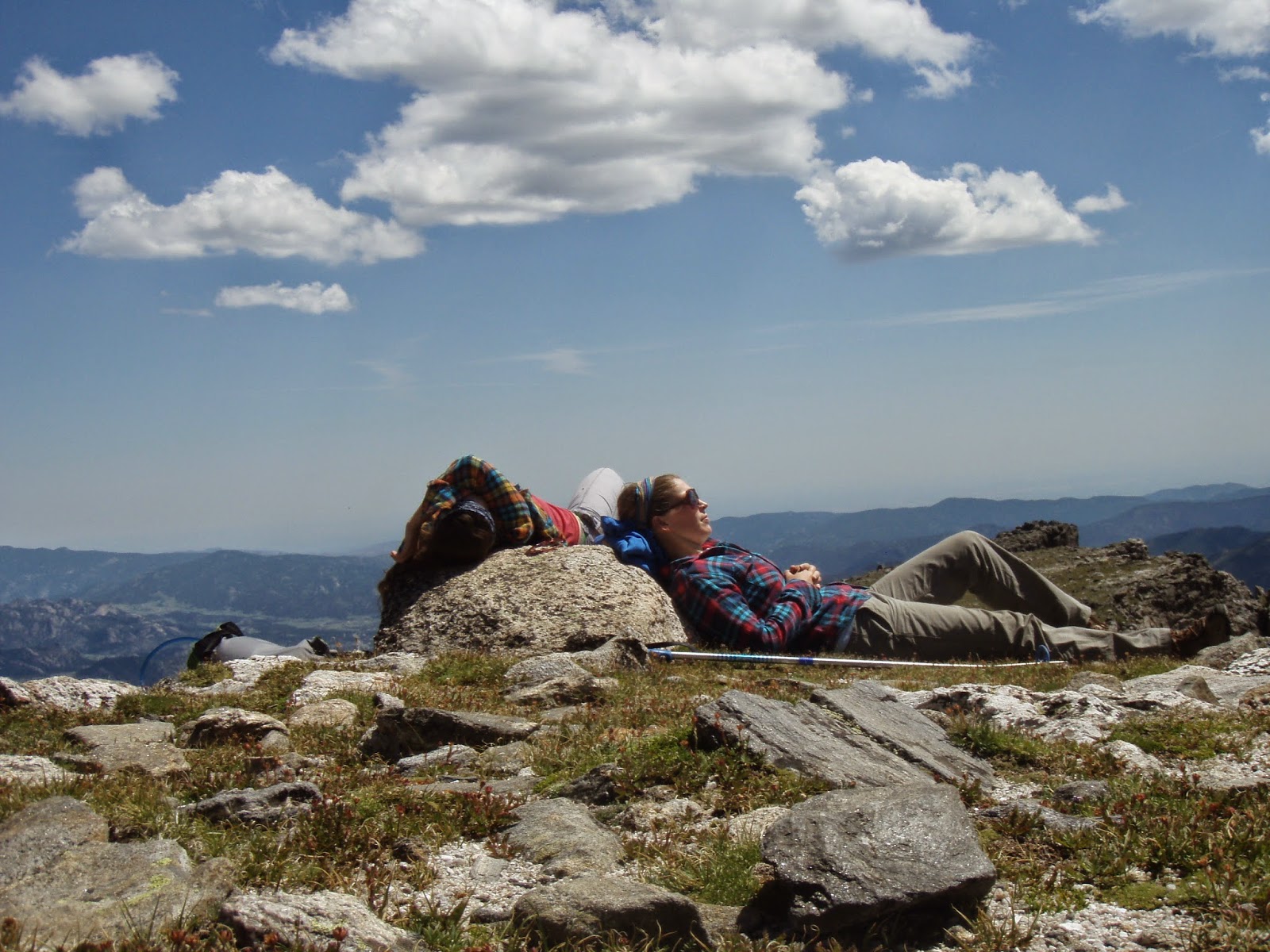
 Being the total trooper that she is, Meridith made it to the top of Flattop Mountain (and so did I)! We both oohh-ed and awww-ed at the view for about 2.5 seconds before taking an epic mountain top nap. Highly recommended. When we awoke, we were both feeling grand. We ate a spot of lunch, then poked around the mountain top, enjoying our accomplishment, before heading back down the way we had come. (Editor’s note: This is about the time I decided to aggressively drop my camera for the umpteenth time, dislodging some vital wiring innards, essentially rendering the back screen useless. However, it still managed to arrive alive at the end of our journey!) See Meridith’s previous post about the proper way to descend on a hike.






 Sweet Tea, Science