Low Impact Travel: Snow Mt. Wilderness

Preamble: I feel some of these “Low Impact Travel” posts are going to get a little repetitive in their environmental action content.  Unless I have a striking new tip or experience, I’ll just include ways I generally lower my impact into the narrative and sum up at the end.  As I do more different kinds of travel this summer (travel for conferences, going home to Kentucky, or driving for work) I’ll write more posts with more specific tips.  As suggested in the comments, I’ll bold some of the basic tips/suggestions throughout the post.

****

I wrote on Wednesday that I needed to re-up my commitment to make time for nature before the month ended and I inadvertently killed my 2013 streak of monthly nature outings.  In the middle of writing that post, I sent an email out to a group of my friends about organizing a hiking trip or adventuring some other adventure.  I got a reply from two of these pals about a potential camping trip already in the works with a few mutual friends.  I’m super duper shy and was a little nervous about spending the weekend with numerous people I don’t consistently spend time with (but I did know almost all of them…super duper shy).  But, my friend A (who I went to the snow with) and another friend J were going to be there, and honestly I knew everyone else going was fun and nice, so I decided to get over my irrational reservations and do what I wanted to do:  go camping!

The other nice thing about tagging along on someone else’s adventure is that I had to do very little planning.  The ring leader of the operation, M, had us all over to her house for dinner on Friday night where she made us delicious food and we worked out the details.  A had already picked out a great spot, the Snow Mountain Wilderness in the Mendocino National Forest.  I do my work along the coast in salt marshes, where there aren’t really any trees and even less mountain action, so I love exploring in areas like this.  There were nine of us leaving together on Saturday morning and planning to return early Sunday evening, with another person meeting us up later on Saturday night.  So, we split up meal/beer duties and decided that we only needed two cars.  Everyone would sit close, but we would use way less gas, which, in a group of ecologists, is a prime concern.

I headed from the lovely dinner straight to the Co-op to get food for my meal, Saturday dinner.  I was going to make burritos with guacamole and my dinner counterpart planned to make roasted vegetable packs to put in the burritos or eat on the side.  I got my supplies and went home with the best of intentions intentions to make everything for my food contribution that night.  Instead, I went to my room and set my alarm for early…I’d do all that stuff in the morning.  We were planning to leave at 8am, and I didn’t roll out of bed till 7:20.  I hadn’t packed a single thing.  Oops.  Lucky for me I keep most of my camping gear in a single location and this was only an overnight trip.  I quickly threw all my stuff together in my backpack, went downstairs and threw all my food in a bag.  No coffee yet, ugh, but I rolled up to M’s house only 15ish minutes late, just as everyone was bringing their stuff outside to pack in the cars.  Perfect timing actually.  And M had coffee.  A good woman.

We blew a tire on the way to the campsite,
but with our powers combined overcame

We piled into the two cars and began our caravan out to the Ranger’s Station closest to our end destination.   Meridith wrote last summer about how we love to talk to park rangers and get their recommendation on what to do in the area.  We planned to ask this ranger where she thought we should camp, and we needed to get a campfire permit.  I actually didn’t know that, in CA, when you are camping outside of designated camp grounds you must have a campfire permit to start a fire or use a camp stove.  It’s a cool practice because they go through a bit of basic fire safety with you and make you state (cross your heart) that you will abide by certain cations to minimize fire risk.  If we want to keep enjoying the wilderness, we need to make sure and follow the rules.  Fire permit in hand, we headed to the recommended Summit Springs Trailhead.  Along the way we drove through the remnants of a forest fire, which A (a forest ecologist who studies fire!) told me happened in 2009.  We pitched our tents at the informal site along a flat about a quarter mile short of the trailhead.
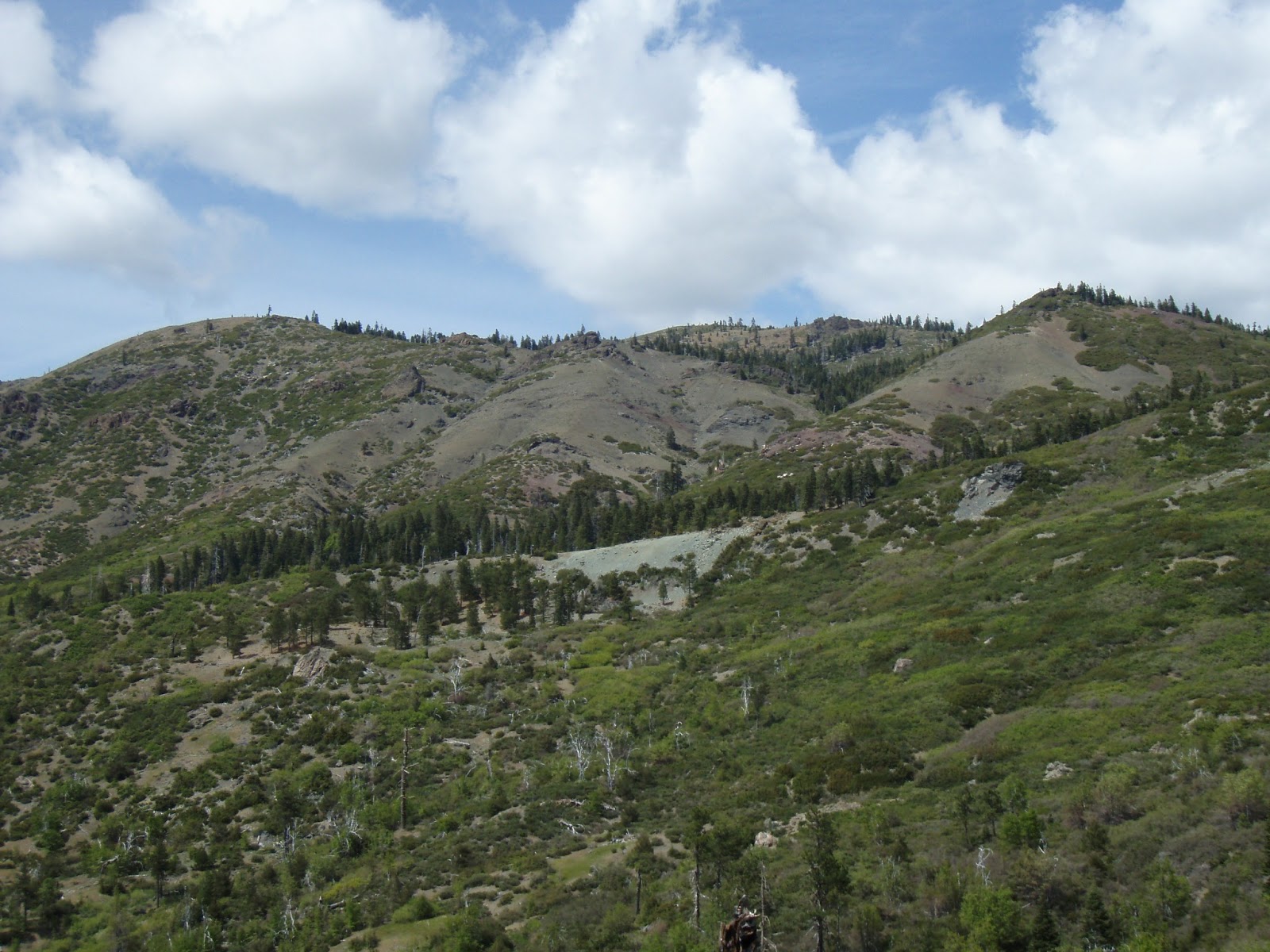
The light green looking clearing in the center is a
serpentine outcrop
Serpentine

After an awesome lunch, we headed to the trailhead around 2:45 for a 4 hour hike about the wilderness.  We saw tons of really cool native flora and some awesome vistas.  One set of really cool ecological features we saw were the serpentine outcropings.  These unique geologic formations result in the very unique serpentine soils.  These soils are the result of the erosion of metamorphic rocks which contain high levels of iron and magnesium.  Due in part to the unique mineralogy of these rocks (and in part to some other ecological characteristics about which I am certainly not an expert), this soil has very characteristic properties and supports a specific group of native plants.  The really cool thing about serpentine outcrops is that they represent small discreet patches of habitat for theses specialized communities.  As a result, these soils and their associated flora and fauna have been used to study many ecological theories (island biogeography, meta-population structure, meta-community theory, just to name a few).  Plus, these are just really pretty rocks.

Forest Frisbee
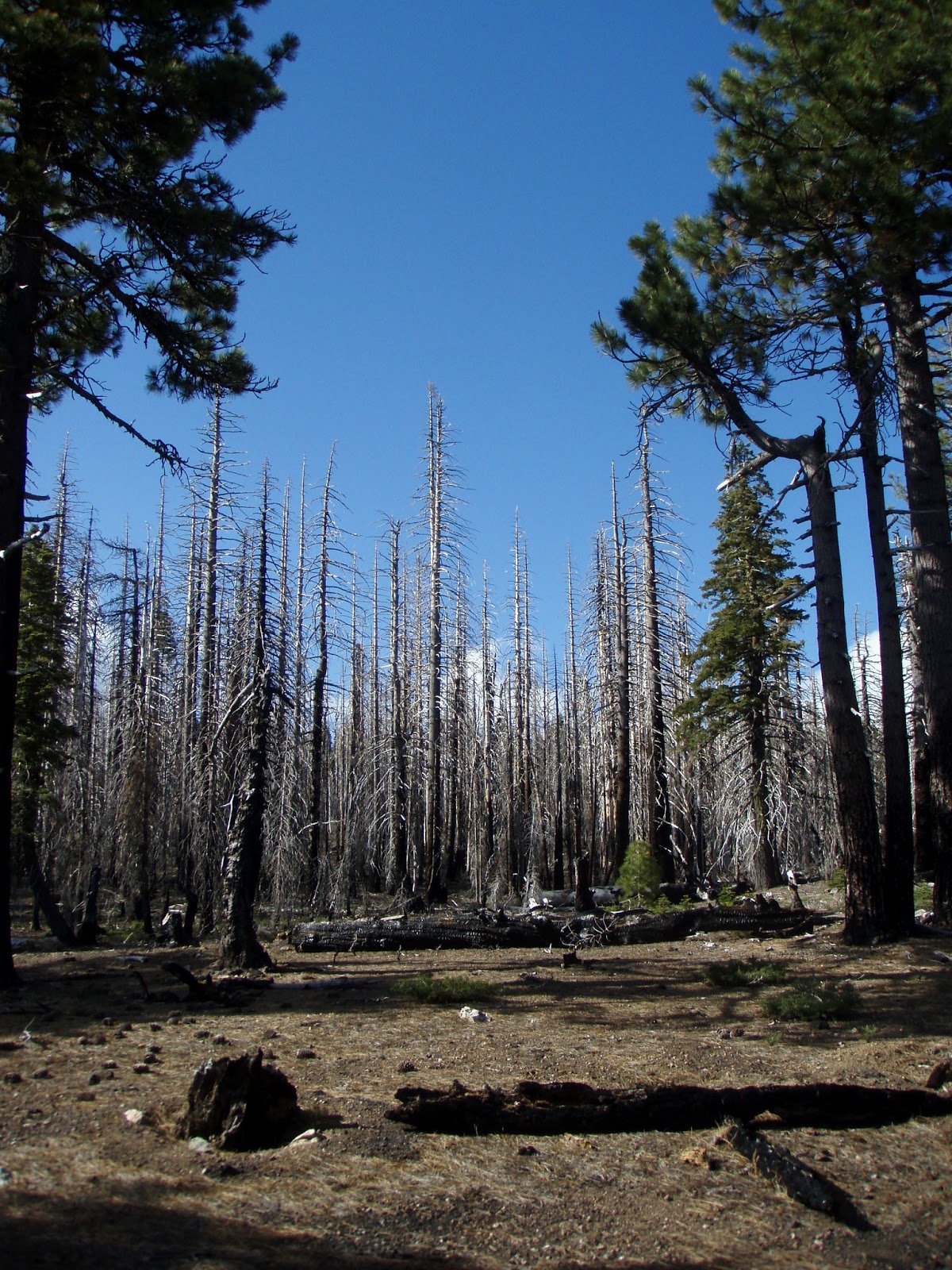
Old Forest Fire

We arrived at an open glade around 5:00 pm, and everyone was pretty ready to turn around and head back for dinner prep before we lost the light.  A little game of frisbee broke out, and a few of us wandered a little past the open area, and around a meadow to attempt to get another good view.  Meadows are really cool ecosystems as well.  A lot like wetlands, they are periodically wet and walking through them can cause subtle changes in elevation, which alter hydrology and can impact the native species.  Public service announcement:  when you are hiking, always walk around a meadow.  We found our final view, which was a great glimpse of the valley and part of the Coast Range, and we also passed through another, older (according to A) forest fire.  Seeing all the burned trees standing there, stark white, with little saplings popping up underneath was really cool and moving for me.  Seeing the natural cycles of nature, and feeling like I understand even a small part of what is going on is humbling and exciting.  We headed back to camp, made an epic dinner, had an killer bonfire, drank some adult beverages, and ate (at least I did) one too many s’mores.  As the night wound down, we dowsed our fire with a substantial amount of water, stirred the embers, and headed to bed.
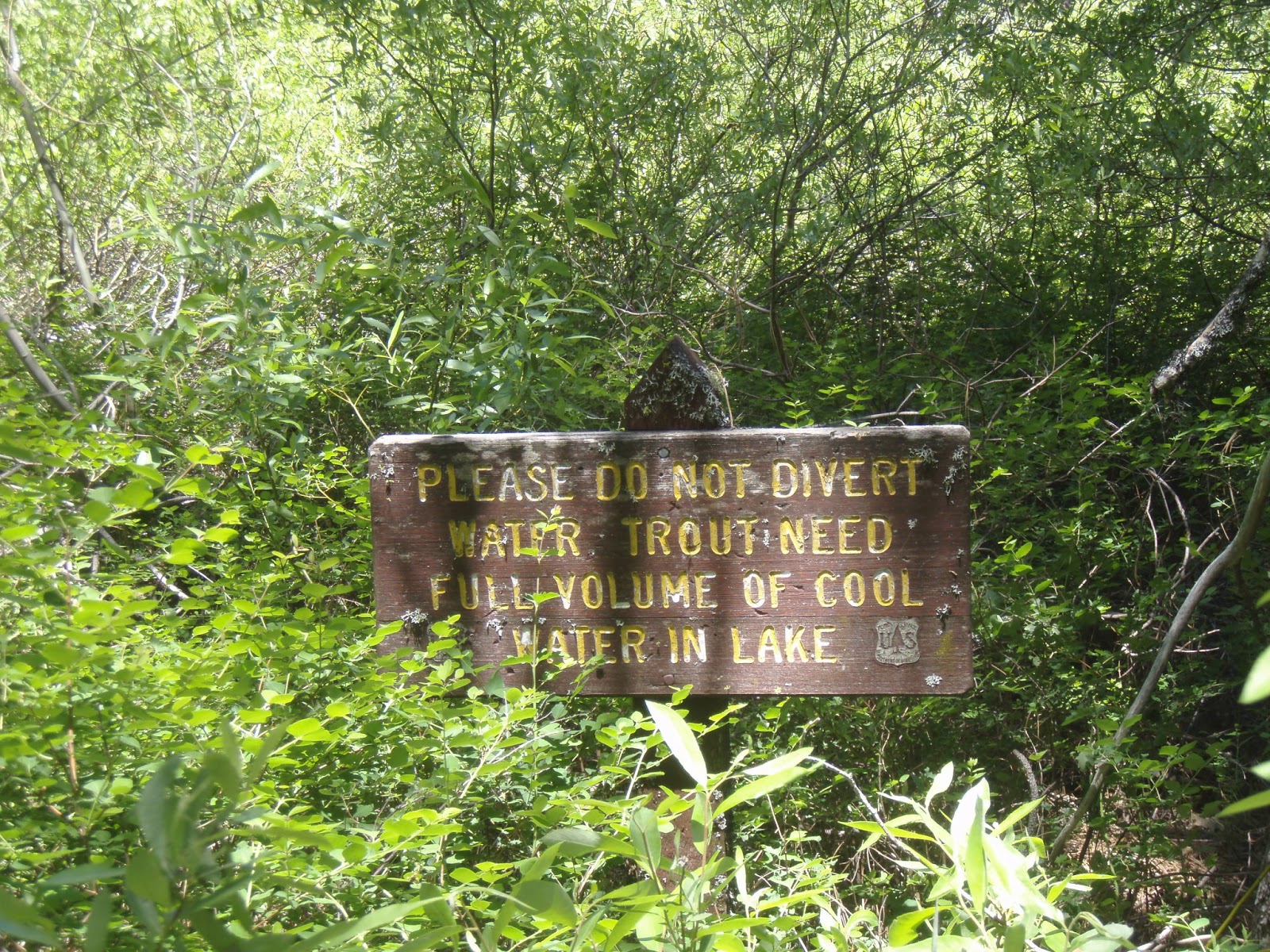
Informative Sign

The next morning after breakfast, we packed up our camp and headed back down the road.  We wanted to get another short hike in, but weren’t sure where we wanted to go.  One of our party had a really poor night’s sleep and another had long standing knee issues.  After a full day of hiking the day before, we were looking for something low key.  Luckily, on the way out, we passed a sign for Letts Lake.  We snacked by the shore then took a short, hour long hike all the way around the shores of the lake.  I, naturally, poked all around at the edge of the water and took a picture of the lake from every angle.  I love ecology in general, but when you add water to it, I’m in my element.  I saw some cool dragonfly exuvia on the emergent vegetation and a pretty interesting informative sign.  I wish there had been a little more information as I could infer a lot from this sign, but I think the general public would have been interested in a  bit more information.
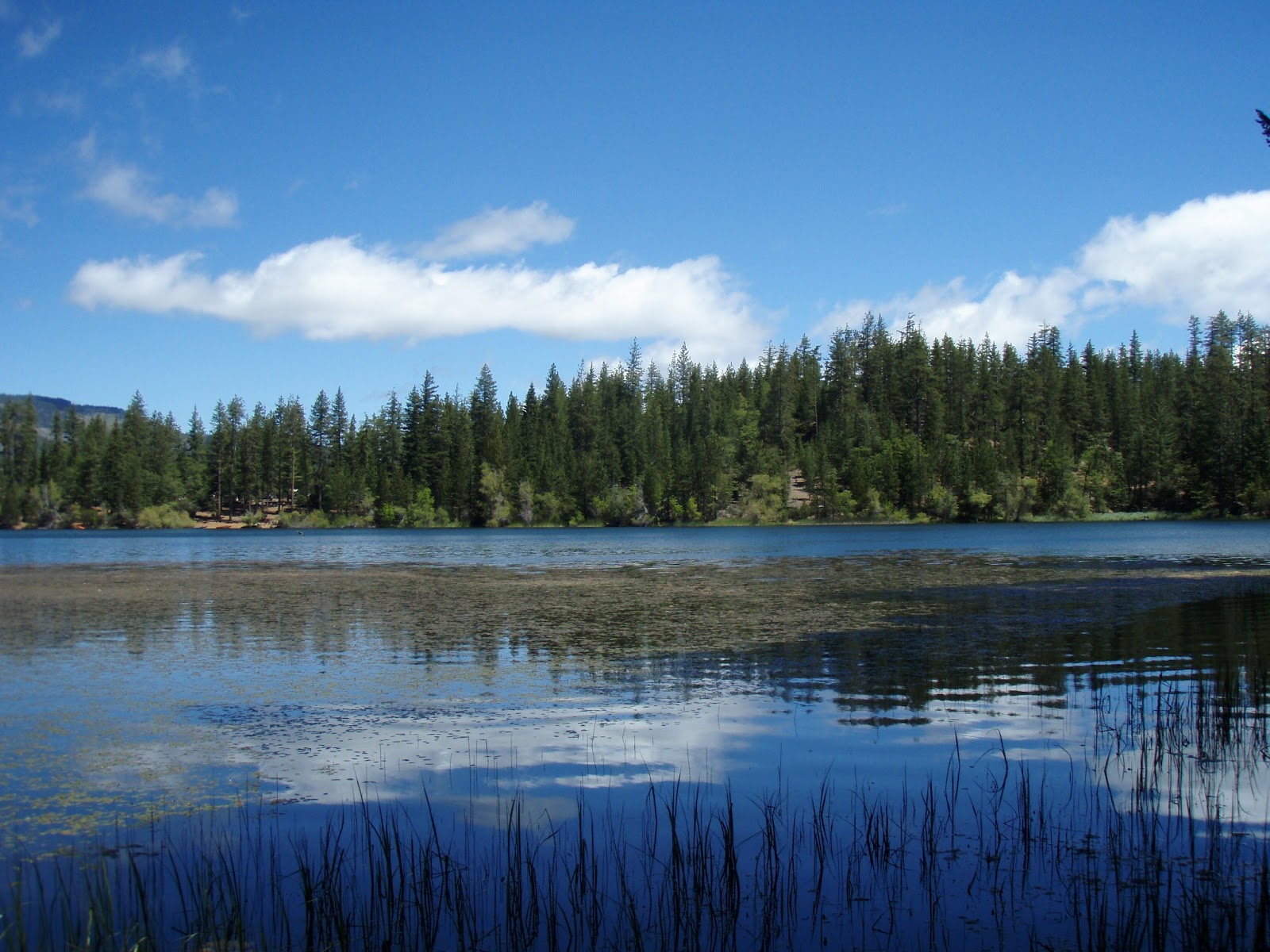
Letts Lake

And that was that.  Adventure success.  And, despite my initial shy-girl reservations, I had a great time with this group of people and think I will hang with them again in the future.  It’s hard for me, but I always feel so great after making new connections or expanding on ones that are already in place.  I’m excited to see what will happen in June as that will be the half way point for this new year’s resolution.

Last Word:  After feeling sort of despondent after a few weeks of pretty intense work, getting out into nature totally recharged my batteries.  As usual when traveling, I tried to make sure we took as few cars as possible.  We brought and cooked almost all our own food (we stopped at a little Mexican joint on the way back out of the woods) and were careful to LNT (leave no trace) when we packed up our campsite.  We also were very careful about our use of fire in the woods and made sure to get the proper permits.  I also took lots of pictures and made sure to get thoroughly wow-ed by the natural splendor of the area.  A very successful trip indeed.      

This is me, glorying.

What do you think?  Do you get nervous going on trips with people who you don’t know super well?  What are some of the best nature facts you’ve learned on the trail?  Any awesome “wow, this is beautiful and makes me feel small, which is AWESOME!” moments to share?   
Elk, Deer, and Sheepsies, oh my!

Day Ten

Rocky Mountain National Park

Total Miles Hiked: 10.24 (58.3 overall)


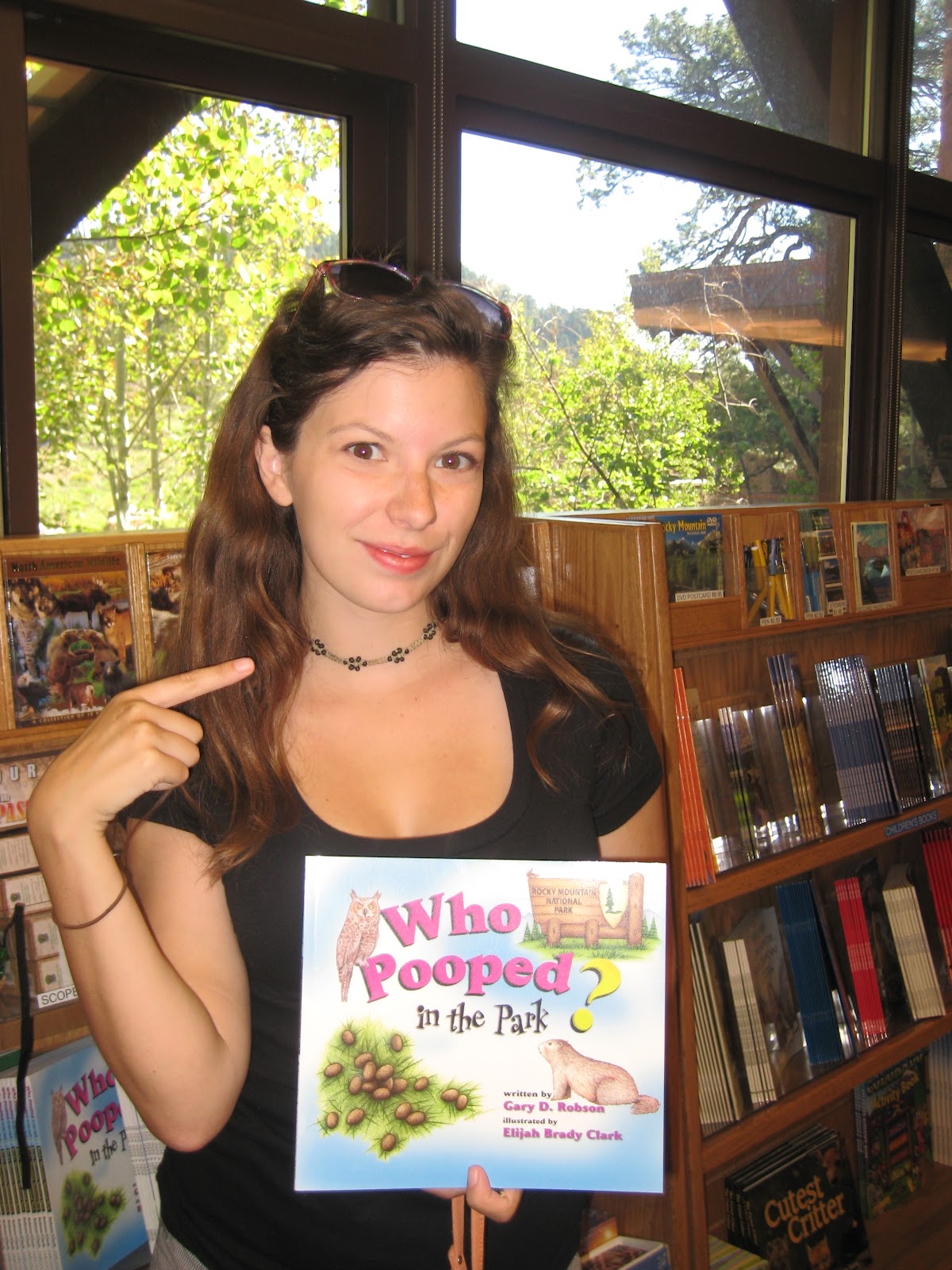
Who Pooped in the Park? Who?!

The ranger who helped us (this time I didn’t remember to peep his name tag) could tell right away that we were bonafide nature nerds. You start dropping science slang like ‘ecosystems’ and ‘habitat’ and you’ll see the smile on the rangers face. You’re one of them now. He suggested a long hike up Flattop Mountain for the next day. We’d have to wake up early to make it to the trail head before the road closed in that direction; we were too late to do so today. We could, however, try our luck with the Deer Mountain loop as well as varying other short trails with wildlife opportunities. We were certainly gaining experience in hikes with high elevation gains. I’m not sure if they ever get easier. Perhaps, you, oh reader, knows an answer? Deer Mountain was a 6.2 mile trail with a 1000 ft gain. Our quads and calves would take most of the strain. And a strain it would turn out to be at the very end. Stairs. Stone stairs to the top. Don’t they know I’ve already hiked up a few thousand feet. Is this some kind of a joke? Rachel soldiers on ahead, while I take the ol’ slow and steady tortoise approach. Breath. 

A little yellow flower child hiding in the bushes.

There is no better motivation that looking up to see a small scrap of a girl looking down at you inquisitively. 

“You’re almost to the top.”

“I don’t know, is the view worth it? Or should I just turn around?”

“I think you can do it.”


Her solemn answer cinched it. And at the top, I arrived. Rachel giggled down at me, knowing I had it in me the whole time, and sometimes I can be a bit of a slow poke. 
We laid out our prepared picnic, but soon had to battle both the habituated chipmunks and the dark clouds rolling our way. We don’t need much of an impetus to scarf down our sammies after that hike, and we soon do a quick tour of the available views before descending once more. Now, some people will try and tell you that going down is much harder than going up the hill. I find this to be utterly preposterous and question the sanity of these naysayers. Hiking down hill, you are more relaxed, less sweaty, often full of a snack or lunch, and generally in a much better mood. The worst is over. You get down so much faster than the hike up took you.  There’s a reason for the phrase ‘it’s all downhill from here’. You can smile and chat with the hikers still on the struggle bus. “So close! Watch out for lightening!” You may even hold your arms out like your an airplane and let gravity pull you faster and faster down the slope. Airplane noises are optional, but recommended. Keeping an eye out for rocks and switchbacks is required. 

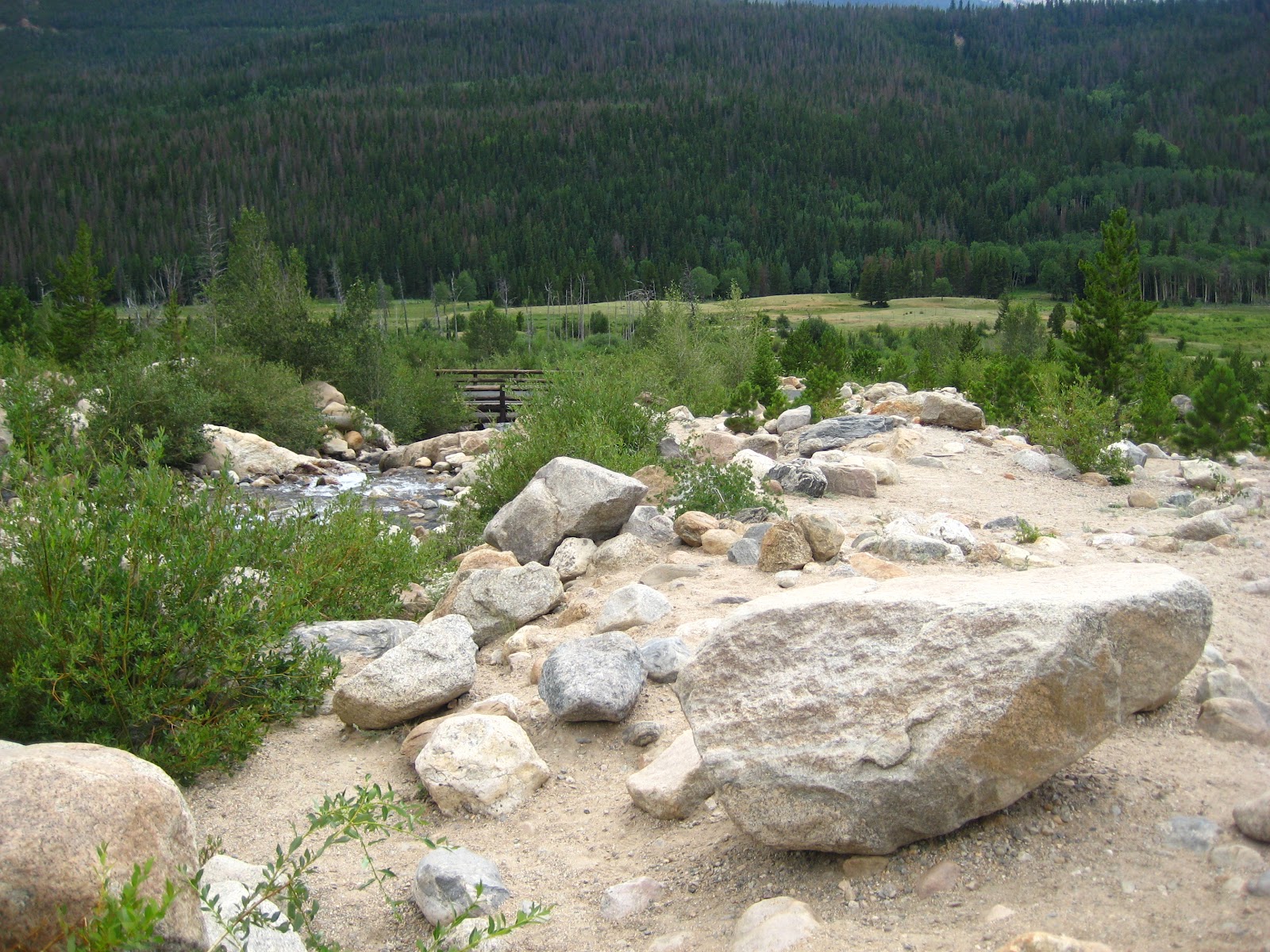
Rocked carried down to the alluvial fan.


The visitor center may be my new favorite way to start my mornings. Especially visitor centers when you’re in a new park. New postcards to look through (still need everyone’s snail mail addresses: alwaysscientist@gmail.com), new stickers, new patches (my favorite), new books, new maps, new poop books. Also, we can chat with new rangers. As stated previously, Rachel and I love figuring out what sort of sights we’d like to see and how far we want to hike during our stay and getting suggestions from the Information Desk. It has yet to let us down. We knew we wanted another moderate-strenuous hike, we wanted to hike in and explore all three available ecosystems, and we desperately wanted to see some bighorn sheep or a moose. 

And then you’re magically back at the trail head. No time at all.

We opted for a tiny viewpoint for our resting area/mid-day reprieve. A 70+ year old  reservoir dam had burst in 1982 releasing 220 million gallons of water to race its way to Horseshoe Park. That much water moving with such speed is a deadly, and often startling, in its sheer force. The aquatic juggernaut scooped up rocks, trees, and whatever else it darn well pleased and carried them along it’s path, pounding into anything that dared get in the way. It was only an observant garbage collector, who phoned in the roaring noises, that saved the majority of the people in the path of the water catastrophe. Three people still lost their lives as the rush of water swept through a campground. The debris the flood carried was deposited in a large fan-like array (alluvial fan) that even 25+ years later can be easily observed. 

We left feeling somber and in awe of the raw power that nature possess. 

We were in need of relaxation after such an impressionable stopover. 

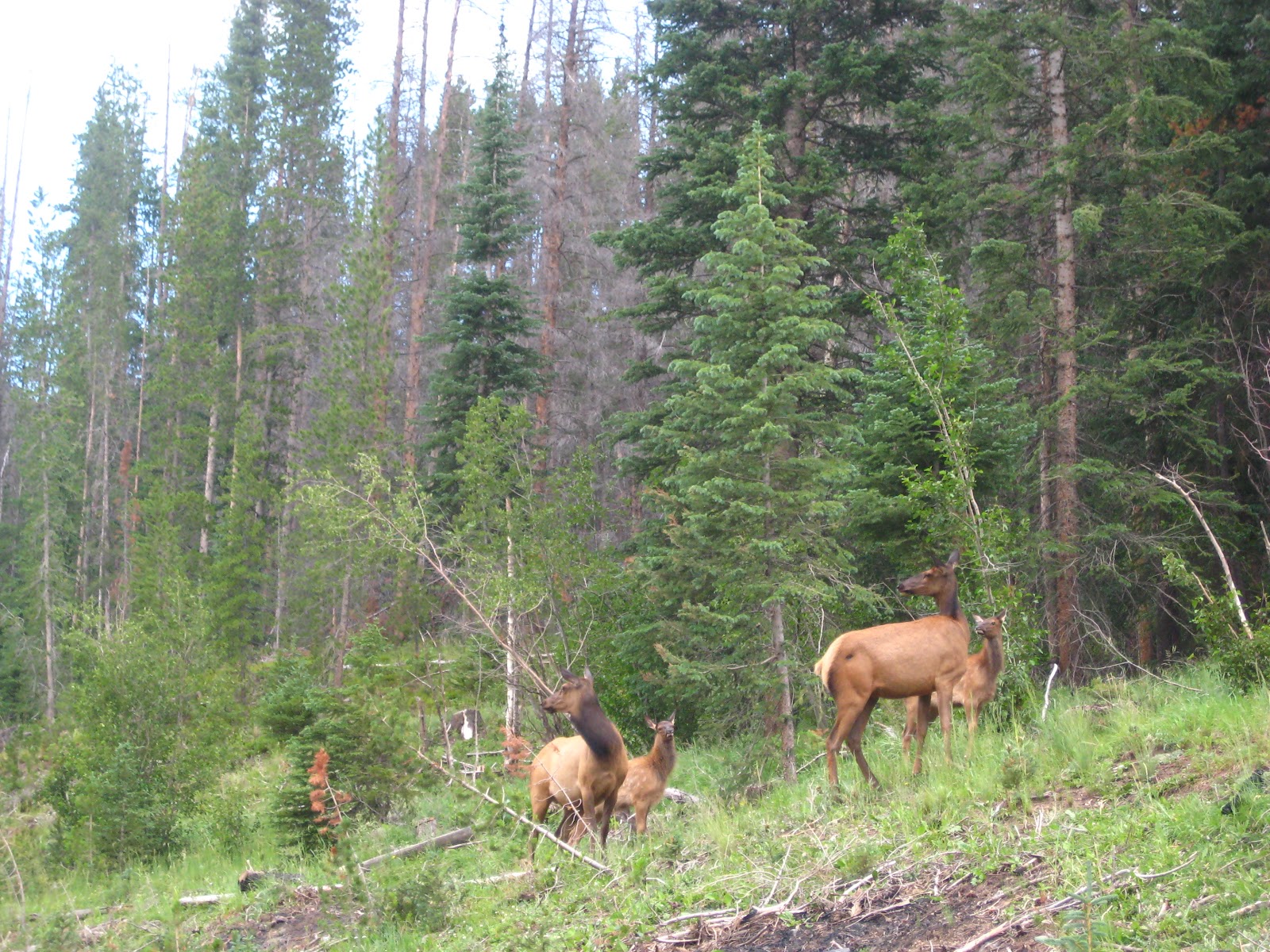
Elks.

After two parks of hoping and searching, we were still on the hunt for the elusive Bighorn Sheep. We had seen deer all over the place. They were no big deal at this point. Elk nearly immediately greeted us the evening before on our drive into Rocky Mountain NP. Herds could be seen along the roads and moving carefully through campgrounds. Our last stop of the day was a quick drive to Sheep Lake. We focused really hard on our desire to see the sheepsies. 

And then the cars ahead of us slowed to that tell-tale creep that indicated the sighting of some charismatic critter. Could we be so lucky?

Sheepsies.


Yes. 

We got to the pull-in and parked.

We’d arrived just in time to watch a herd of sheep cross the meadow in front of us. Mommas and babies. 

They’d spent the day frolicking and were now heading back into the hills.

We nearly missed them. 

But we didn’t!

BIGHORN SHEEP!

We had a nice rest while we watched the few lingerers and chatted up the ranger on duty in the area. Ranger Volunteer Gina was lucky enough to be assigned to the Sheep Lake station for the day instead of her usual visitor center position. She informed us that the sheep hadn’t been viewed in the area since Independence Day weekend. She told us more about her adventurous summer as a park intern and how she often ran programs at the visitor centers. Talk about an awesome guest post…here’s hoping!


Feeling alive with satisfaction, we managed to pull out a few more miles that evening during our periodic jogs. We found a path leading to a road and subsequent trail from our campground and had a mini-evening adventure. If you’re a runner, you must head to the National Parks for some of the most gorgeous scenery ever. Just don’t pull a Meridith and stumble all over the place while craning your neck to see the views.  

We were so pumped with energy from our day and run that we decided to head into the nearby town of Estes Park for some sugary Starbucks drinks and internet time. Can’t be a mobile grad student without a little productivity. 

We were so starved for solid internet connections that we were eventually (politely) kicked out of the coffee shop and continued to suck up the precious from the outside tables. We must’ve seemed like normal, decent people that didn’t smell like days of hiking and driving because we eventually garnered invitations for drinks and pool in the nearby bar from barefoot boys. Rachel knows better by now to try and dissuade me when beer, billiards, and bare feet are involved. 

We stayed long enough for Rachel’s team to dominate in a fair Best Two Outta Three round and for me to find a co-author for my envisioned, future e-textbook on biostatistics before we retreated back into the park for sleep. 

Question of the Day:
Could Rachel and I beat you in a game of pool?

Love in the Desert?

Day Eight

Arches National Park
Moab, UT
Founded: 1971

Total Miles Hiked: 10.5  (48.06 overall)

We’d arrived too late to secure a camp spot in the park, however the nearby city of Moab had a plethora of private campgrounds to choose from. After consulting our handy Fodor’s guide, we soon were on our way to the recommended Slick(Shady)rock campground. It had all of the typical amenities: small grill, shade, restrooms, office wi-fi, pool, hot tubs, showers. We may not be in the park, but we’d be living in luxury and leave smelling like delicate desert flowers. For however long that lasts.

We only had the one day in the park, so we made sure to wake up early to make the most of our time. Someone once told me that Arches NP is where you go to fall in love with the desert. Now, I’ve been living in the desert for over two years now and have only a mild toleration for an area that is mainly devoid of forests and streams. But, I wanted to give the desert another chance.

As always, we stopped off at the visitor’s center for our trinkets and usual chat with the Rangers at the information desk. We’ve yet to be disappointed by the advice of the Rangers, and this morning Steven and Emma were not about to break that streak. Rachel and I usually try and have a basic idea of what we want to accomplish in a park. How far we want to hike (usually about 10 miles per day) and what sights we would like to see (arches and some bighorn sheep, please). Steven recommend the full Devil’s Garden trail (with primitive loop), a restful afternoon out of the sun, a quick walk around Balanced Rock, and then to top it off with a sunset trip to the Delicate Arch. Emma was our go to for bighorn sheep questions. Where can we find them? Does she know where they are right now. Is she hiding them? Can she let them come out and play? We were informed that sheep sightings are still rare in the park, but to keep an eye out during the first three miles. Oh, Emma, I don’t think you realize how badly we want to see the sheeps!

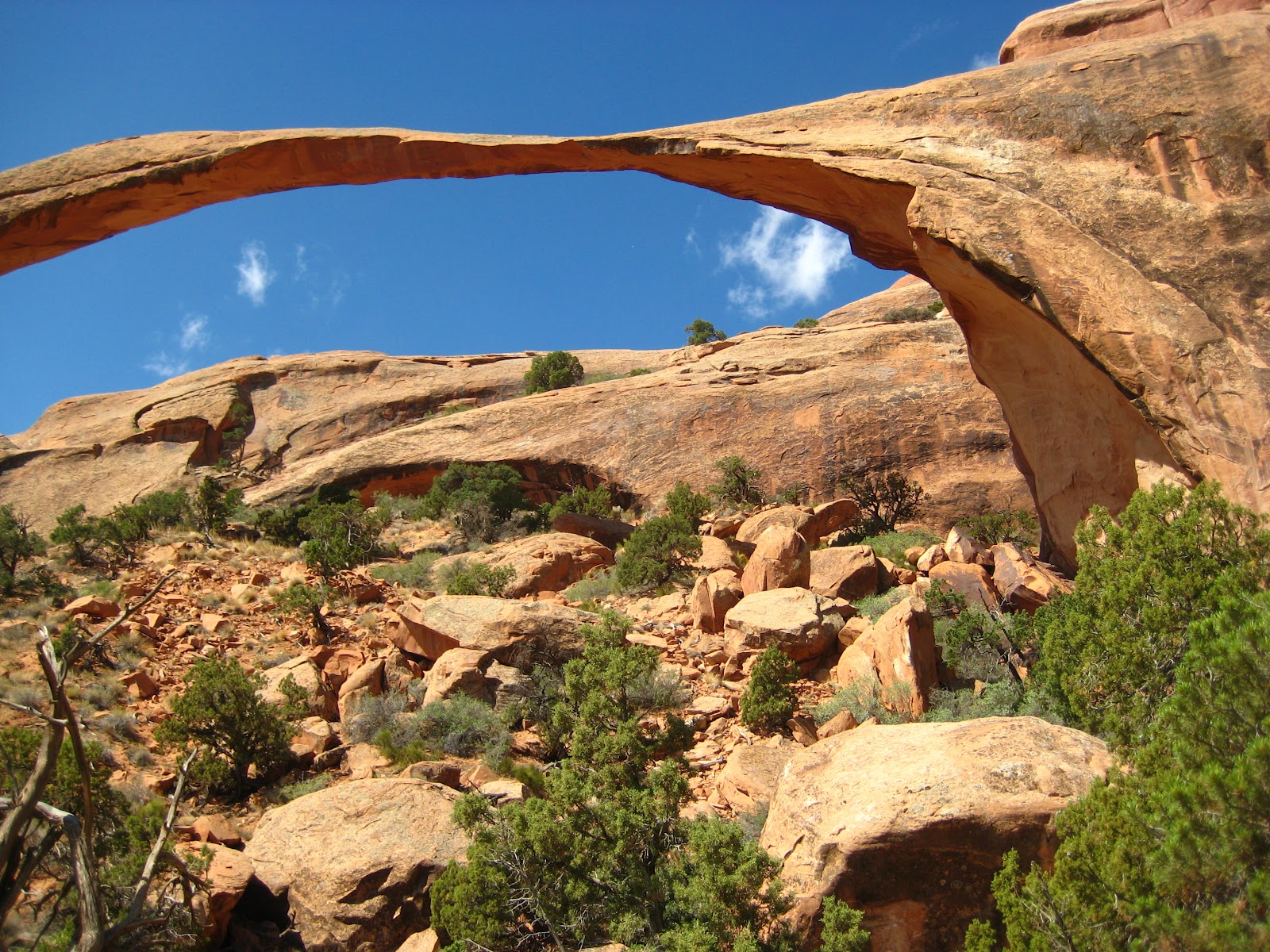
Landscape Arch. Can you tell where a slab fell?

Our first trail was at the far end of the park, so we enjoyed the drive out by obsessively searching for sheep. Devils Garden is a trail that may be enjoyed at several different difficulty levels. Many of the arches available for viewing are towards the beginning of the journey directly off the gravel path. You may go as far as Landscape Arch, the longest in the park, before the primitive loop begins. Here, we were soon traversing and scrambling over rocks and ridges. Rachel’s choice of wearing a hiking dress that day was nearly a poor one, but she managed to stay decent. The crowd thinned as we encountered more and more arches and more and more difficult pathways. The rock cairns I explained yesterday were especially helpful on this terrain, and they often kept us on the right route.

We’d started off on the trail in the mid-morning hours, and were able to enjoy the cooler morning temperatures for some time. However, the desert is good at heating up once the sun is comfortable high in the sky. We aren’t ones to disregard park warnings, so we were well equipped with our water bladders in our packs, each holding 3 liters of water.

When we reached the end of the trail we were more than happy to have a rest and picnic in the limited shade we could find. Dark Angel looked over us as we munched our sammies and snacks. Then, once more, we were in the sun hiking back. Our second wind was more of a sweltering breeze due to the heat, and we were soon grateful to stand in whatever shady patch we could find. Despite the liters of water consumed, our hands were still swollen slightly by the time we reached the main trail again, a sure sign of the start of dehydration. The trail head and accompanying water supply were a welcoming sight.

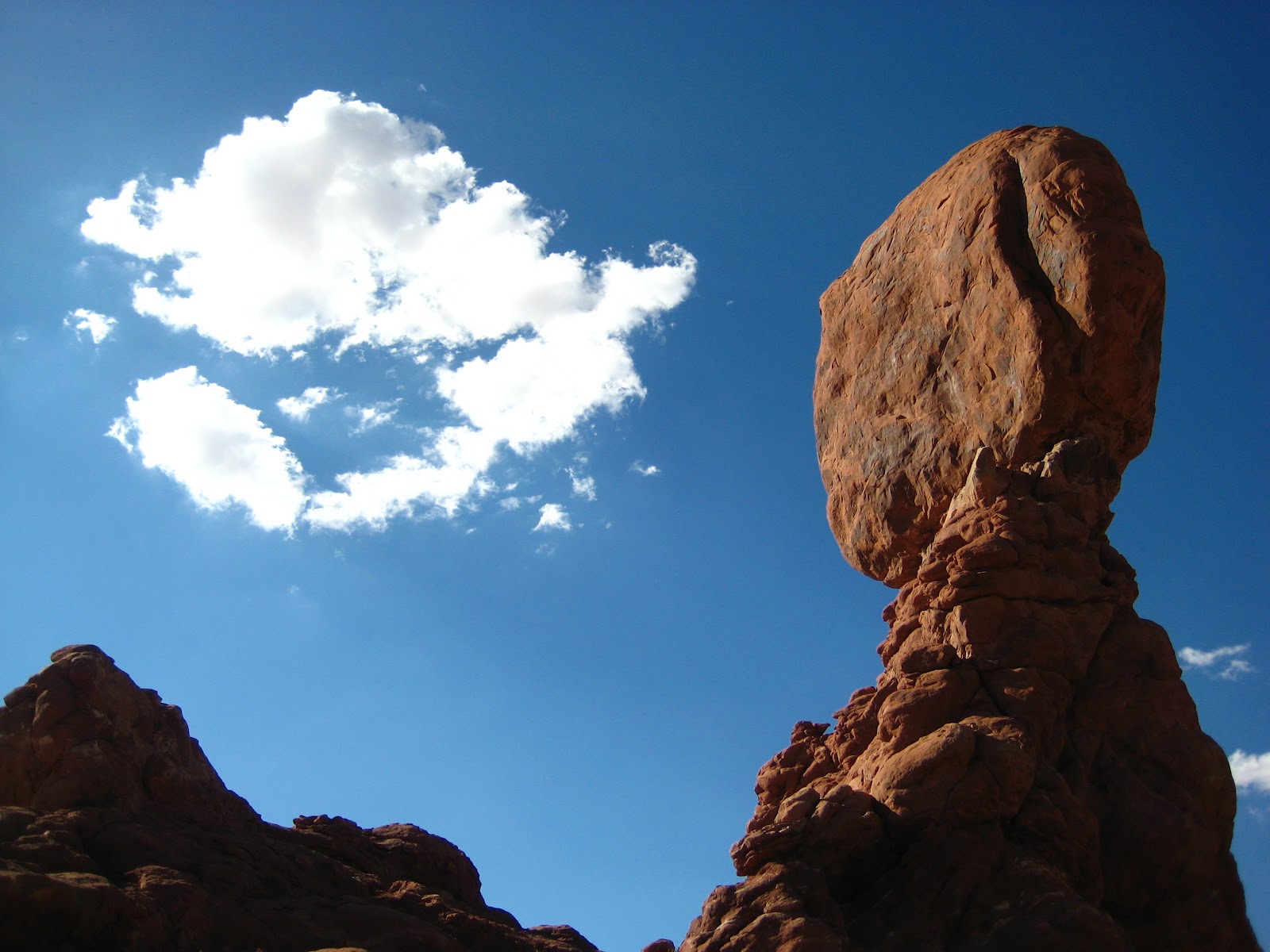
Balanced rock being all balanced and such.

We had plenty of time to spare before we needed to head out towards Delicate Arch for sunset and little desire to stay in the sun for much longer and, so, set out to find a place with shade to rest, write, and snack.

The picnic area across from Balanced Rock proved to be just the place for all of our needs. While most of the tables were in the blistering sun, we managed to score one with a lovely tree bending over to protect us with its shade. I tried to write some informative words for you, oh readers, but Rachel’s napping just looked so peaceful and I knew I wanted to join.

“Meridith….Meridith. Your face it in the sun.”

Rachel, once again saving me from certain cancerous doom.

To recover from our slumber, we got after some hummus with pita chips in a completely unladylike manner. But, it did the trick and we were soon back on the trails where we explored the mini loop around Balanced Rock before setting off for the Delicate Arch trail head.

We had plenty of time to meander along the route to the most famous of all arches in the park. We encountered the homestead of the first settler in the area. An Ohio man, who escaped to the West for the drying, presumed healthier, climate.  He built a teensy one room home for himself and his son. Later, when his daughter and her family joined them, he built a proper house with wood floors and everything. It was still teensy and perhaps had just slightly more space for the 4+ people than Rachel had when she lived in my laundry room senior year of college. Teeny tiny.

Continuing once more, ever closer to the final destination, we came upon what Rachel holds among her top 10 favorite things she’s ever seen. Petroglyphs on a rock above the trail. Perhaps as old as 400 years, these markings revealed horseback Ute Native Americans hunting bighorn sheep.  Small dog like creatures were also included. We were really impressed with the lasting power of the art and we walking on finally, still wondering about the markings that didn’t last the years and the individual who had sat there so long ago patiently carving the scene.

After some unexpectedly steep uphill climbs, we finally turned a corner and were presented with a sight we’d only seen in photographs, postcards, and nature documentaries. Delicate Arch. We’d arrived early enough to get a decent spot among the droves of people with the same sunset plans we had. It did, however, prove difficult to get a shot of the arch without a group of ridiculously posed tourists. The line of groups and families waiting to get that perfect picture under the arch seemed never ending, and if any stayed too long blocking the shots of other photographers wanting that solitary shot of the majestic arch, they were requested in no polite tones to move along.

We had both expected the sun to set behind the arch, however it actually slunk away behind our backs, drawing the shadows up over the arch from the bottom. Still a wonderful sight to behold. Several adventurous young sightseers took in the view from atop the nearby rock formations. The darkness grew, yet we stayed behind to enjoy the desert night. We were well prepared with jackets and headlamps, so felt no anxiety towards the upcoming night hike back to our vehicle.

The darkness welcomed us and we welcomed the sounds and sights of the nocturnal wildlife, awaking with the moon. We kept a slow pace so that everyone could pass us and take their noises with them. It’s always good to hear people enjoying the natural beauty of the parks, however many do not realize that the show is not over. It’s just starting. Once the night air was empty of these sounds, it began to offer up its own. We chose a spot on a small bridge over a pool of water. Day or night, water is a great place to find wildlife. We waited. It was not long until we were rewarded with the sounds of bullfrogs calling to potential mates, the flapping of bat wings as they whiz by us, and various insects chirping and humming. We listened and watched the stars come out before we said our final goodbyes to the park.

I don’t know if I’m in love with the desert yet. It’s still hot and often times not as elaborate or as colorful as Arches. Maybe I’m a little in love with shade in the desert, and that counts.

*more photos later – I can only do so much on stolen Yellowstone Staff wifi!*

Question of the Day:
What is your favorite type of landscape?