First day in Dublin

Day 1
Location: Isaac’s Hostel, Dublin Ireland
I don’t think it’s possible to have a smoother, jet-lag free international traveling experience. I left from Chicago O’Hare (ORD) on Wednesday around 7. About thirty minutes behind schedule, mind you, because apparently Air Force One was nearby? (Insert meme: 30 minutes less holiday time in Ireland. THANKS OBAMA.) Once in the air, my seat mate struck up conversation and I was really hoping he’d be a complete bore so I would have no choice but to sleep. He expressed similar concerns, but I sadly informed him that, unfortunately, I’m fascinating. He shared a stick of gum with me and we proceeded to shoot the shit until dinner and then snoozes. 
The entire plane, landing, customs, baggage retrieval, etc process was so painless that it doesn’t even warrant mention. Really, my bus ride to Chicago was only an hour or so less than my entire trans-Atlantic flight! My new friend, seat mate KC, had even less plans for his solo trip than I and decided to tag along with me to check out the hostel I’d booked. More smooth sailings with check in there. KC decided to stay for a night as well. Rooms weren’t ready for a few hours, but we miraculously were just in time for the FREE daily walking tour. Most hostels come equipped with rentable lockers and are a great bargain for securing your large bags while exploring the city. KC and I split a locker (they really are huge here) but I made sure I was in charge of key duties. 
Cue three hours of wandering about with our trusty Irishman tour guide, Sean, and another new friend, SC. Sean certainly earned his tips, and we had gathered some solid Irish history knowledge, as well as some ideas for where to explore further.
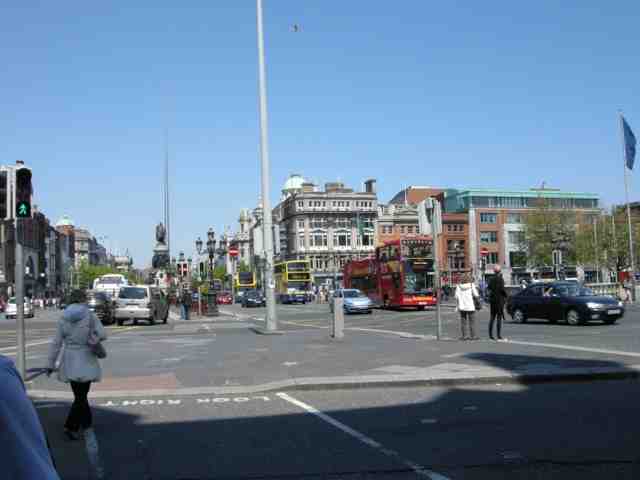
Dublin’s “Spire” in the middle(?) of the city. Great place to meet up if you get seperated, but really it looks like a radio antenna. 
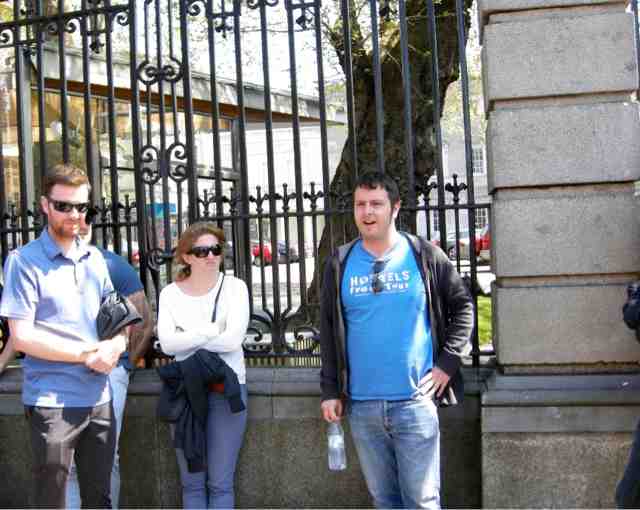
Sean, our lovely free tour guide. 
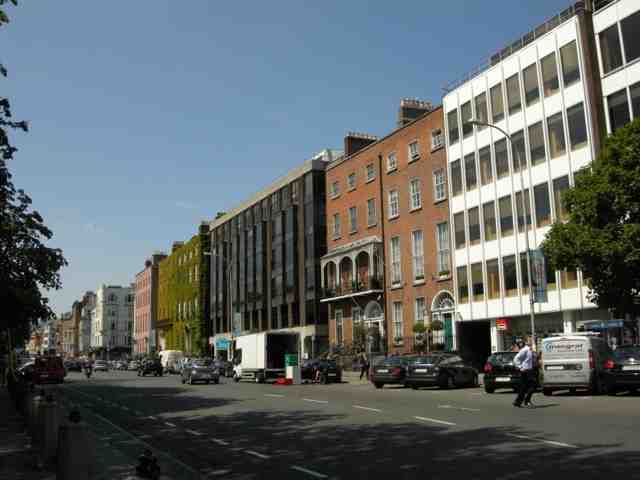
Super cool architecture/housing in Dublin. 

The thing about traveling abroad to large European cities is to not over think them, or to put them on a pedestal, as it were. As we were finding our way back to the hostel, it dawned on me that Dublin is not really so different from any major American city. Once you check out a map well, find some solid landmarks, familiarize yourself with the transit systems, and just go out and wander about, you’ll feel just as comfortable. Yes, we did walk around in a few superfluous loops while trying to find some noms, but that was just as illuminating as any bit of the guided tour. 
The rest of the night has been a blur of hotel chilling. Sauna and tablet monopoly. If my next 89 days are this glorious, I’ll be just fine with that. 

EcoNews Round-up: May 29, 2013

Hello, hello.  It’s time yet again for me to share some of the cool ecology (or conservation, or just cool science!) related news and media I’ve been taking in recently.  As it has been over a month from the last EcoNews segment I posted, this will cover some of my highlights from the past 8ish weeks.  Onward!

African Elephants.  Kenya, 2008.

I’ll start with something less obviously “science,” but still totally science related in my mind.  As you probably remember from my post about my morning routine, I bike to work/campus nearly every morning.  On this bike ride I generally listen to a bunch of different podcasts (only one headphone, and the one that isn’t near to traffic, plus I’m on a bike path 50% of the time…okay, it’s not super safe.  Guilty.).  One of my favorites is Stuff You Missed in History Class.  Obviously, this is a history focused podcast, but they often talk about science history or discuss other things which my brain instantly connects to science.  The latter was the case with their shows in early April about The Great Emu War and Australia’s Rabbit-proof Fence.  The Great Emu War (great may be a bit hyperbolic) is a classic case of human-wildlife conflict.  Humans plant wheat, emus eat wheat, humans want to shoot emus with machine guns.  I don’t mean to make light, the description of the occurrence made my little veggie heart tremble, but it instantly struck me how similar this situation was to other cases still happening today.  An example from my personal research experience is the impact of elephants on subsistence farmers in Kenya.  Elephants can trample an entire farm, which supports a family, and afterward there is a tendency to want to destroy the “problem elephant.”  From a western perspective, the idea of killing an individual member of an endangered species seems reactionary, but from the perspective of people who support their entire lives with small plots of land easily dispatched by the said individual, the choice is not so clear.  Understanding how to mitigate these conflicts is a key area of research in conservation biology.

The Australian Rabbit-proof Fence is interesting because it discusses the issues around managing invasive species.  I don’t recall if they use that specific term in the podcast, but Australian rabbits are a classic example in invasion ecology.  An interesting note, which they bring up in the podcast but do not expand upon, is the potential to introduce a virus to control rabbit populations.  This is another classic example in the scientific literature concerning biological control.  Biological control can be defined many ways, but the definition I currently like best can be found in Eilenberg et al. (2001):  “The use of living organisms to suppress the population of a specific pest organism, making it less abundant or less damaging than it would otherwise be.” And though this definition technically excludes viruses, I very much doubt the authors would dispute the fact that the use of viruses to control pest populations is, in fact, biological control.  The virus referenced in the podcast is one of a group of myxoma viruses, which have been used to control rabbit populations in Europe.  One one level, the argument for biological control is that it helps us avoid potentially more harmful control measures (like poisons or pesticides) and it may be naturally sustaining (such as a virus which has natural cycles within the population) making it more cost effective.  More cost effective, say, than continually up-keeping a fence to exclude rabbits.  However, biological control isn’t always perfect and introducing a biological control agent to control another introduced species can have a run-away effect.  These sorts of decisions are heavily researched  and the literature surrounding the study of biological control is very interesting.        


Another really cool podcast I heard earlier this month was from my favorite podcast of all:  Science Friday.  It was a discussion with Michael Pollan’s about his new book, Cooked:  A Natural History of Transformation.  In the interview, he discusses the ecosystem inside your guts.  I don’t know about you, but I love, love the idea of thinking of myself as an ecosystem where I am the manager and I have to care for the populations.  Oh wait, you didn’t realize I was that nerdy?  He also talks about fermented foods and how there is a process of ecological succession among the communities of bacteria growing in your sauerkraut or kombucha.  I found this section exceptionally fascinating and plan to ferment some stuff over the summer.  Science plus cooking, I love it.    
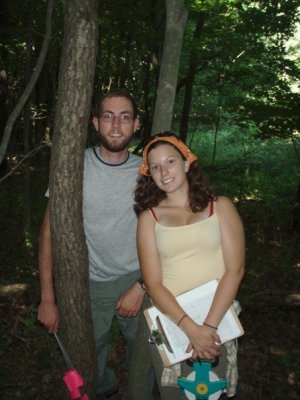
I tried to find a picture of Meridith, Colin, and I, but I’m
not sure I have one!  You’ll have to settle for Colin
and Meridith as biology babies (2007).
Last up in this segment, I’d like to plug two of my friends who recently got scientific papers published.  I’m at that age where some of my friends are having babies, and my friends are birthing research papers.  Some are doing both at the same time, overachievers!  Anyhow, my long time ecology friend Colin Kremer was first author on a cool study in the Journal of Theoretical Ecology entitled, Coexistence in a variable environment: Eco-evolutionary perspectives.  I love papers like this because they attempt to address questions that bridge fields in biology.  Specifically, how does ecology interact with evolution, and how will this impact the communities we observe.  Last, but not least, a recent paper by the all time ecology love of my life, Meridith Bartley was recently published in the journal Biomass and Bioenergy.  Her paper, Effects of salinity on growth and lipid accumulation of biofuel microalga Nannochloropsis salina and invading organisms, attempts to improve efficiency of production for the marine algae used in many algae biofuels operations.  Again, her study is unique because it takes an ecological perspective on the problem by incorporating competition and predation from invading organism.  Okay, end shameless plugging of my friends.  
 
Last Word:  I’m always finding that non-science focused things make me think of science.  That’s probably because I spend so much of my day thinking about science related issues, but it’s still fun to find connections.  No matter if you are biking to school, fixing your dinner, or making new friends, all roads can lead to science eventually.  I just love that.
 
What do you think?  Do you see connections between outside events and your field of study?  Where do you get your news?  Internet, print, podcast?  Do you have any cool science news to share?     

In My Pack: (3 Month) Summer European Adventures

I’m just one sleep from waving farewell to Louisville at the bus station and starting my long journey to get to my long journey. For anyone just now tuning in, I am spending 90 days traveling around different European countries by myself. I have a very, very basic itinerary, a Euro Railpass, and whatever fits into my backpacker’s pack. During my three months traveling around Europe I’ll need a variety of clothing options. Chilly days are still a threat even in the middle of summer.

Flight between Port Elizabeth and Johannesburg.
That may or may not be ketchup wrapped in plastic for my
scared vegetarian in Africa ways. 

The closest I’ve come to needing to prepare for a trip of this magnitude was my month adventure around South Africa in 2008. I spent 4 weeks split between road tripping along the Garden Route and studying abroad with a group from my university, learning about local Wildlife Management practices.

Last summer, Rachel and I had the luxury of an entire car’s worth of space to cram in everything we could possibly hope to never need and then some. We had an entire bin full of our clothes. Another, even larger, with nearly all the food we’d eat the entire trip. Thanks, Sam’s Club! Not to mention, camping gear, computers, our letter writing box, gifts we bought along the way, etc. I honestly think at one point we just walked around my house in New Mexico grabbing whatever we wanted to toss in. SO MUCH SPACE!

Both trips, I surely over packed, but we went everywhere by rental car or vans, so I didn’t really have to lug everything around regularly. For this trip everything needs to fit onto my Gregory backpack. I’m unfortunately not sure of the model or even size. I bought it a few years ago at a local shop’s sale and did very little research (other than asking the sales man which fit me best). I’ve used it a few times and had no complaints.

I’ll have to report back at the end of my trip on the quality of my packing choices, so by no means is this current list a recommendation of any sorts. I did however check out several other travel bloggers for inspiration: Her Packing List, A Dangerous Business, Travel Fashion Girl. Luckily, since I am so used to packing for research/camping related trips, I am not disappointed by the lack of space for super cute clothes.

Without much further adieu, here is what is coming with me in my Gregory backpack for three months and an unknown number of countries across Europe!

I’ve already removed a pair of shorts from this original
selection. What else won’t make the cut?

Clothing

  • 2 bras – black/nude
  • 1 sports bra
  • 6 undies
  • 2 pairs wool socks
  • 1 pair jeans
  • 1 pair zip-off hiking pants
  • 3 shorts (1 for sleeping & hiking)
  • 5 tshirts (+3 for passing out to Gold Star Hosts)
  • 1 tanktop
  • 1 button up flannel (my token Adventure Shirt!)
  • 1 rain jacket
  • 1 handkerchief
  • 1 leggings
  • 1 sweatshirt
  • 1 monokini
  • 1 dress
  • 1 cardigan
  • 1 pair base layers – leggings and undershirt
  • 1 pair gloves and warm hat
Shoes
  • hiking shoes
  • chacos
  • I told myself that makeup was the last thing to go into my
    toiletries bag IF there was room. There was! This is all I’m taking.
    Already don’t wear makeup daily, but I like options.
  • extra shoe laces

Gear  (Bold Kept in Day Pack)

  • ipad (and keyboard)
  • camera
  • water purifier
  • chargers
  • dry sack
  • compression sacks
  • camping stove
  • mess kit (full or 1/2?)
  • pen & sharpie
  • money belt (mostly for organization)
  • wallet
  • nalgene, insert, and cover
  • travel tea things
  • sleeping bag
  • tent (backpacking style)
  • sleeping pad?
  • travel towel
  • head lamps
  • sun glasses
  • deck of cards
  • lock
  • leatherman
  • REI green day sack
  • First Aid Kit
  • Nifty Business Cards
  • Plug adapter
  • French and German phrasebooks 
  • headphones
This is slightly smaller than a TicTac box.
All my hair do-dads. Hair ties, bobby pins, and 2 clips.

Toiletries

  • toothbrush
  • Dr. Bronners
  • diva cup
  • razor? 
  • make up
  • hair things
  • wet wipes
  • mini hair brush
  • Sunscreen
  • Bug spray
  • Contacts and solution
  • Glasses and case

Important Papers – and copies of all!

  • passport
  • flight itinerary
  • bank statement
  • travel insurance papers
  • Railpass 
  • SCUBA cert papers
  • Kentucky for Kentucky and WHY Louisville Stickers (also for Gold Star Hosts/New Friends)
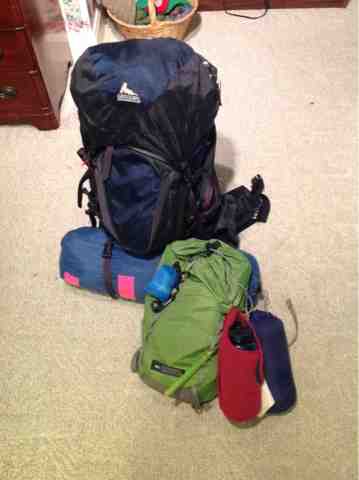
My two bags all ready to go!

The entire time I was organizing and making/moving piles around in my room it seemed like I was packing SO MUCH. But now that I’ve gotten everything in my big pack and day pack, I have extra space in both! And it’ll lighten as I use things and give away a few shirts. I consulted a few trusted friends and you’ll notice that several item did NOT make the final cut. Others I just added moments ago. 

I’m also bringing the book I’m nearly finished with, Zen and the Art of Motorcycle Maintenance, on the bus so I can get that finished and sent off to Rachel. We started it together last summer during our travels and I’ve been hogging it! Also an extra envelope and some paper because I owe a letter to one of my pen pals (and previous CouchSurfing host!).

Question of the Day:
What do you think of my packing job? Should I chuck anything out? Did I forget anything? You’ve got 2 days!


As a sidenote, the majority of my future blog posts will be typed/posted from my iPad. The blogging app has improved lots, but still doesn’t lend itself for much in the way of photo arrangement. I’m also not sure if there’s a spell check. I’m secretly a horrid speller. Hope you can excuse some less than perfect posts. I’ll be going back and prettying them up as I am able. I appreciate you, gentle reader!