Joining the Ranks of Tourists and Fangirls in Yellowstone

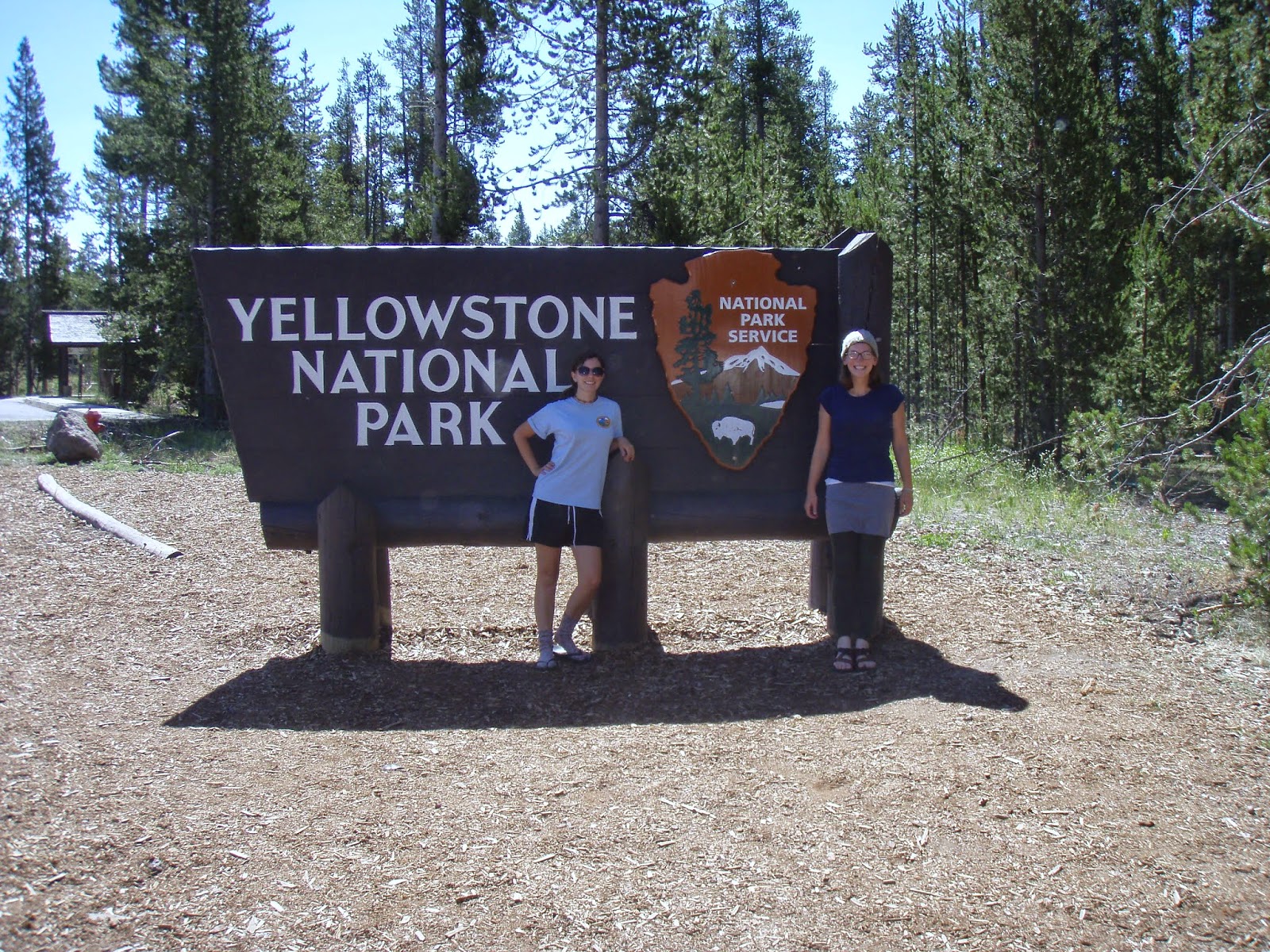
Obligatory “NP Sign” Photo

Day 13
Yellowstone National Park
Total Miles Hiked: 3.5ish (70.7 overall)
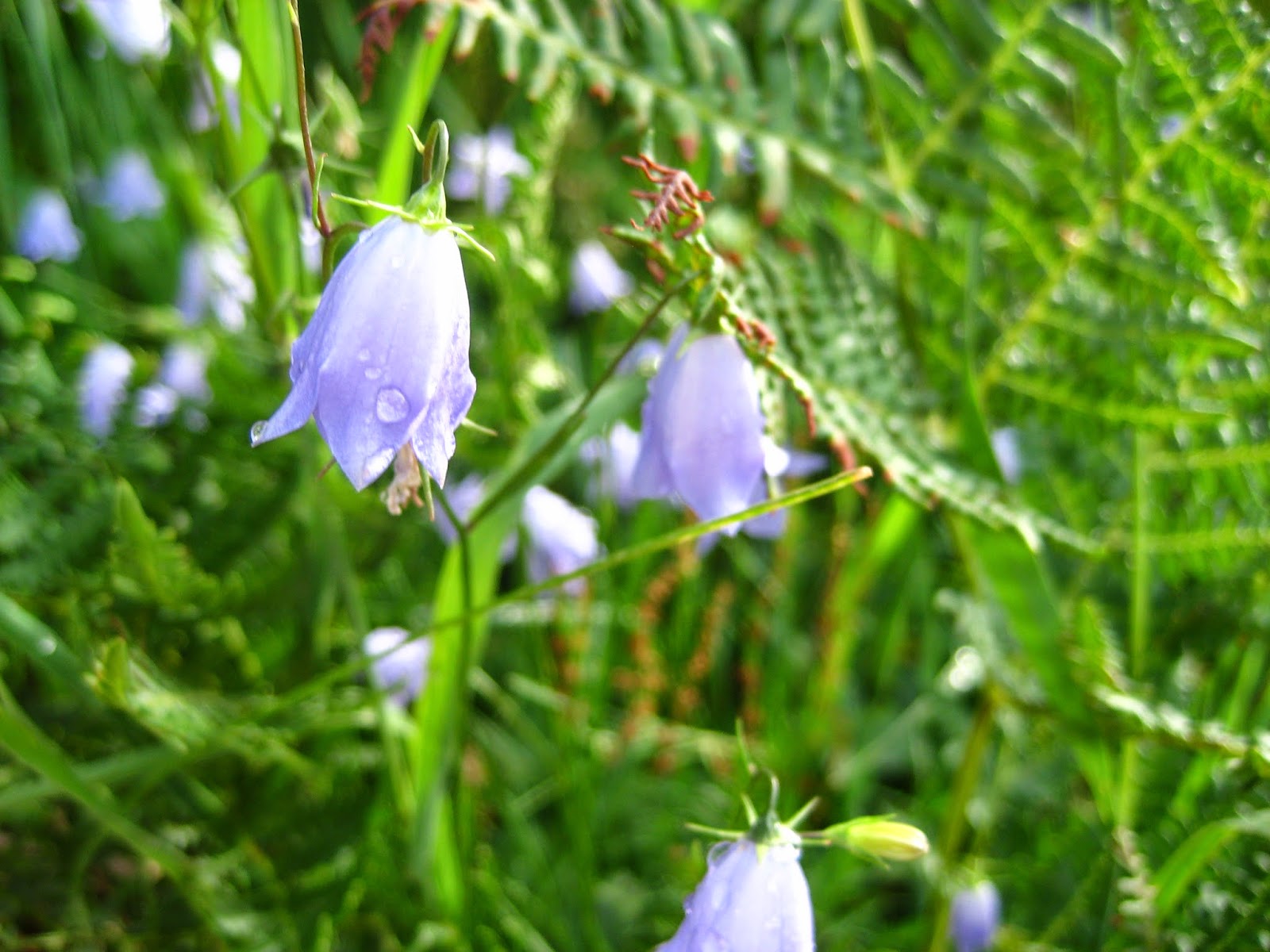
After the rain

Nearing the completion of their Master’s theses, two young, wild women struck out on the adventure of a lifetime. Meridith and Rachel’s 2012 Besties National Park Roadtrip was a transformative journey around the Western US National Parks. 10 states. 9 National Parks and 1 National Monument. One summer of fun!

Yellowstone, the Disney of U.S. National Parks. America’s first national park welcomes over three million people each year, and Rachel and I were certain we wanted to be part of the excitement during our adventures. When we were first planning our trip (which was a very exciting and motivating time during that spring semester) we knew we wanted to take our time exploring this particular gem. Three days seemed adequate, but I’m sure we also could have spent the entire summer there hiking and learning. Even after all of the hiking we had just completed at Rocky Mountain NP, plus arriving at Bridge Bay Campground at 2 am, we couldn’t wait to explore this national treasure!

Right on time!

I hope we don’t need to remind you folks, but on our Awesome Besties National Park Roadtrip we weren’t messing around. We went on an early morning jog along the Natural Bridge Trail (this was when we were being extra amazing…I don’t think it lasted all summer), which was both invigorating and a prime opportunity to try and spot a moose!  Post-jog and granola hoovering, we struck out toward the epicenter of all that is Yellowstone: Old Faithful. And wow, the crowd here couldn’t have been more different from others we’d seen at the previous parks. People of all ages, itty little dogs on leashes, bikers, hikers, photographers, families, and us were all milling around until the next eruption time. Conveniently, eruption timers were plastered all over the viewing area. Old Faithful really did live up to it’s hype and was spectacular to view.

As per usual, we sought out the park ranger that looked like they had the full low-down on the park, and, as per usual, we were not disappointed. A lovely old couple took turns answering our questions and suggesting possible itineraries (Editor’s Note:  Jim and Dot are the business!  Go find them!). We explained we had three days, and while we wanted to hit up the major tourist attractions, we were also quite badass and wanted to do some tougher hikes and see some wildlife. Pausing only to insist we go check out another geyser about to erupt, this couple quickly outlined where we should adventure, and and passed on an important safety tip. Apparently, up until this point in our trip we had been walking bear lunches and didn’t even realize. My thoughtful, well-meaning mother bought me a Bear Bell to attach onto my pack to ward off bears. How sweet!  However, according to our newest ranger friends, these bells acted more like dinner bells than warding off bells. Good to know; acquiring bear spray was necessary.

Meridith’s idea of heaven

Luckily, we could mosey on over to one of the many stores scattered around the park by way of the the largest log structure in the world. Thanks to my love for science documentaries I was able to give Rachel the briefest of overviews of the famous, historic Old Faithful Inn. The highlights: super fantastic craftsmanship and the ice cream shop we found. Rachel treated me to an ice cream cone, and I was in heaven. But, as my luck would have it, heaven was about to get even better. As we wandered back into the lobby, we noticed a man at a small table, which seemed to be set-up for a book signing. Recognition washed over me as I felt my face flush with excitement and sudden anticipation. There, seated before us, was one of my personal heros. The dude who writes the “Who Pooped in the Park?” books. Gary D. Robson, in person. Rachel was kind enough to let me fangirl a bit and we went up to get a photo. If you’ll take a moment to imagine a grown woman, possibly with ice cream smudged on her face, trying to contain her excitement whilst in line among a sea of young children, waiting to meet a gruff older man sitting at a table with scat samples covering it….well, then you’ve pretty much nailed the scenario. I managed to resist elbowing a few 8-year-olds out of my way before getting to the front of the line.
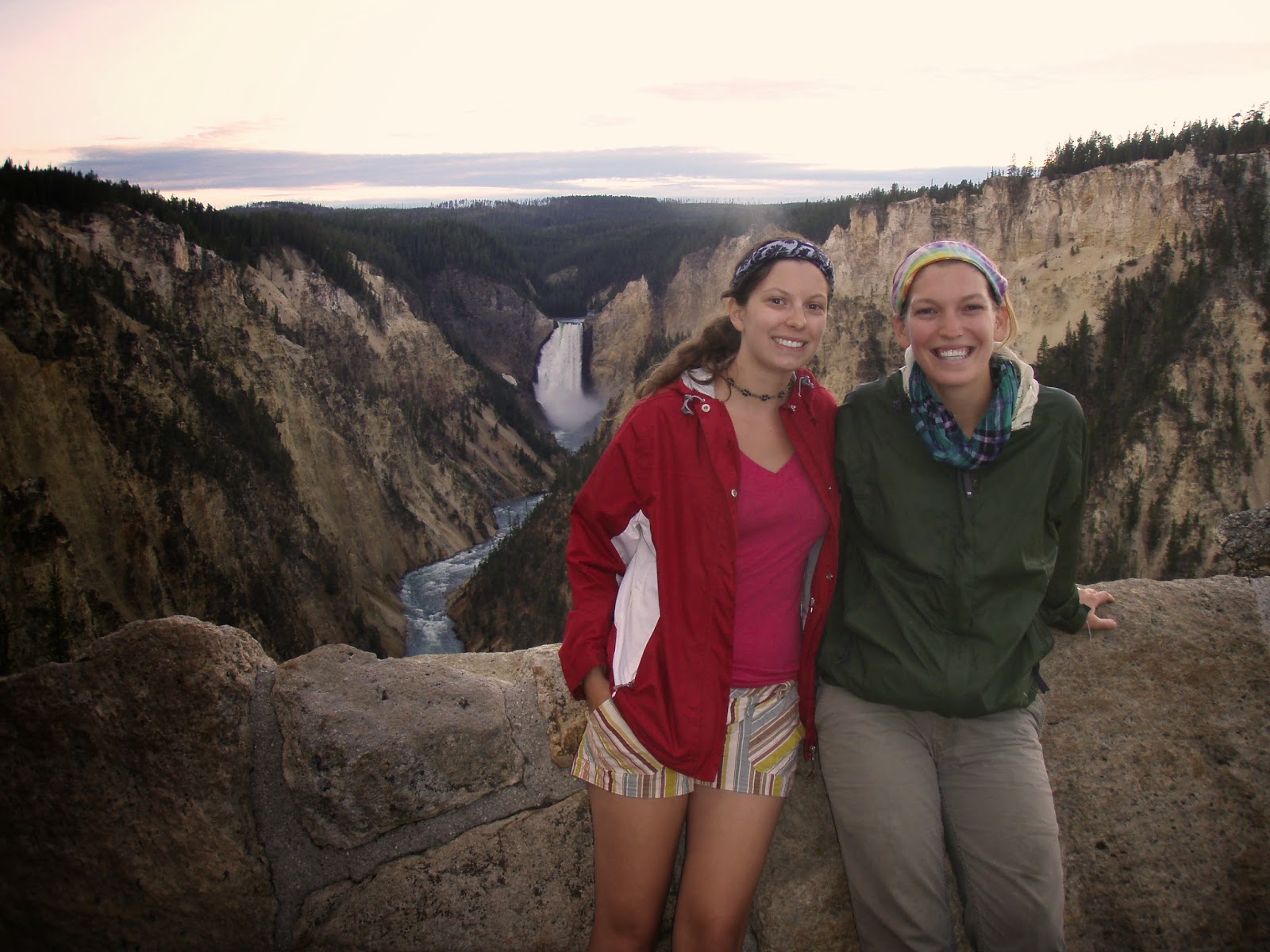
Our second Grand Canyon together!

Still star struck, we battled the brewing rains to finally get to the gift shop with bear spray. I was a little dumbfounded at the steep price, but I suppose if you are investing in your personal safety that price is well worth paying (Spoiler Alert: we never needed the bear spray so now when not out on hikes with me, it lives on the rack behind my apartment door where it waits for State College’s unluckiest home intruder.). I honestly don’t remember the entire conversation, but I chatted up the sales clerk while purchasing the bear spray and through some combination of comradery and the ol’ Meridith charm, I walked away with the staff password to the wireless internet in addition to the bear spray! SCORE! We waited out the rest of the afternoon rain while bingeing on stolen…borrowed internet.

You know, just hanging out on top of a mega-volcano

Now you might think that it was a total bummer to have rain on our first day of visiting Yellowstone, but it was actually quite beneficial! The afternoon storm scared off the majority of people so we were able to hit up the major tourist highlights without dealing with the crowds! We were treated to amazing experiences and sights at the various geothermal elements, artists paint pots, and even the Grand Canyon of Yellowstone. Even more, we got to enjoy a pretty sunset and several of the majestic bison! One even was sweet enough to pose stoically in front of the setting sun before ambling across the road right past our car. Being the responsible and safe park goers that we are, we kept a safe distance from the wildlife and stayed inside the car in a designated pull off area. (Excuse me while I side-eye and judge everyone else not as responsible as us). All in all, it was a perfect first day in Yellowstone. We tucked in early because we knew that day two was sure to hold ever more excitement!

Magestic

A Day in the Life: Summer Field Work

Restored marsh area.

Despite what Starbucks is trying to tell you, fall doesn’t officially start in the Northern Hemisphere until September 22nd at 10:29 pm (equinox party anyone?).  And yet I felt now might be a great time to reflect on the summer.  At this point, if you’re a semi-regular reader you probably know a bit about my interests, but today I want to share a peek inside my summer work.  It was fun, it was muddy, and it was also just a ton of work!

I’m just for scale, look at the height on that hybrid Spartina!

But before I can really tell you what I did, I need to tell you why I did it.  As a PhD student, I’m nurturing a little research agenda that I hope will mature over time.  Right now, it’s at that horrible tween stage where it wants to be a grown up research agenda, but I keep driving it to the mall and embarrassing it in front of its friends.  Regardless, when people ask about my work at parties or family functions, I tell them I study the impacts of invasive plants in tidal wetlands.  Tidal wetlands are hugely important in terms of impacts to biodiversity (nursery habitat for many organisms) and ecosystem services (carbon storage, flood abatement, water filtration, and the list goes on…).  Ironically, in California, only about 10% of our historic tidal wetland area remains, and to add insult to injury wetlands are one of the ecosystem most impacted by invasion.  

But, why invasive plants?  Plants are primary producers, hanging out at the base of the food web, and when they change, other things change in really interesting ways.  My master’s research focused on the impacts of an invasive plant on songbird food webs.  I found the plant impacted the insects, which the birds ate, thus impacting the birds.  I was intrigued!  That’s how I knew a PhD was right for me, after my MS, I have about 1,000 more questions.  In my current research, I try to understand:  How do changes in invasive plant density impact the effects these plants have on ecosystems?  How does restoration approach impact ecosystem recovery after the removal of an invasive plant?  How does understanding the function of invaders in ecosystems impact management choices?  I have approximately a billion other small questions that I try to address, but those are the biggies.


Now, what does a work day in the life of someone trying to answer these questions look like?  For about 6 months out of the year, it looks like me sitting at my desk, at my computer.  But during the field season, especially the summer, things are very different.

Studying Restoration in the Low Marsh

Restoration site types:  Native Spartina foliosa (top left), actively replanted (top right), passive eradication (bottom left), invasive hybrid Spartina (bottom right).
Tidal marsh plant communities are structured largely based on environmental stresses associated with inundation by the daily tides.  When I’m working at my restoration sites, I’m down in the lowest elevations where plants persist.  That means I need to be in the marsh, ready to work when the tide is low enough.  Each field day, I rise at least two hours before the low tide level I need to get my business accomplished.  Most of the time this summer, that meant being up at 4 am.  I’ll admit it, it was a bit of a drag being up that long before the sun.  I would change into my field clothes, make some coffee (so necessary), grab the lunch that I (hopefully) pre-made the night before, and head out the door.  I jumped in my car, which is (again, hopefully) pre-packed with all the gear I’ll need for the day, and swing out of my parking lot to pick up my employee and potentially a few volunteers.  Once we are all loaded up, we start the hour and a half drive out to one of my six sites in the San Francisco Bay Area.  These awesome people are really what makes all my work possible, so if they fall asleep approximately 20 minutes into the drive, I focus on NPR and coffee.

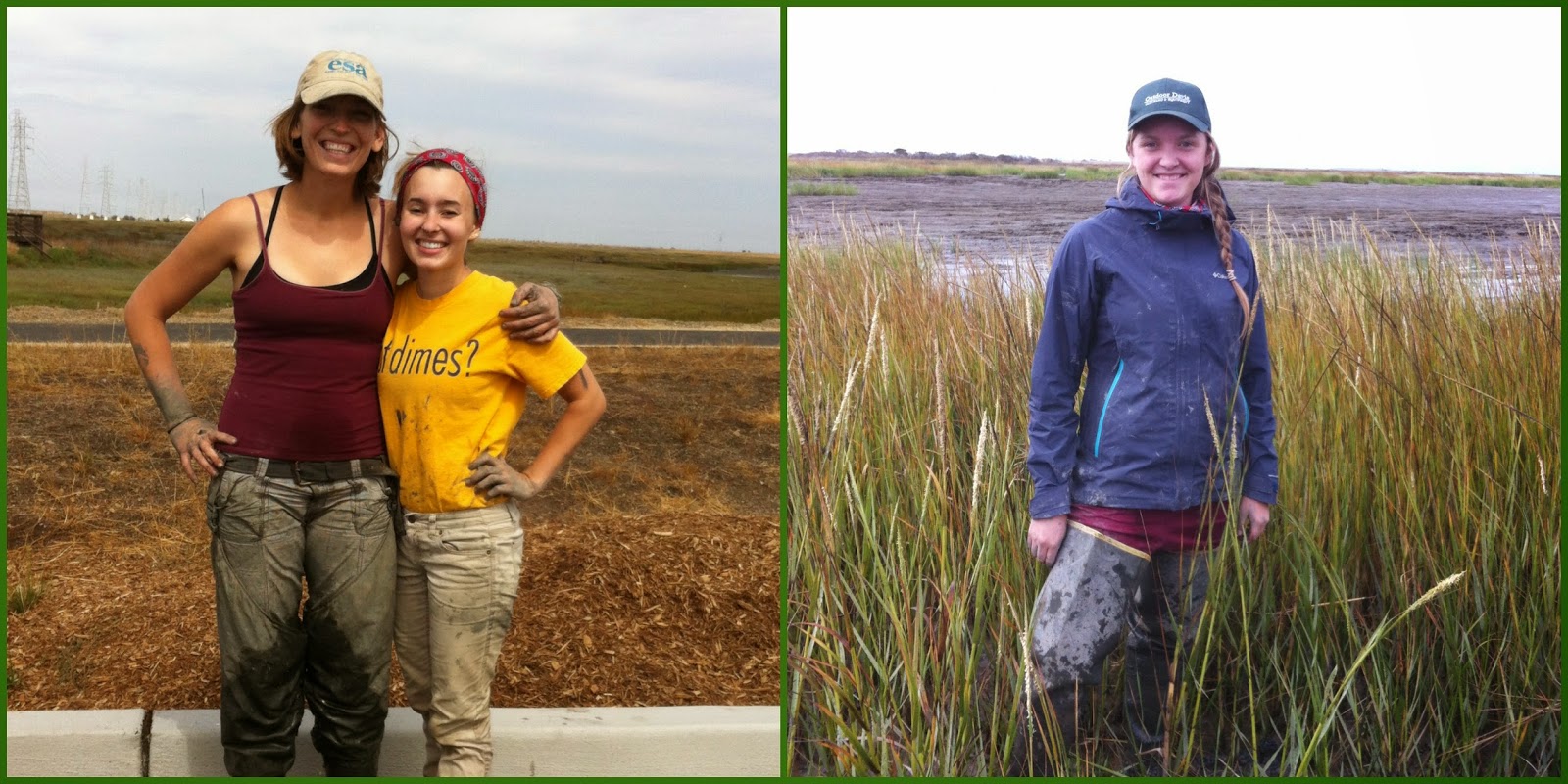
Two all star members of the wetland field crew!
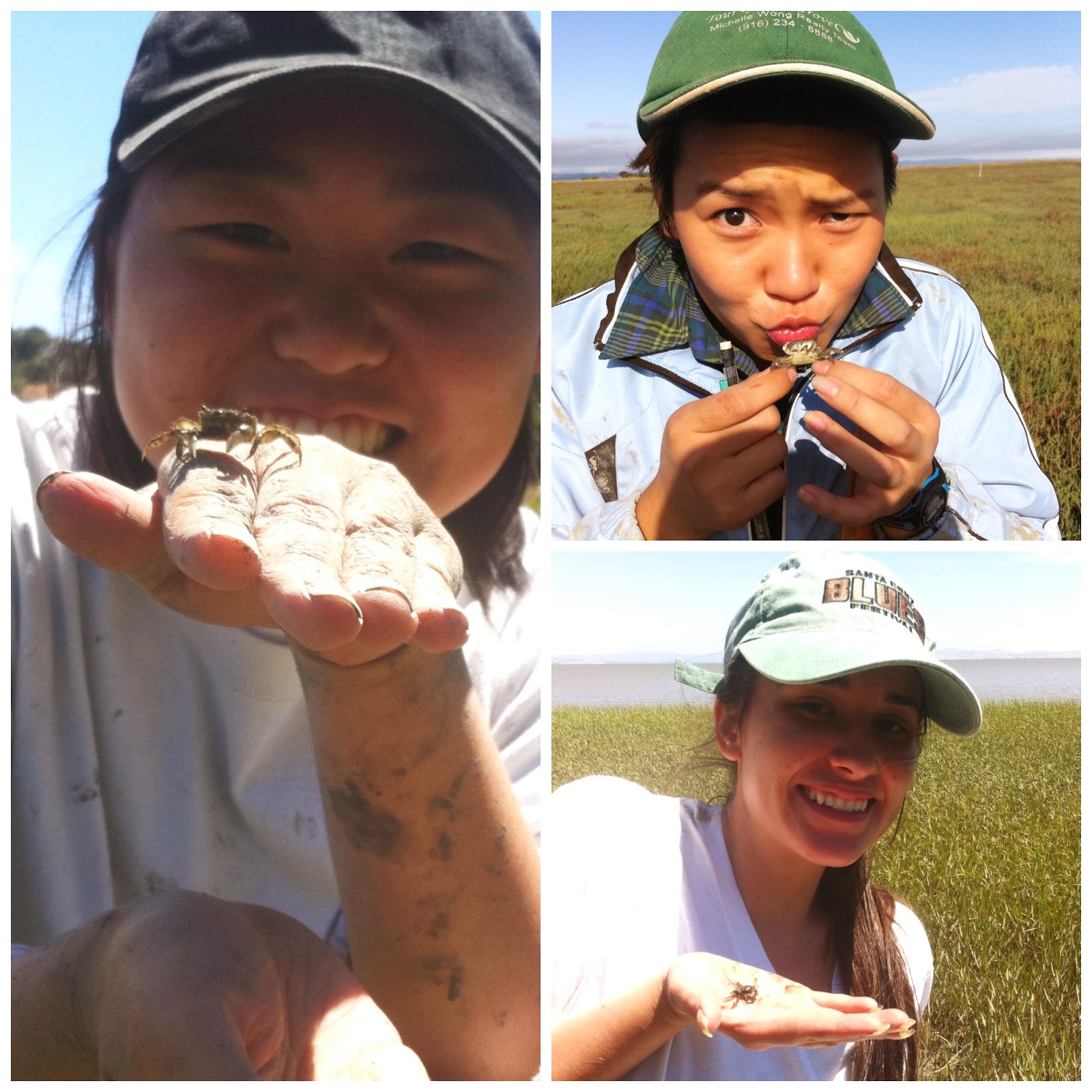
Once we arrive, we pull on our waders and prepare to get muddy.  For this restoration work, I’m very interested in how invertebrates living in the soil are impacted by the different restoration approaches, specifically active replanting of native plants versus just eradicating the invasive and letting things passively progress.  So, I take a lot of soil cores.  Soil cores for grain size, soil cores for water content, soil cores for inveterate identification, soil cores for benthic algae analysis.  So.  Much.  Mud.  I also get to play with adorable crabs and watch the sun rise up over the bay.  In the end, it’s always worth the early wake up call.  Depending on the site and the day, the tidal window could be open for 4-7 hours.  As the sea creeps back up toward the land and my transects, we pack up our gear and lug 30 pound buckets of mud back to my car.

Muddy gear ready to be rinsed.
*Cue very obnoxious pop music and more coffee to make it through the drive home*

What happens back at the lab that evening really depends on the time of day and what the plans are for the next day.  Generally, we spray off all our gear (salt water = gear death), preserve and store all the samples we took, and go take showers.  Lather, rinse, repeat for about 20 days spread out over 1.5 months.  

Studying Management in the High Marsh

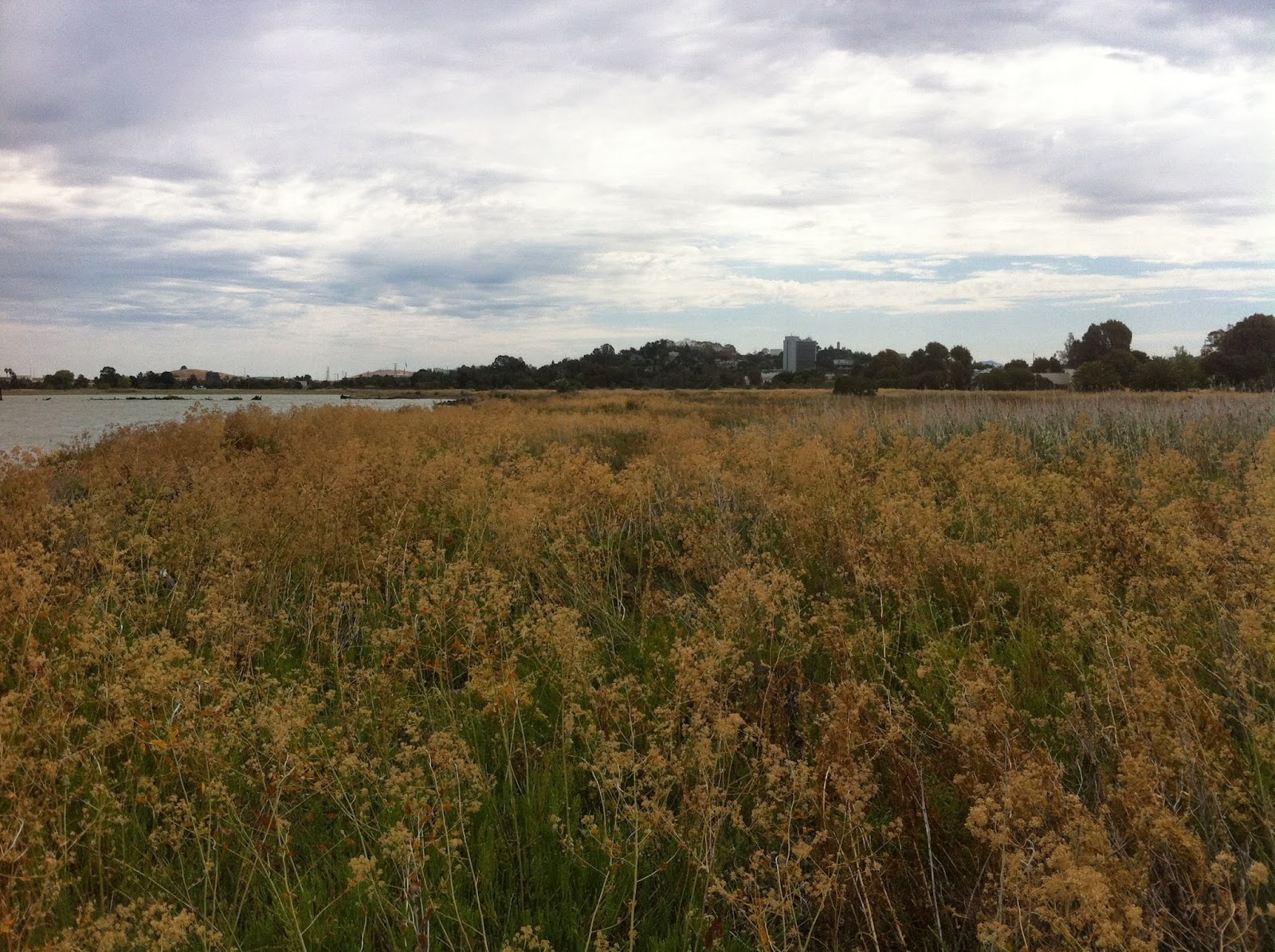
My other experiment this summer examined how different densities of an invasive plant might have different impacts to the ecosystem.  This plant, (Lepidium latifolium, or white top) can occur in several different elevations in the marsh, but my master’s work showed the largest impacts were in the high marsh zone.  Thus, I’ve concentrated my current work in that area.  So, unless the tide is really high during the middle of the day, I’m generally not very tidally restricted for this work.  I’m super interested in the impacts of invasive plants at different densities because we generally know about what things are like when these invaders are absent and when they are really bumping.  That middle stage?  A bit foggy.  That’s where I come in, or so I hope.  

Marsh full of Lepidium.
On Lepidium mornings, I wake up at 6 am, which feels like a luxury, let me tell you.  I make coffee, grab my lunch, and head out to pick up my helpers for the day.  Once we arrive at the field site, we set to work counting stems.  I’m attempting to hold stem density constant between the different treatments, so a lot of this summer was spent driving out to the site and clipping out any extra stems that had sprouted up from the time of my last visit.  These little suckers resprouted so aggressively!  I learned a lot about how often I need to actually do this reclipping.  I piloted this experiment this summer, so I didn’t take all those lovely soil cores in this case.  I’m stoked for this February when I expand this project to three sites and really go for it!
___________________  

Crab lovin’.
When I look back over this summary and compare it to my feelings after my first field season in the winter, I know I’m starting to make progress down my research path.  In all honesty, during the winter I was simply trying to keep my life together.  This time around, I felt I could breathe more easily, reflect more often, and make much better decisions over all.  I also felt like this summer I actually have a lot of fun in the field!  Sure, logistics are still difficult, and I definitely have a metric ton of mud still in the lab fridge to work through this week.  Overall though, I feel like I can say things went well!

For those of you who are getting ready to start this graduate school journey, just remember that no one has it all together.  Anyone who pretends that they do is absolutely full of it.  This is a learning process, and learning is way scary!  Talk to people you trust, take breaks when you need to, and remember why you signed up for this in the first place (cause you totally volunteered, btw)!  Trust me; it’s always confusing, but navigating that confusion will become much more of a fun adventure!   

Until next time!  If you need me, I’ll probably be in the lab.     

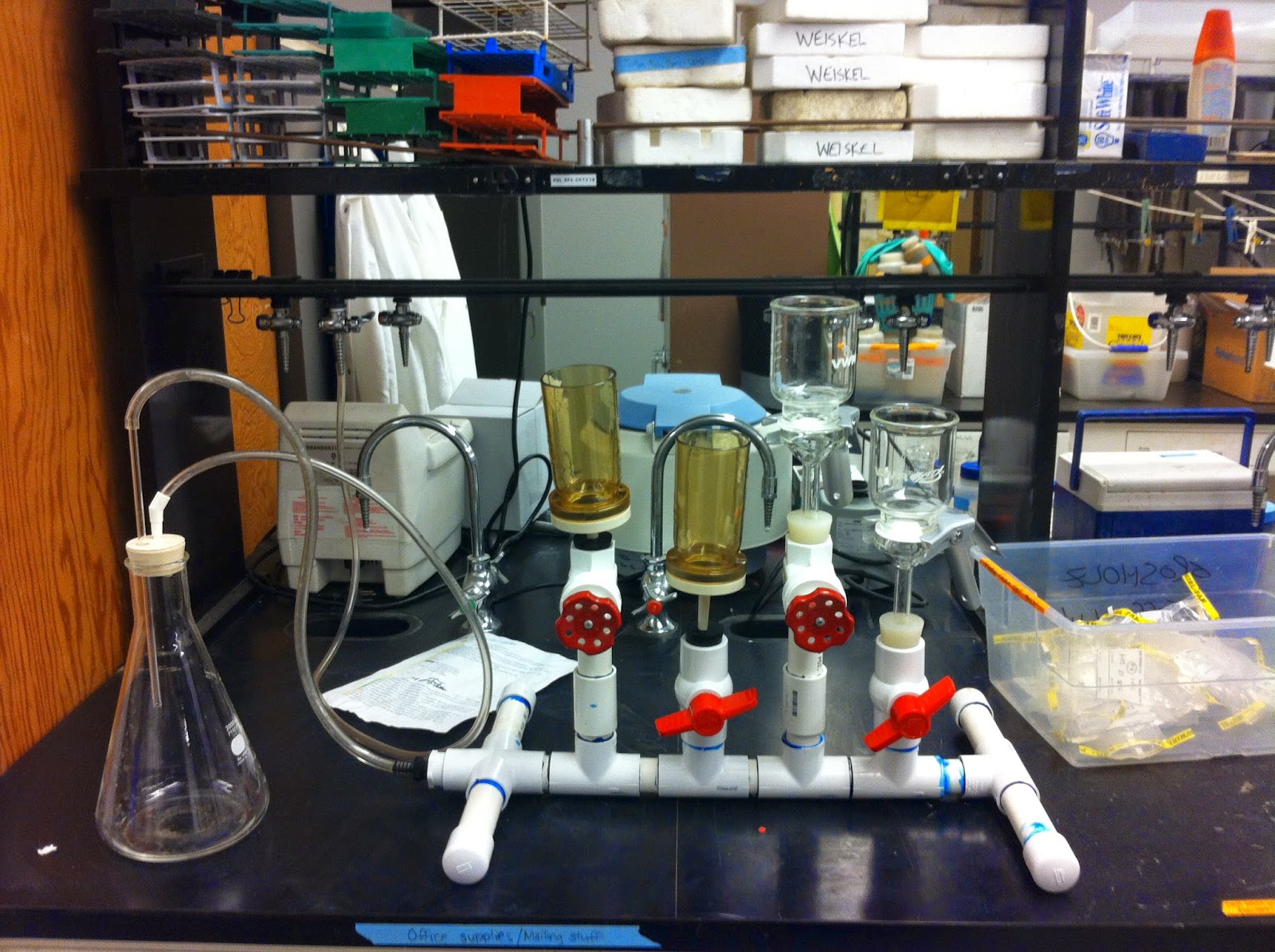
Beakers and stuff, like a real scientist.

Share a Science Documentary Day

Science documentaries. I’ve got a sneaking suspicion that you love them. You’ve watched both iterations of Cosmos; you’ve joined Stephan Hawkings on an exploration of the universe; you’ve learned about the rovers, landers, orbiters, and space stations exploring our solar system; you’ve experience Sr. David full-on gushing over a hedgehog. If I were to write a blog post trying to convince you to check out some of Sweet Tea Science’s favorite science documentaries, you would scoff because you are so on top of that. And that’s awesome! Seriously, let’s take a moment to appreciate our collective thirst for knowledge!

However, let’s not get so ahead of ourselves that we forget to share this excitement, enthusiasm, and thirst with others!

I have been inspired by a lovely evening out with my partner and his friend. We had been enjoying a few beers, and we got on the subject of education, intelligence, science, space and…well, you know how conversations can go. We eventually got on the subject of exploring our solar system and trying to understand the creation of the universe. Now, keep in mind that I love these kinds of conversations and could go on and on for a while. My comments are often prefaced with “I saw once in a documentary that…[insert science here]”. I was shocked to find that the friend had never heard of some of what we were discussing. It wasn’t that he didn’t have an interest in the topics, quite the opposite! He tried to write it off as us just being inherently smarter than him, but honestly, it was just a product of being an avid science documentary watcher. The knowledge is out there, I just Netflixed my way to it! I want others to know that they can too!

I am beginning to realize that there exists a set of people out there that are interested in exploring the sciences, but they don’t believe in themselves or don’t know what avenues to explore to help with their intellectual endeavors. This is where we come in. I’m going to assume that the majority of readers are here because they are totally into science. If we all independently hosts screenings of science documentaries and invite lots of our friends that might not normally choose such a film, then think of all of the science converts! I propose we
take this opportunity to organize. I nominate September 17th, 2014 as the first annual Share a Science Documentary Day!

This is a project that will require the help and support of the online scientific community. Science Side, I’m looking at you!

Your STS Homework:

1011425_10101307980269262_1191846856_n.jpg

1. Share your favorite science documentary. You may do this in the comments here, on our Tumblr, or on your own social media outlet of choice! Be sure and tag us, @SweetTeaScience, so we can reblog/post/tweet you. Feel free to use the tag #SciDocuDay2014!

2. Host a Science Documentary Viewing on September 17th, 2014. Invite friends now and get people excited!

3. After your viewing don’t forget to try and start a dialogue. Talk about what you just learned and encourage others to share their impressions.  (Editor’s note: I think this would be a great time to talk about how to pick a documentary that isn’t bunk and how to be a skeptical consumer of information.  I mean, I love me some Netflix docus, but I’ve also quit some half way because…bunk.)

4. If you’d like, write up a little something about your event. What did you watch; did people enjoy it; would you host a similar movie night again, etc. We’d love to hear back and post your feedback on our blog or Tumblr!

Best of luck to everyone choosing a film to watch. Here might be a good place to start. We’ll keep you updated via tumblr about our own plans and movies that we choose to watch at our respective events! If you have any suggestions we’d love to hear them.