And now for something a bit different!
We’ve been writing a lot in the past few weeks about life as a graduate student or some of the things we are learning while on our respective doctoral journeys. However, if you will recall, we also love to go on journeys in general. Meridith and I have always been avid travelers. We have visited numerous other countries together (South Africa, Costa Rica, Panama, England, Aruba…) and separately (Kenya, Argentina, Ireland, Thailand…). While traveling overseas is, literally, one of the best things ever, one of my favorite bar questions to ask people is, “What are the top 5 locations you want to visit in the United States?” I think we spend a lot of time fantasizing about getting to far-off, exotic locations, and that can cause us to overlook the beauty in our own backyard (so to speak). (Editor’s Note: This is so true! One of my big epiphanies from my summer traveling Europe – by bus and train! – was that I had totally under appreciated all there is to see in the good ol’ U S of A.) And while I might get to visit friends or make new friends when traveling overseas, getting a co-conspirator for your State side adventuring is a bit easier.
As Mer is one of my all time favorite partners in crime, she and I have always made a point to visit one another regularly. Our college roommates (and often an all-star cast of their amazing boyfriends/girlfriends/partners/pals/siblings) make a point of gathering for New Years Eve. That’s always a treat, and usually involves doing a multi-city flight out of California, to home, to the NYE destination (Boston 2015!), and then back to California. While well worth it, that gets expensive. If you add onto that a trip home during the summer and plane travel really starts to take a bite out of your budget. So, what’s a budget-conscious, environmentally-minded person with a severe case of wanderlust to do? Well, you can hop on the Greyhound and get to a regional destination with little money, hassle, and C02 wasted. When I was living in Long Beach and Meridith was in Las Cruces, we were frequenting the Greyhound route between Long Beach and El Paso on a semesterly basis!
 |
| NYE 2014 Crew |
“Whoa, whoa, whoa, Rachel. Take the bus? I have a car!” Yeah? Then find a bunch of friends and pile into the car. Carpooling is great, and sometimes it is the most logical option. But, maybe you have a more flexible schedule, you’re traveling solo, or you really want to cut your carbon emissions. In that case, you should really be looking up the local Greyhound and Megabus schedules. I’ve written about my internal conflict concerning the environmental impacts of travel here, and I’d suggest you check it out. For those unwilling to read my previous ramblings, my conclusions are simply that bus travel is the most cost effective and environmentally friendly way to transit regionally. Since writing that post over a year ago, I’ve had numerous conversations with people who just can’t seem to get over their bus hang-ups. Maybe this isn’t the most glamorous way to move about the world, but if you are a reasonable traveler who keeps their wits about them, you have very little about which to worry.
Maybe you’re willing to give it a try? I’ll give you a few tips from my numerous Greyhound adventures and misadventures to make your first bus trip a breeze.
 |
| Cat Bus. The best kind of bus. |
First, and foremost, put your patient pants on. Unlike plane or train travel, hitting the open road on a Greyhound requires a little less coordination on the part of the company. This might also be part of the “you get what you pay for” part of this equation. I’ve been on some very punctual bus trips…I’ve also waited and waited for my connection. Really though, I’ve slept in plenty of airport chairs waiting for my connecting flight when it was delayed. So, meh, I’d call this a wash really. I just tend to expect the bus to be a little behind its time. (Editor’s Note: For most people this goes without saying: double check your departure time AND date. I’m going to share my most shameful Greyhound experience because I love y’all. I’m not even sure if I ever told Rachel this, but last NYE my partner and I bussed to/from Chicago and I totally made us miss our bus because I was in charge of the tickets – we were still new and he didn’t know yet how horrible of an idea this was – and got the dates mixed up. So when we were leaving to catch our bus, I took our tickets out and realized that our tickets were for the day before. Cue full shame meltdown and us having to buy a whole ‘nother set of tickets day of, which meant paying full price.)
Once your bus arrives, where you sit matters a little bit more than where you sit on a plane. Really, you don’t want to sit near the bathroom. Obviously, right? You should also choose your seat mate (if you have to have one) with at least a little care. My brother has a theory that, when you’re on the bus, you’re much less focused on how you might die than when you’re 10,000 feet above the ground. So, I have (unscientifically) concluded that people are generally less inhibited on the bus. For this reason (or something), I’ve had a lot more interesting and friendly conversations on buses than I’ve ever had on planes. If you want to chat, look for the person who looks like they want to converse. Want to sleep? Look for a fellow napper. In my experience, there is generally at least one bus occupant who really needs to drop the mic; I would suggest not sitting with them.
 |
Mer took a 12 hour bus ride so we could surprise our friend
on his birthday! |
Seat selection handled, now it’s time to occupy yourself. If you’re doing a regional tip, you can try to choose an express bus that has wifi. The wifi on buses is free, unlike on planes. You probably won’t be able to stream Dr. Who, but you can check your email, access gDrive, and generally get some work done. There are also, often, power outlets so you don’t have to worry about your computer or tablet crapping out on you. This is my problem on, literally, every flight. Why don’t I learn? I’m not really sure if there is a cause and effect situation here, but I have found it much easier to get work done on the bus than the plane. Again, maybe because I’m still on the ground?
Normal travel tips apply on the greyhound as well. Climate control can be something of an issue on the bus. Consider your relative hot/cold scale when choosing an aisle or window seat. Wear layers so you can add and subtract as needed. Also, you really do want a blanket and a pillow. There will be no smartly dressed attendant to hook you up with one if you forget. Bonus points, you can bring liquids on the bus! Beverages, peanut butter, hummus, and anything else delicious and spreadable is totally allowed. This makes it way easier, for me at least, to avoid the pull of buying weird airport or plane food that is strange in my tummy and wrapped in a bunch of obnoxious, ultrathin plastic.
 |
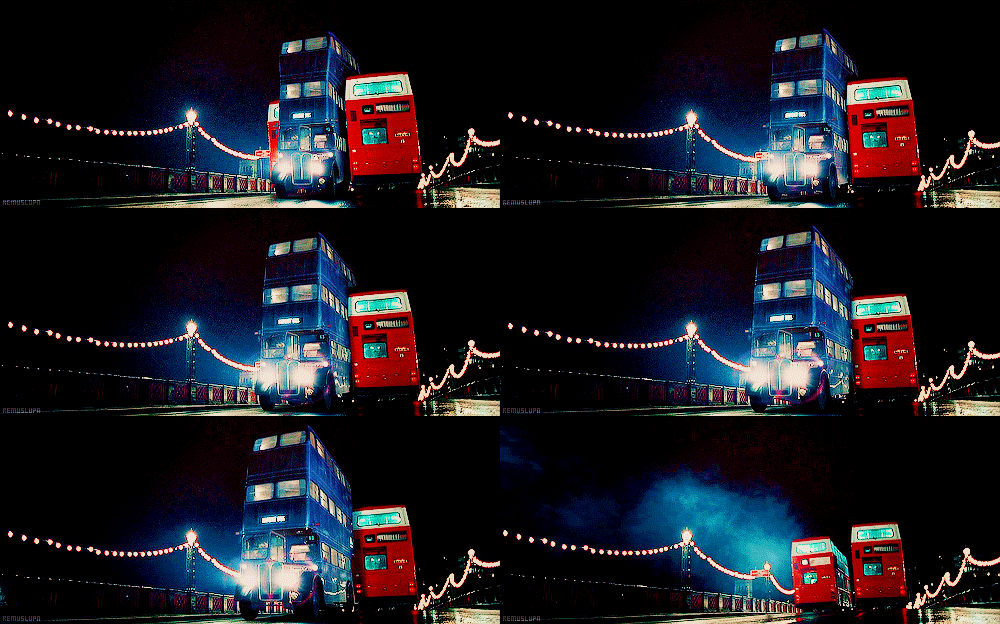
| Night bus. Also a good option. |
How long will your bus adventure be? The longest I’ve been on a Greyhound trip, to date, was 20 hours from El Paso to Long Beach. It was a haul. And as stifled and dehydrated as I usually feel getting off a plane, I felt downright stinky when I disembarked in Long Beach after a 20 hour coach trip. You’ll feel way better if you can brush your teeth, change your shirt, and apply some deodorant during a layover. Do yourself and the person receiving you at the end of the line a favor and stay fresh.
Last tip? Don’t be a douche-bag…or something like that. The most common argument I hear from those reluctant to travel via bus is that it isn’t safe. Not to sound harsh but, these may be the same people who want apps on their phones to keep them out of “bad” parts of town. Get out of the bubble and give yourself a chance to not be afraid of others. I’ve met some friendly, sad, unnerving, and genuinely hilarious people on Greyhounds. And you know what? I’ve met the same set of people in so many other places! See my original statement above, be a wary traveler, but don’t be afraid of other humans who are just trying to get from point A to point B. As Patty Griffith would say, “Grow kindness in our hearts for all the strangers among us, till there are no strangers anymore.”
There you go, now take the plunge! Your wallet, the environment, and your wandering soul will thank you! (Editor’s Note: Benjamin and I are planning on taking a train from Boston to NYC then Megabusing back to State College! Yes, it’s more time-consuming and we’ll have to chill in the cold while waiting for the bus, but the money saved is going to be so worth it!)
 |
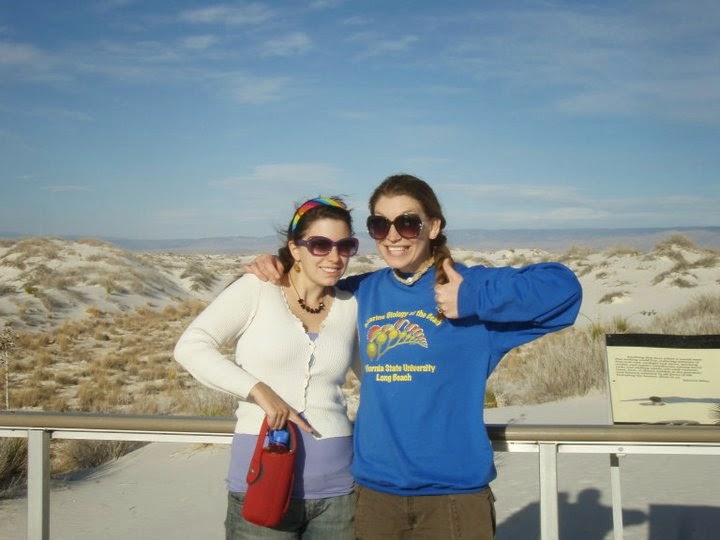
| Hiking after one of my bus trips to visit Meridith in New Mexico. |

 I’m studying for my qualifying exams right now, and I think I’m firmly in the “What if I FAIL?” phase. I really don’t think I’ll fail. But, WHAT IF?!! In either case, I’ll know in about two weeks. In the afterglow of my success or in the I-don’t-give-a-crap phase before deciding on my new career path, I plan to have two days of full on relaxation. Hint, if you come to this blog to hear about actual science things, then now is the time to bow out of this post. Otherwise, here are the things I plan to do when I can close my eyes and not visualize the carbon and nitrogen cycles.



 Sweet Tea, Science