Being an Involved Grad Student

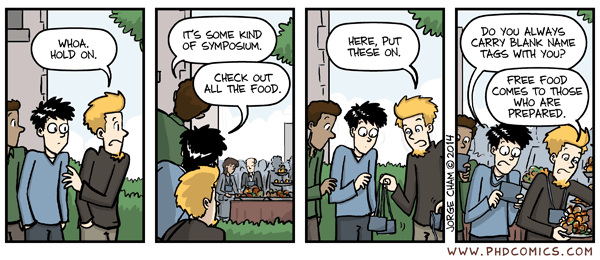
A.K.A How to being involved AND score free meals

I’m a fairly involved graduate student. Rachel is as well. The benefits are numerous, but some of the top reasons we like to be involved include contributing to our respective departments and universities, building our C.V., access to amazing workshops/events/etc, in addition to always knowing where the free food on campus is located! Below are some of our top ways for you to get involved within your own programs!


Check Your Emails

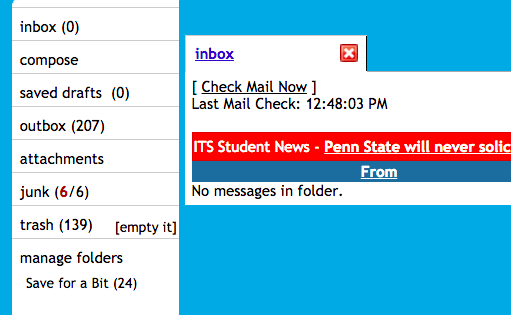
Inbox Success! Now to stay on top of it!

I cannot believe the amount of people in my department who don’t keep up with their inbox! It’s not so scary to peek in and give them all a read. Then also, don’t be afraid to delete them! Granted, I’m on the far other end of this spectrum, constantly checking, deleting, and sending emails to the other students in my department. Zero email inbox is my happy place. Trust me though, there are plenty of opportunities waiting for you to read about in your inbox! I get emails about social events, workshop opportunities, conferences, class announcements, etc.
Free Food Score: 2 out of 5 Pizzas.

Join your GSA (or START one)

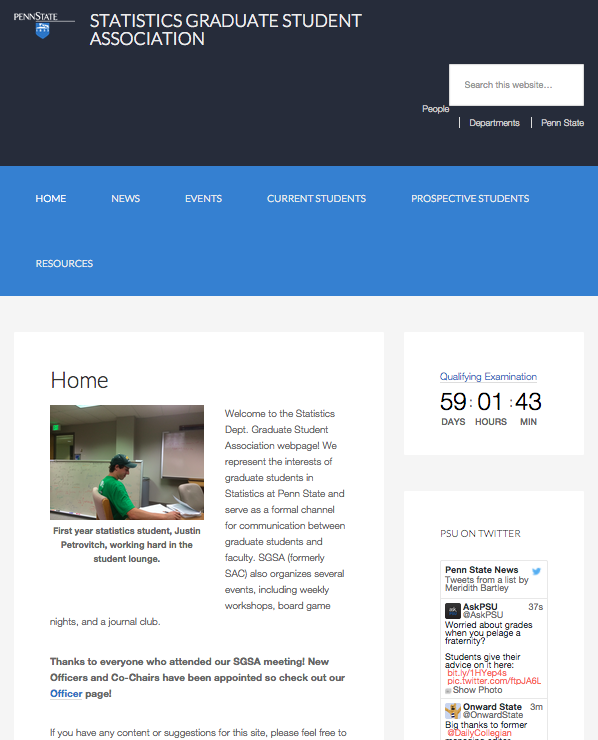
The level of involvement will surely vary between departments, but I’ve found that even my department’s small (and frankly, underutilized) Graduate Student Association is full of potential! When I arrived at PSU our GSA was just called SAC and it was a loosely defined organization with just a string of presidents who took responsibility for organizing a social event every so often. No one really knew what SAC stood for. I think Student Advisory Committee, but it was neither quite a committee nor advisitory. Luckily, we voted at our last meeting to officially change it to Statistics Graduate Student Association! In my short time being involved (since last fall) I’ve served as webmaster and made a bad ass website for us, organized weekly grad student workshops that now have Panera catering, organized a successful laser tag outing, AND been promoted to vice president. I’m looking forward to running for president next year. If your department doesn’t have a group already, ask around and check into the procedures for creating a campus group! It’s a mostly painless process and usually once recognized, you’ll be able to apply for funding.
Free Food Score: 5 out of 5 Pizzas

Check out College/University Level GSA Groups

Often the lifestyle of a grad student dictates that you spend the majority of your time on campus in a very few number of locations, interacting with only a limited number of colleagues. If you’re anything like me then you probably love to nerd about about your chosen field of study and you enjoy hanging out with others who share that passion! It can be hard to meet graduate students in other fields, but once you do it can open a whole new social aspect of your grad student life! Check to see if your school has graduate associations at the college or university level and check out their calendar for events that will draw in students from all across campus. Penn State’s GPSA hosts a plethora of amazing social events, workshops, coffee hours, talks, etc all year long, including a giant end-of-the-year field day for grad students. These organizations are also key for staying informed and involved with grad student rights and issues. Health care is a key issue for everyone insured through their university and there a lots of changes still taking place through the Affordable Care Act. Make sure that your voice is heard!
Free Food Score: 4 out of 5 Pizzas

Note the intimidating countdown until
the hardest test of my life. Blarg.

Be an Officer

The current student associations don’t have quite what you like going on? Be that change you want to see! Get involved. Get elected. Join committees and plan some events to your liking! You can also choose your level of involvement. Remember, everyone else is also a graduate student so they’ll be more than understanding if school, research, life gets more involved. I especially enjoy my role as webmaster where I’ve been able to create web pages through PSU’s partnership with WordPress. It’s much simpler than I anticipated and such a great tool to have learned.
Free Pizza Score: 3 out of 5 Pizzas

Twitter!

Academia is quickly taking over Twitter. I love using it to keep up with current events and issues in science, as well as living vicariously through Anna Kendrick. Even if you don’t want to keep up tweeting from an account, you can still use one to cultivate lists of accounts to follow. I keep a list of accounts that provide relevant Penn State and statistics news so that I can have them on our SGSA website in a convenient Twitter widget. My hope is that even the students and faculty in Stats that don’t tweet (a LOT of them) still have easy access to the information. It’s a great place to hear about research, events, funding opportunities, jobs, free food, and sports.
Free Food Score: 1 out of 5 Pizzas 

Offer to Show Prospective Students Around

You were a young student applying for grad school not so long ago. You remember how nerve-racking the whole process is! Volunteering to take a prospective student out to lunch is a win-win situation. You get to tell them your honest feelings about the program and possibly your advisor (Check out last week’s post for more on this!) so they are fully informed and you both get lunch, usually paid for by your department. My department is having our recruitment day next friday and I can’t believe it’s already been a year since I was in their position. That visit and the emails I exchanged with two students really sold me on choosing Penn State and Statistics for my PhD program. I’m so happy to be here and to have the opportunity to help guide potential new graduate students towards a similar decision!
Free Food Score: 5 out of 5 Pizzas

If there’s anything we’ve missed or if you’d like to share your own experiences let us know! 

Questions to Ask when Choosing a Graduate Adviser

A few weeks back, my graduate group had its prospective student weekend, where all the top ranked applicants get to come and meet professors and current students.  Meeting and greeting all these hopeful students got me and a few others thinking about the process of choosing a graduate adviser.  STS wrote a bit about how to find and contact prospective PIs in the past, but that post doesn’t touch on how to make a decision once you have a few professors interested in working with you.  In many academic fields, your relationship with your major professor is the most important professional relationship you will have for many, many years.  Even when you earn your degree, a prospective employer will still want to know what your mentor thought of you.  So, it’s crucial to choose a person who you feel will not only aid your academic growth, but who you are generally compatible with on a personal level.  You don’t need to be BFFs, but things like having drastically mismatched communication styles, academic expectations, or assumptions about levels of involvement can make the road to degree completion much more hazardous.  And, on a broader scale, it’s really not worth it to work with Bigshot-Publishes-Yearly-In-Nature if they are unkind, unhelpful, or unavailable.


Below, I’ve compiled a list of pretty well every question I have ever asked, been asked, or wished I’d asked during the process of choosing a graduate mentor.  I’ve divided it into three main groups:  questions to ask the professor, questions to ask graduate students in their lab, and questions to ask any graduate student in the program.  You certainly don’t have to ask all these things, but do a little soul searching beforehand and think about what really matters to you.  You are making a commitment to work with someone regularly for the next several years.  Sure, they are interviewing you, but you are also interviewing them.    


Despite the fact that this list is long, it’s obviously not exhaustive.  Give more suggestions in the comments below!        


Questions to Ask the Professor


Okay, it’s time to put your big-person pants on and get serious.  Asking thoughtful questions will make you more memorable, and nothing is worse than getting to that point in the interview when they ask, “Do you have any questions for me?” and coming up dry. Plus, this is going to be one of the most important people in your life for the next 4-6 years. When I was having these talks before choosing a PhD program, I compared it to going on lots of first dates.


What can I expect from you/the program as far as funding and support?
I know it’s awkward, but it’s very important and it shows you mean business when you ask about money, so just do it. Make sure and think long term.  Don’t just worry about year one, ask how you might expect to be funded for the entire duration of your degree.  Answers like, “I expect my students to apply for external fellowships.” are normal, but it’s good to know that sort of thing up front.   
What can I expect as far as lab or field support?  Do they employ technicians or undergraduates?  Are these employees tied to certain projects exclusively?
It’s nice to know if there is a lab manager who knows where all the equipment is kept and what sort of condition it’s in currently.  You also want to feel out the availability of undergraduate employees and volunteers.  
How would you describe your mentoring style?
Are they hands on; are they hands off; do they view themselves as more of a boss or someone who is working with other (albeit young) professionals?  You can compare how they describe themselves with how their students describe them.
How many students do you plan on concurrently mentoring?
Code for, “How much time will you have to support me when I need you?” or “How many other people do I have to fight for your money?”
What are your day-to-day expectations?  
Some advisers want to meet once a week, some once a month, some only when you need them.  Some people expect to see your face everyday and to know where to find you from 9-5 at the least.  Others will be fine with you working from home.  This is another chance to see if your personal style matches with this professor’s.
What type of skills do you expect me to come in knowing or expect me to learn during my time in your lab?
If they expect you to know R, SAS, ArcGIS, or a set of field skills and lab techniques before you begin, that’s important information.  It’s likely they would have weeded you out via some of these things, but if not you need to be aware. Also, if you didn’t already know what they expect during your degree, you can see if those expectations align with your interest and goals. Bonus points if you ask what resources are available in the lab/program/University for acquiring these skills.
How often and when in their graduate careers do students in the lab publish papers?  What are your views about authorship on papers with students?
Are they first author on everything to come out of the lab?  Are there big lab projects that everyone is involved in and get’s to be part of writing up?  This is also another good gauge of the PI’s expectations of you as a student.
Thank you for meeting with me.  What are the next steps I can expect?
So, you liked them.  It’s fair to ask when you might hear something, or what contingencies acceptance of your application might depends on, such as departmental funding or pending grant applications.


Questions to Ask Graduate Students in the Lab:


This is equally as important as talking to the professor themselves.  A few pro-tips.  Talk on the phone or in person.  People are more likely to be honest and candid when they don’t have to write it down.  If you can, try to talk to students who have graduated; they have nothing to lose by keeping it real. Just like PIs, graduate students will ask you what you’re interested in and what your experience is. Have something intelligent prepared to say (remember, your expressed interests are not a binding contract!); sometimes professors ask members of their labs for opinions about you later.

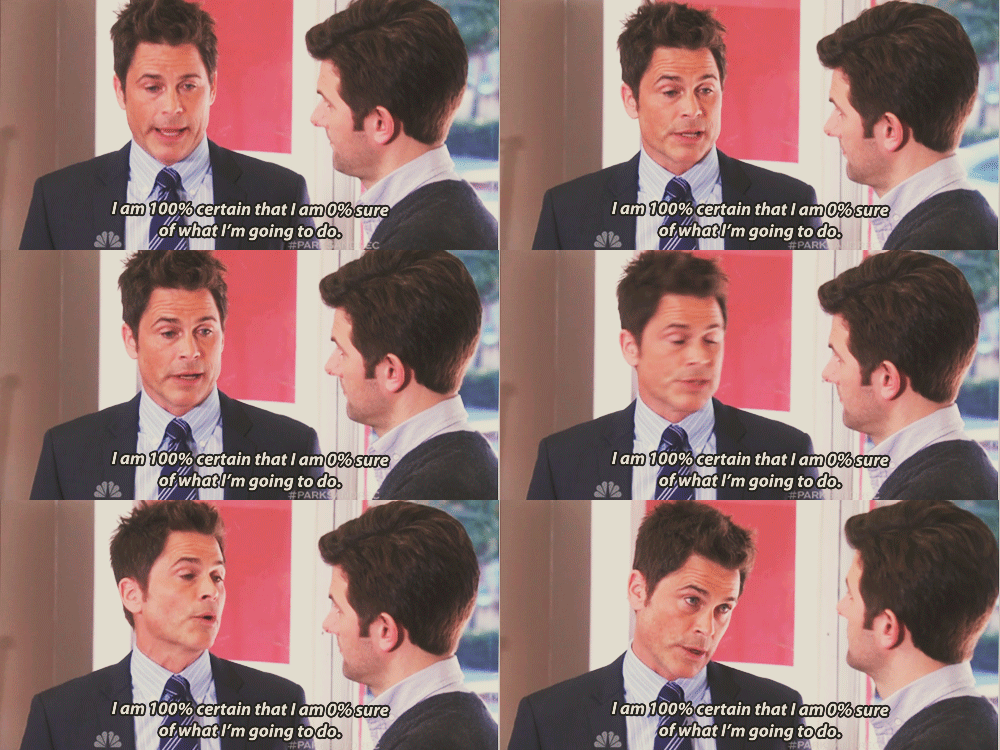
Don’t be this Rob Lowe. 
Can you describe your research?  How do you feel fits in with the PI’s research program?
This is a polite question to ask, and it will help you gauge other questions this student might have specific insights about for you.  It can also give you hints about lab structure.  Does the PI only choose students who study things closely related to their own work, or are they more open?  
What is the PI’s advising style?
Are they hands on; are they hands off; do they view themselves as more of a boss or someone who is working with other (albeit young) professionals?  You can compare how the students describe them to how they describe themselves.
How would you describe your working relationship with the PI?  With other students in the lab?
You want to find out if people collaborate in the lab group, if the PI is active in providing feedback, and if that feedback is generally helpful and constructive.  Similarly, in graduate school, you learn just as much, if not more, from your peers.  So, do other students in the lab collaborate or work share?  Do they give helpful feedback on your ideas and work?
Do you find the PI to be approachable?  
True story.  Four days before my QE exam I tapped on my mentors door and had an unannounced, mini- breakdown, minus the tears thank God.  I think I might have actually exploded if I hadn’t felt I could go to him for reassurance and support.  It doesn’t have to be that extreme, but you do want to know if students feel comfortable approaching their major professor.  You need someone you aren’t afraid to feel stupid in front of, because feeling stupid is what grad school is all about (spoiler).  
How does the major professor deal with conflict?
Are they direct and reasonable?  Are they passive aggressive or bat shit?  This is very, very important.  
How often do students start in the lab and not complete their degrees (they choose not to continue in the program, change labs, change programs, etc.)?
If the last three PhD students have moved on without getting their degrees, it might not be a problem with the students.
What is the lab culture like?  How often do you have lab meetings, and what are they like?
You want to know if students are competitive with one another, which can be a good thing or a bad thing depending on what you like.  You want to find out how much lab members collaborate, hang out, or work share.  Asking about lab meetings can be a good way to gauge how the lab interacts as a whole.
Did you TA/RA?  How difficult is it to secure TA/RA positions?
This will depend on the answer the PI gives you about funding, but if you’re going to need to TA or RA, it’s good to know how difficult it is to get those positions.  It’s also a good idea to ask about the application process, because you’ll generally have to do this for your first year before you even arrive on campus.
How often do members of the lab travel to workshops or conferences?  Which ones do you generally attend?  Is there lab/program/University support for travel?
Have I mentioned that knowing about money is important?  Here is another example of that fact.  Conferences are important to your professional development, so you want to know the conferences lab members are attending and how they pay to get there.  


Questions to Ask Graduate Students from the Program at Large:


In my view, who you work for is the most important choice, and the reputation of the program is secondary.  However, there are some things students outside of the lab you are applying with can tell you that can be very helpful in making a final decision.


Do you know students in Professor So-and-So’s lab?  How do they seem to like it?
It’s unlikely that an outside student will be really honest with you concerning their views of other professors.  But, they might give helpful feedback about the general mental state of students in that lab.  I’ve heard this question answered as “They seem happy,” “It seems like that professor has really high expectations,” or “Students in that lab are very productive!”
How would they describe the culture of students within the program?  
Are students within the program competitive with one another, or is the atmosphere collegial?  My own opinion is that you want to come out of your graduate education with a bunch of smart colleagues, not a bunch of people you have been trying to outdo for 4-6 years.     
How would you describe the attitude of professors toward students in the program?  
Are professors within the program competitive with one another, or is the atmosphere collegial?  This will obviously influence the attitude of the students in the program.  You also want to gauge how easy it is to collaborate or meet with professors other than your major professor.  Is there an open door policy?  Do professors generally make time for students?    
How would you describe the administrative and University support available to the program?
Is there a great office staffer who knows all about all the paperwork?  Is the person who administers grants for your graduate group super helpful, or not?  If students generally feel like they struggle to find answers for programmatic questions, that will be a pain you should be prepared to deal with if you choose that program.  
Is there an active student group for the program or for graduate students at large on the campus?
Ideally, you want there to be a feedback mechanism between the students in the program and the faculty, staff, and administration.  A good student group provides this.  A situation where you have a voice is always a better situation.  
What is the social scene within the program?
Sometimes, graduate school will make you feel like a cotton-headed ninny muggins. If students get together for happy hour, play intramural sports together, or love game nights, it will give you a chance to check in with other people who are sharing your experience.  Because you are not a cotton-headed ninny muggins. 
  

Citizen Science: What, Why, and How

This is a post I’ve been intending to write for a long, long time.  It’s a lot easier to write about my day to day life as an ecologist and PhD student.  In fact, any time I turn my computer on to write something that isn’t about me or about my personal research, I get this super intense surge of imposter syndrome.  I’ll stop the unnecessary preamble there for now.  It’s just my attempt to keep my writing in this space authentic, as I think it’s important to be honest about the struggles we face, even if they are mundane (Ermahgerd, writing a blog?  What if someone *gasp* reads it?!)
____________________________________

Training citizen scientists out at Stebbins Cold Canyon UC NRS

 The term citizen science has been buzzing around in scientific circles for a number of years now.  When I first drafted this last week, the first annual conference of the Citizen Science Association was just wrapping up in San Jose, CA.  This conference showcased the amazing body of scholarly research concerning citizen science, which is telling us a larger and more coherent story about the practice every day.  I have had the pleasure of working with professional scientists and educators whose whole course of study revolves around the design and training of participants for these endeavors.  I will offer here the briefest of introductions based on my own reading and experience and a little anecdote about a citizen science group I help facilitate in my area.  For a peer-reviewed take on the matter, look to the fabulous overview by Bonney and colleagues’ from 2014 in Science (so it’s short and sweet) entitled, Next Steps for Citizen Science1.

What is Citizen Science anyway?


First things first, what is citizen science anyway?  Well, first of all, it is science.  That’s a major point to emphasize.  Data collected by these projects should answer scientific questions or test specific hypotheses.  Second, this is science being performed by individuals who are (in most cases) not formally trained as research scientists.  There is a huge variety within the citizen science genre, but, in my experience, most projects fall into three main categories:  atlas/survey, monitoring, and manipulative/experimental.  


Atlas or survey projects use the increased person power provided by citizen scientists to attempt to catalog all of something.  Whether it’s ants in your backyard, critters in a park, or bees in your garden, these sorts of projects tap into our collective observation skills to gather useful data about when and where things occur.  For me, personally, online games that help map things (proteins, neurons!!) fall into this same category.  Others might disagree.  These sorts of projects don’t generally ask you to make observations at any set interval, they just want to know what you saw.  Monitoring based citizen science projects are also observation based, but time and place are more important.  Most monitoring projects are hoping to capture any changes that are occurring over time.  These changes could be in timing of events, composition of plant and animal communities, or an indicator of environmental health.  Actual manipulative citizen science projects are more rare, and tend to occur in conjunction with specific researchers.  If anyone has cool examples of projects like these, put them in the comments below!  And, because things rarely fit into three neat little categories, feel free to share other examples.     


Wait, is Rachel out of a job now?


Expanding leaves. Photo Cred: Allie Weill,
hand model Rachel Wigginton
Some might ask the point of such a practice, as scientists, myself included, spend years training to do what we do.  I wanted to point out here at the get-go that there are many studies looking at the accuracy of data collected by citizen science projects (see 2, 3, and 4 for examples), and with proper training, data collected by these projects can absolutely be used to answer scientific questions1.  So, formally trained scientists are still needed to design the protocols, set-up sites, and perform proper training for volunteers.  I can tell you from personal experience, doing this is a lot of effort up front.  There are also the back end costs of coordinating volunteers, keeping citizens engaged in the project, and curating the data that is gathered.  That said, I’m clearly not out of job thanks to these projects, but why would I even bother?


There are a few really great incentives for scientists to make citizen science work.  First, and non-research related, you are doing some amazing outreach.  We all remember that moment during our scientific training when things started to click, and I can almost 100% guarantee you that “click” didn’t come in the classroom.  It came when you were taking your first baby steps into actually doing science.  By working with citizen scientists, you are allowing people who might never get to have a hands on experience with science to get up close and personal with a study system.  You will be amazed how quickly these citizens start thinking like scientists.  I can imagine few things more gratifying than having a volunteer tell you a project has changed how they look at the world.   


The second, and totally research related, reason to get involved in citizen science is the increase in data resolution these sorts of projects afford to us.  Certainly, myself and a few intrepid undergraduates will know a lot about native Spartina restoration in the SF Bay by the end of my PhD research (at least I hope!).  But when we attempt to scale up, both in time and space, it’s hard to get a handle one some questions without a bigger team.  Think about one of the oldest citizen science project, the Audubon Christmas Bird Count.  Obviously, no single researcher or even a team of researchers, could have maintained that many survey points each year or kept observations going all the way back to 1900!  And before you start poo-pooing all this data, return to my above comment.  With the proper training, citizen science data can be used for papers that get published in peer reviewed journals.  Take, for example, the 90 or so publications based on data from eBird1.  We need to stop seeing citizen science as just a way to pad a broader impacts statement and start treating it as a scientific opportunity.   


The inspiring folks of the CPP Stebbins
Case Study: California Phenology Project at Stebbins Cold Canyon


Now, I’ll be the first to admit that not every research question, or even every research program, has an appropriate place for citizen science to fit.  Like every tool, there is no need to make a round peg fit a square hole.  For example, I work in a very sensitive habitat type on plants and invertebrates living in the soil.  There are several endangered plants and animals in my system.  Getting citizens involved in a meaningful way isn’t in the cards for me, at least not yet.  So, here is my pitch for why, even if you can’t address your own research, you should still stick a toe in the citizen science pool.  


During the spring of the first year of my PhD program, I was working on a Conservation Management degree certificate.  This certificate entails taking some course work, which I was going to take anyway, and doing a group project.  Our group was approached by some staff from the UC Natural Reserve System, who had a bit of extra funding for a community outreach project.  We decided a citizen science project would fit that bill.  So, in the fall of 2013, a group of students and two faculty advisers (one ecology, one education) started meeting to discuss what sort of project would fit well at our nearby UC NRS site, Stebbins Cold Canyon.  Stebbins is unique for several reasons.  First, it’s one of the few UC NRS sites that is open to the public, with some pretty stellar hiking trails.  Second, one of the said hiking trails recently got listed on some online hiking forum, and the rate of visitation has gotten pretty high in the last few years.  Last, most of those visitors have no idea that this is a research site where science is actively happening.

We went through a large list of existing citizen science projects and also emailed all the researchers doing work out at Stebbins.  We really wanted to make sure any data we gathered ended up with a scientists at the other end.  There is already a complete species list for the site, so we nixed any atlas style citizen science projects.  In the end, we settled on starting a new site for the California Phenology Project, which is a subset of the National Phenology Network.  This project is part of a nation wide effort to capture changes in the timing of life events for plants and animals (ie: phenology) as they relate to climate change.  I think this is a prime example of the type of question that can really only be addressed with a literal army of data points.  


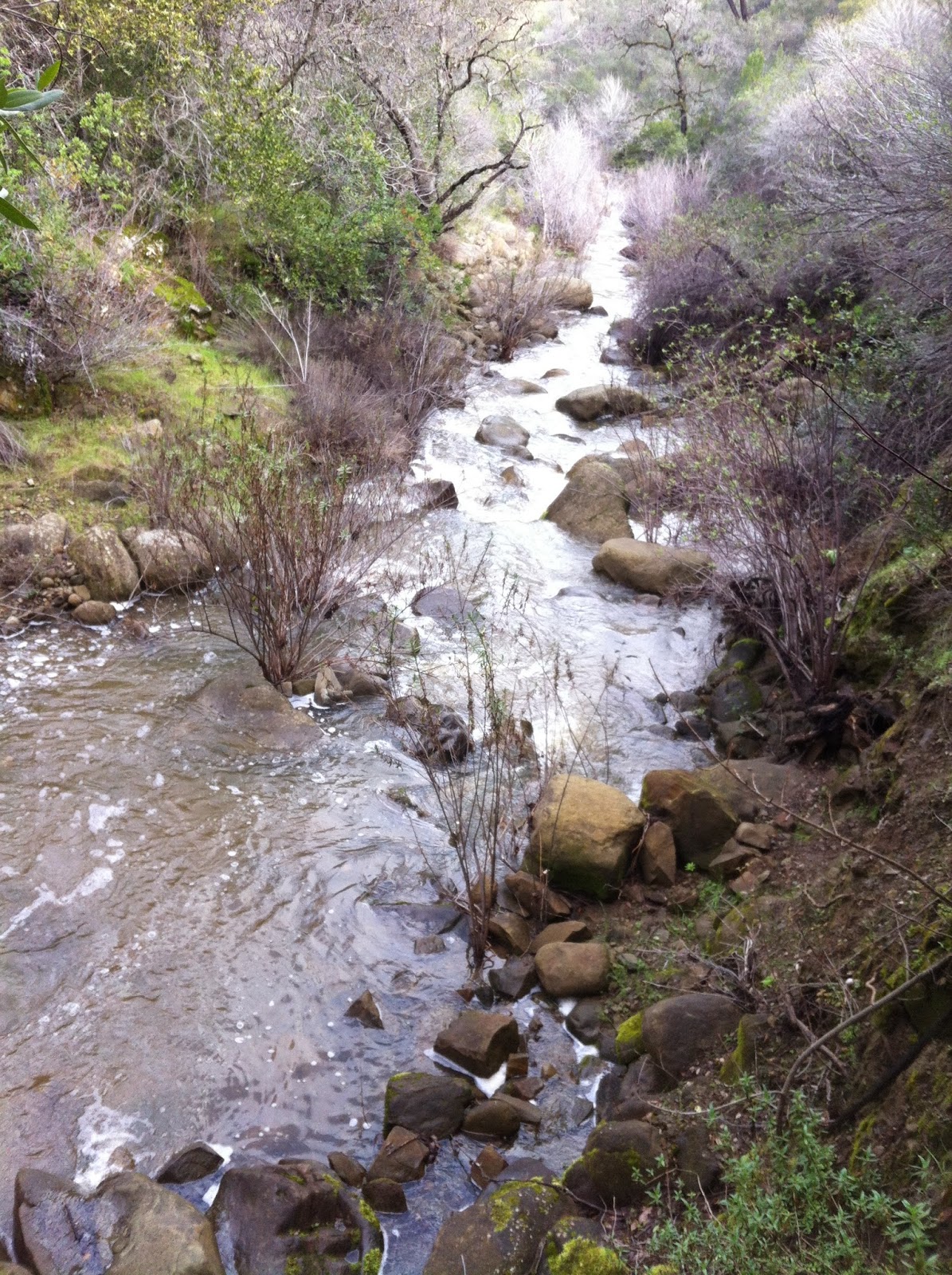
Water in the creek at Stebbins Cold Canyon UC NRS
If you foolishly think, like I did, that simply starting a new site for an existing project wouldn’t be that much work, you’re very wrong.  Because this is such a well thought out project, with some pretty specific scientific questions, the requirements for establishing a phenology trail are fairly in depth.  Then you have recruiting and training volunteers, making sure they are entering data, coordinating all the monitoring sessions, etc., etc., ect.    


And if you’ll recall, this isn’t even the system I study.  I don’t even really study climate change.  But you know what, being involved with this project has been one of the most rewarding parts of my graduate career to date.  First, I feel like I’m really addressing the needs of a land manager (UC NRS) by educating visitors about the scientific use of Stebbins.  Not only do our volunteers now know tons more about the site, but they are always telling us about conversations they have had with others on the trail.  More importantly, I absolutely feel like our team has helped to change the world views of all our volunteers.  I feel as though I have seen these people start to think and interact with the world like scientists.  They have told us they notice the differences in flowering times between locations.  They think about what our recent rain storm will mean for the phenology of the plants up at the canyon.  They note the differing amounts of pollinators on plants at different phenological stages.  I could go on.  It’s magnificent.  And very, very humbling.  Because sometimes, I forget to be awed by the first Toyon berries of the year, then we get an email from a volunteer, who is so excited to be the first one with a “yes” data point in the ripe fruit column.  


We have started to see conference presentations utilizing the NPN and CPP data sets.  This is real science ya’ll.  


Sold.  How can I get involved?


As a scientist, you can start your own citizen science project to assist you with your research!  Look for the standards and best practices explained by the Citizen Science Association.  Or, you can do like we did, and expand an existing project.  If you are an interested citizen, look for a project going on in your area.  Zooniverse is a great online repository of the many, many projects going on right now.  There are all levels of involvement, from coding video from the comfort of your own home, to hitting the trail with a data sheet after a weekend of rather intense training.  


And hey, if you are a scientists or a citizen who wants to get involved with the CPP at Stebbins Cold Canyon, check out our website and shoot us a line!  We’d love to have you on our team.

1. Bonney, R., Shirk, J. L., Phillips, T. B., Wiggins, A., Ballard, H. L., Miller-rushing, A. J., & Parrish, J. K. (2014). Next Steps for Citizen Science. Science, 343(March), 1436–1437.
2. Crall, A. W., Newman, G. J., Stohlgren, T. J., Holfelder, K. A., Graham, J., & Waller, D. M. (2011). Assessing citizen science data quality: an invasive species case study. Conservation Letters, 4(6), 433-442.
3. Delaney, D. G., Sperling, C. D., Adams, C. S., & Leung, B. (2008). Marine invasive species: validation of citizen science and implications for national monitoring networks. Biological Invasions, 10(1), 117-128.
4. Galloway, A. W., Tudor, M. T., & HAEGEN, W. M. V. (2006). The reliability of citizen science: a case study of Oregon white oak stand surveys. Wildlife Society Bulletin, 34(5), 1425-1429.
5. Gardiner, M. M., Allee, L. L., Brown, P. M., Losey, J. E., Roy, H. E., & Smyth, R. R. (2012). Lessons from lady beetles: accuracy of monitoring data from US and UK citizen-science programs. Frontiers in Ecology and the Environment,10(9), 471-476.