 |
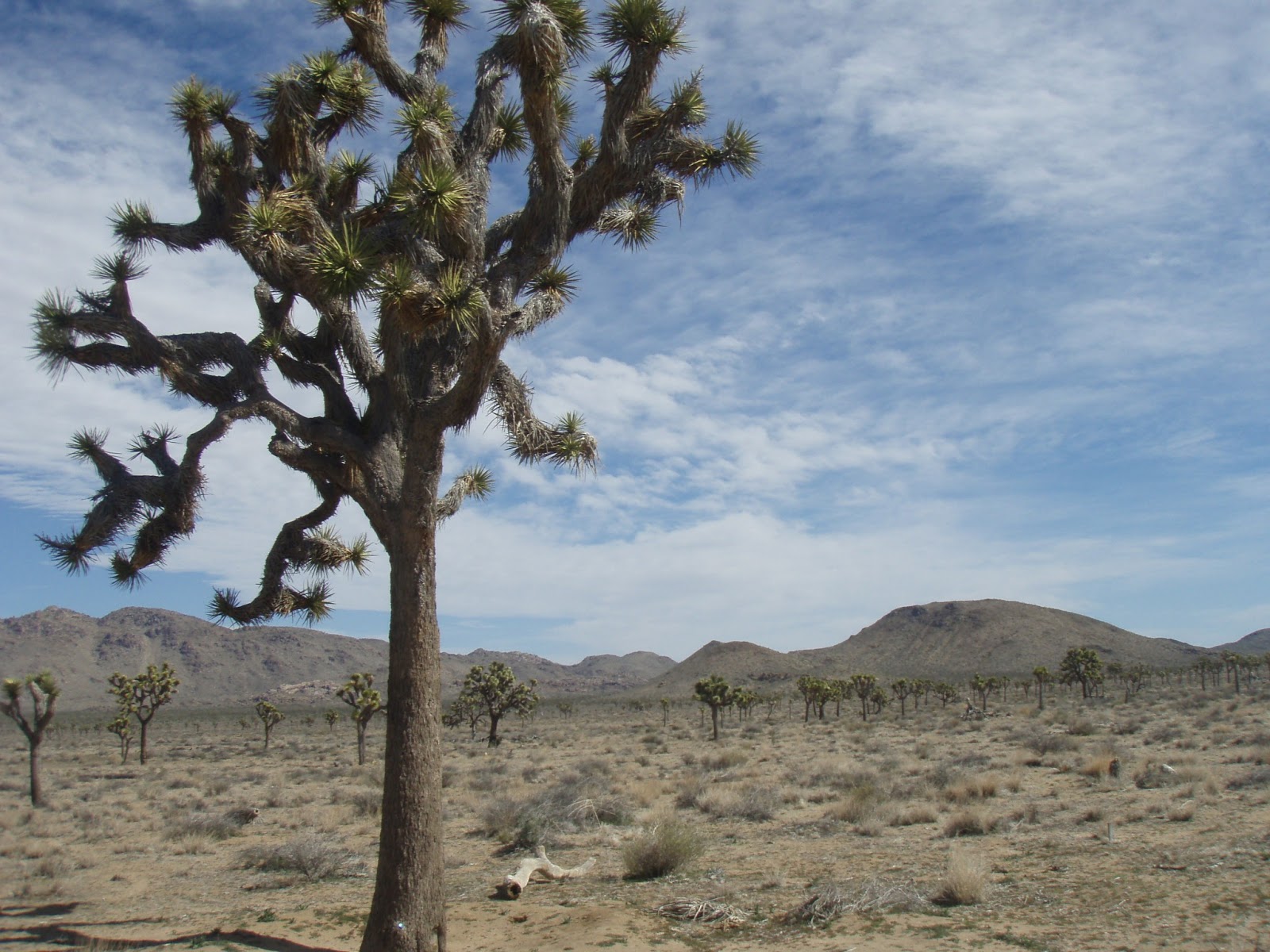
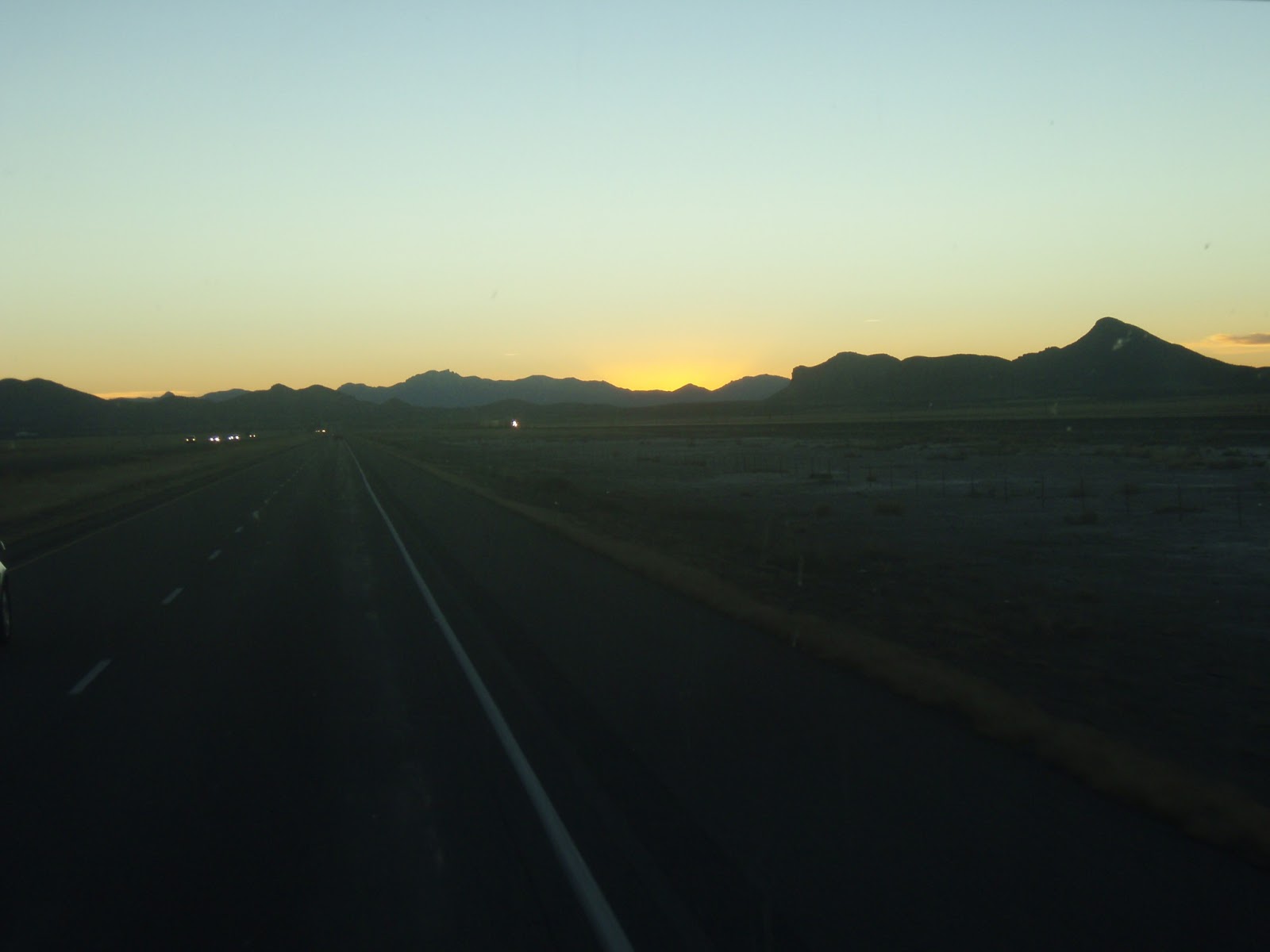
| My Greyhound view on the 20hr trek between NM and CA. |
As a preface, this is part one of a two part post about my recent trip home to Kentucky. Part two will take the more traditional form of my other Low Impact Travel (LIT) posts where I discuss my adventures and the little ways I try to alter my travel behaviors to reduce my ecological impact. However, I wanted to take some time and space to talk about an issue which often troubles me, how and why we choose our means of transportation. Please note that while this post does contain some science, it’s mostly my own opinions and rational. It should be taken as neither fact or prescription, and is simply the conversation I have been having with myself for the past 4 years, converted into essay form.
Part One: Some Science
I don’t know if you’ve noticed yet, but I travel a lot, and I really enjoy it! I am, however, generally conflicted when it comes to the subject of plane travel. It’s a pertinent topic considering the new study published in
Environmental Science and Technology last week (for some good summaries of the study you can look here or here, but I suggest you read the paper). The study’s authors Jens Borken-Kleefeld, Jan Fuglestvedt, and Terje Berntsen offer very accurate estimates of the climate impacts of different modes of long distance travel (in their study 500-1000 km) by comparing impacts at 100% vehicle occupancy vs. average occupancy. They also expand the definition of “climate impacts” to things beyond simple CO2 emissions, though no matter which measure you examine, the story is relatively
consistent. Spoiler alert, plane travel loses big time, every time. Now, allow me a moment of European envy. One of the options in their study, high speed electric rail, boasts
zero grams of CO2 emitted per vehicular kilometer. Obviously, that is just based on the fact that these trains don’t have tailpipes, and who knows where that electricity is generated, but trains lack some of the fundamental climate impacts included in plane travel such as the creation of cirrus clouds and the indirect production of ozone. So, plane travel, not so good…yet I’m going to try and write a low impact travel post in which I take a plane? It seems mildly disingenuous to me. The thing is, I know that lots of people face these same sorts of problems. Obviously, I need to visit home. It’s good for my mental health, I adore my family, and I don’t know if anyone else has had a southern mother but…even if I didn’t want to go home, I would. So allow me a moment to try and work through this moral quagmire here, in this forum. I’m going to use my potential trip home over Thanksgiving to make this a bit more tangible. Admittedly, holiday pricing sort of skews the picture for us, but that is when most people do most of their long distance traveling, so I feel it’s appropriate.
Part Two: Time, Money, and Convenience
 |
| This is how Clark Gable and I prepare for train travel. |
First, let’s break this problem down economically based exclusively on the upfront cost of travel. When I first moved to California, I had some pretty romantic visions of myself boarding a train and chugging the 2264 miles back to Kentucky for the holidays. I might also have envisioned myself in some pretty excellent period garb; I might also have been riding on the train with Rhett Butler. That’s beside the point, because in 2013, taking the train in the USA is not substantially cheaper (or cheaper at all!) than plane travel in many cases. For example, this coming Thanksgiving, it will likely cost me around 450 dollars to take a plane to and from home for the holidays. The train would cost me about 500 dollars (included in this cost is the necessary bus from Chicago to my final destination). Taking a bus all the way across the country would run me only about 375 dollars. If I drove my car, by myself, it would cost me about 393 dollars. I suppose this part isn’t super surprising and matches up relatively well with the findings of Borken-Kleefeld et al. (2013) who found coach (that’s European for bus) travel to pose the lowest climate impact. So, hooray, the cheapest form of travel is also the most environmentally friendly. That’s a good thing. The fact that the train costs more than the plane in this case is probably partially due to timing and partially due to the fact that I’m not just traveling between two major Amtrak hubs. But how many people are just going between LA and Chicago, for example?
So, let’s say you, like myself, don’t mind the bus and love saving money. Maybe you’re leaning toward a Greyhound trip for your next adventure. Let’s now expand the analysis past just upfront costs, and things get a little more complicated. For my long distance holiday travel, I’d say driving alone in my personal car is out of the question. It would take me about 33 hours, so I would need to pay for lodging (a hostel or a campsite at about 20 dollars a night) and I would have to get my oil changed and what not before and after the trip (another 80 or so dollars). After taking these things into account, driving is about the same cost as a flight or train travel. According to the study, gasoline cars, even at maximum capacity, were second only to airplanes in their carbon impacts. So let’s just throw that idea out. Then there is the seemingly appealing option of taking the bus. To get me home for the holidays, I would be in transit via bus for 2 days and 6 hours. I don’t know about you, when when I take a long trip, I’m always very tired afterward and need a day to recoup, so that’s essentially three days lost on either side of the vacation, or almost a whole week! Let’s say you get paid 10 dollars and hour, that is a net loss of 480 dollars if you can’t work remotely. Okay, so maybe for such a long trip, Greyhound isn’t what we want. What about the train then? To get me back to KY from CA would take almost 66 hours via train, or almost three days. So, the train takes longer than the bus. An advantage of the train, however, is the free WiFi and more comfortable seating where one could, potentially, get some work done. Last, we have plane travel, which could get me back to KY in as little as 5 hours (no counting transit to and from the airport). So I only lose two or three days to travel (depending on recovery time), and a lot of planes and airports have WiFi now, so I could even work in transit.
Okay, so up to this point, this essay might seem a little…unusual based on my general content. And that’s a fair observation. The truth is, I
want to advocate for coach and rail travel, I
want to say that I never fly because I know how bad it is for the environment, and I
want both those statements to be true. Unfortunately, that’s just not the case. So, where do we go from here? I think I have quoted
Colleen Patrick-Goudreau previously, but she often says “Don’t do something because you can’t do everything.” I think that applies here. So, what to do? I think we must all apply some careful time and thought to how we move around the world. Consider your personal circumstances carefully. After all, convenience cannot be the only factor when making choices…that’s sort of how we got into our current environmental mess. Based on my own personal reflections, I do have some recommendations, but I encourage each of you to do individual research and make choices based on your own knowledge and morals.
Part Three: A Practical Ecologist Guide to Transportation Selection
1. Traveling with friends who don’t dig alternative transportation? Carpool every time possible in the most fuel efficient vehicle available. Squeeze in, sit close, just do it. Appeal to their wallets, that generally works.
2. If you are traveling somewhere nearby, maybe within the 1000 km (about 620 miles) range proposed by Borken-Kleefeld and colleges, I would strongly advocate that you take the bus. I’ve taken quite a few regional Greyhound trips, the longest lasting about 20 hours, and they aren’t as bad as you probably think. I’ve met some really nice and interesting people, and I got to see parts of the country that you just miss when you are traveling via plane. And hey, if you have a job where you can work from your computer, you don’t really need the internet, and you don’t get carsick, you can probably take the Greyhound just about anywhere you want to go!
3. If you are traveling regionally or if you have a flexible job which allows you to work remotely, take the train! The seats are comfortable, the views are great, and the free WiFi is pretty speedy. Once I am done taking courses, I have big plans to do this for the holidays. At that point, my office will be my computer and I’ll have a lot more freedom to take transportation that is less efficient time wise.
4. If you have a job that really requires your physical presence or gives you limited flexibility in vacation time you really have two options: don’t take the trip at all or hop on a plane. While I know that some people might advocate for the former option, I really don’t. I do, however, advocate that we make our plane travel as efficient as possible. Carpool or take public transit to and from the airport. Try to avoid buying bunches of plastic-packaging while you’re on the move (
etc. etc. etc.), and make your trip count! When I’m on the other side of the continent, I try to see as many of my friends and family as possible, even if that requires the occasional Greyhound up to Chicago for a weekend.
5. Purchase carbon offsets when you are forced to choose the less efficient mode of transportation. This could be a whole post later, but make sure you do a lot of research before purchasing an offset and don’t fall into the trap of using more carbon because you plan to purchase an offset later. Carbon offsets are by no means a perfect system, but they are a tool we currently have at our disposal. Alternatively, calculate how much you would have spent on a carbon offset and donate that amount to a environmental/conservation NGO of your choice.
 |
| “You take your car to work, I’ll take my board..” ~Weezer |
Last Word: In closing, I would like to remind you (and myself) not to lose faith. Changing technology and infrastructure could really alter things. That’s why it is important that, whenever possible, we vote with our wallets and support the industries in which we believe. We cannot let convenience be the only factor that drives our choices. It’s also really important to remain realistic about the impacts our personal choices have, for both the good and the bad. It’s easy to say that plane travel is less efficient than train travel, but it’s more difficult to translate these things into the currency of our daily lives. Last, recall that this conversation becomes even more important when we consider our daily travels which can easily add up to have more substantial impacts (for the good or the bad) than our holiday or vacation travel. I would argue that choosing the most fuel efficient way to get to and from work daily might be even more important than how you get home for Christmas.
What do you think? Should convenience play no role in our transportation decisions? How do these conflicting factors play out in your life?


























 Sweet Tea, Science