Guaranteed to Lift You Up

No long post today. My thesis needs some undivided attention.

However, in an effort to not leave you empty handed, please enjoy this video as much as I did.

If I’m ever lucky enough to have such an experience I hope it’s caught on tape so I can share it.

Question of The Day:
What are some of your more memorable experiences to date?
What are some you hope to have?

Scale Matters: Applying the Concepts

If you haven’t checked out Monday’sTuesday’sWednesday’s and Thursday’s blog posts, it’d be best to start there! This week we’re having a series of posts discussing scale and size. I’m hoping you all still have your imagination hats handy. 

The concepts we’ve learned about during this week’s series, space and time, hold a very important role within scientific research, more specifically, within experimental design. We may also refer to these aspects as spatial and temporal factors, respectively.

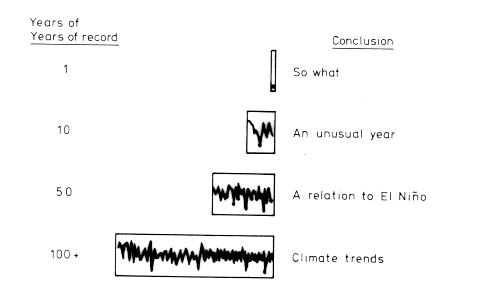
An important question to ask in research: So What?

Researchers need to be very mindful of these scales when asking their research questions. This questions will lead to treatment  and experimental structure.

When scientists study genetics, they use fruit flies and not elephants. Life span is important.

When entomologists study insects, they often have to consider multiple life stages that occupy both aquatic and terrestrial habitats. Some insects live days, while some may live over a decade.

When climate researchers collect data, they do so over centuries. Perspective related to time is important. Repetition is vital to minimizing experimental error.

100+ years is a long time! Certainly longer than any one researcher could record. (Dang, that would be one heck of a PhD project). However, as science is a field of collaboration, communication, and networks, people have found a way to develop approaches to address the limitations our lifespans present. Long Term Ecological Research (LTER) is currently being conducted at 26 different sights in the U.S. that spans multiple ecosystem types, environmental conditions, and varying levels of human domination of the landscape.

Different Scales within Research

Grand Canyon Temporal Scale – Click for Full Size

But even looking at data that span a hundred, or even a thousand years becomes less impressive when you start talking to a geologist. A great way to visualize the time frame geologists must consider is to imagine the layers of rocks in the walls of the Grand Canyon. Geologist can match each rock type and layer position to a point in our Earth’s history. The further down the rock layer, the older it dates. 
You may also confer with a planetary scientist. Or an astronomer. Even a cosmologist. They deal with temporal time scales that stretch back millions or billions of years. Even to that very first moment, the Big Bang. 

This week has been a great experience for me. I’ll try and do series like these every so often. Next week, we’ll return to more sporadic topics for posts. Feedback on these posts is greatly appreciated. Just a head’s up, the next application announcements may occur this week. ‘Mid-April’ is a little vague, but I’m feeling very optimistic. Keep reading, sharing, and commenting if you’d like to read along while I’m on (fake) Mars!

Questions of the Day:
If you are a scientist conducting research, what are some of the spatial and temporal scales that you’ve had to consider?
If not, can you think of the spatial and temporal scale necessary if someone wanted to study you?

Further Reading:
Implicit Scaling in Ecological Research
Choosing appropriate temporal and spatial scales for ecological research
Relative Importance of Spatial and Temporal Scales in a Patchy Environment
Expanding the Temporal and Spatial Scales of Ecological Research and Comparison of Divergent      Ecosystems: Roles for LTER in the United States

Stuff Your Face Saturday

When you are a grad student, weekends take on a whole new meaning. Especially when you are nearing your Defense Date. Weekends become those enjoyable 2 days where you can be in the lab all day with no one around to distract you. (I really think I might be the only person in my building right now.) Also, you get to park anywhere!

Working on campus is certainly not the most ideal way to spend your weekends, but this time of year is crunch time. You may think you have plenty of time to finish everything, however something will always come up. Other students are defending, taking their comprehensive exams, and celebrating their victories and you’ll want to take time out of your day to attend or celebrate with them! Certainly others be doing the same when it’s your turn at bat.

Once you are sucked into research and thesis writing to this degree, it becomes harder and harder to find time to feed yourself. You may find yourself drawn to fast food and junk food, because of its convenience. But, if you make time in the mornings and evenings to prepare snacks and meals in advance, you may still have enjoyable, healthy food to keep you going.

Here are a few tips and ideas that have helped me:

Prepare Ahead of Time
I can be very bad about just wanting to lay down and relax after the day is over. However, I also want to lay in bed until the last possible moment the next morning. Something has got to give. How hard is it to whip together tomorrow’s lunch though? A sandwich. A salad. Some quinoa and whatever delicious things are around the kitchen.


Snacks

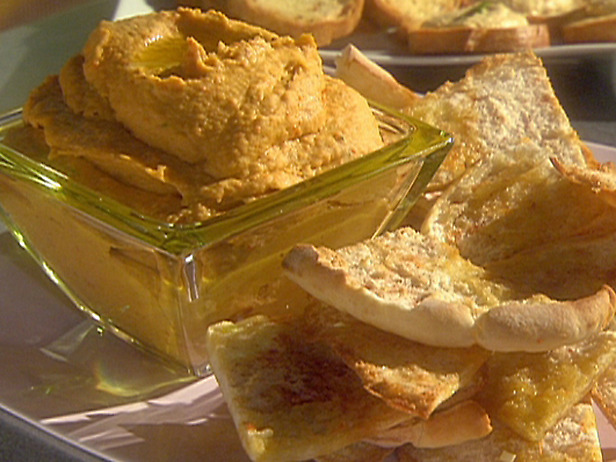
Red Pepper Hummus

Try bringing some of these with you in some reusable containers:

  • cut up veggies and hummus 
  • chips and salsa
  • peanut butter and apples
  • crackers and spread
  • hardboiled eggs

Leftovers
Never underestimate the power of leftovers. Getting full while dining out? Don’t keep eating just because its there, ask for a box or some foil. BAM – tomorrow’s lunch. Also, don’t be afraid to make a recipe larger than you’ll need for that meal. You can store it in meal sized containers that are easy to grab for lunch on campus.

Curry

Crock Pot Breakfasts/Dinners
Slow cookers can be your best friend. All you have to do is throw a bunch of ingredients in and when you get home dinner is waiting for you. I’ve enjoyed making vegetarian chilies, pasta sauces, curry, and beans in my crock pot. I also have a list of recipes waiting to be tried. Including an apple pie oatmeal.

Questions of The Day:
What do you do for meals during your busiest days?
Will you try any of the tips here? Tell me how it goes!