
Preamble: I feel some of these “Low Impact Travel” posts are going to get a little repetitive in their environmental action content. Unless I have a striking new tip or experience, I’ll just include ways I generally lower my impact into the narrative and sum up at the end. As I do more different kinds of travel this summer (travel for conferences, going home to Kentucky, or driving for work) I’ll write more posts with more specific tips. As suggested in the comments, I’ll bold some of the basic tips/suggestions throughout the post.
****
 I wrote on Wednesday that I needed to re-up my commitment to make time for nature before the month ended and I inadvertently killed my 2013 streak of monthly nature outings. In the middle of writing that post, I sent an email out to a group of my friends about organizing a hiking trip or adventuring some other adventure. I got a reply from two of these pals about a potential camping trip already in the works with a few mutual friends. I’m super duper shy and was a little nervous about spending the weekend with numerous people I don’t consistently spend time with (but I did know almost all of them…super duper shy). But, my friend A (who I went to the snow with) and another friend J were going to be there, and honestly I knew everyone else going was fun and nice, so I decided to get over my irrational reservations and do what I wanted to do: go camping!
 The other nice thing about tagging along on someone else’s adventure is that I had to do very little planning. The ring leader of the operation, M, had us all over to her house for dinner on Friday night where she made us delicious food and we worked out the details. A had already picked out a great spot, the Snow Mountain Wilderness in the Mendocino National Forest. I do my work along the coast in salt marshes, where there aren’t really any trees and even less mountain action, so I love exploring in areas like this. There were nine of us leaving together on Saturday morning and planning to return early Sunday evening, with another person meeting us up later on Saturday night. So, we split up meal/beer duties and decided that we only needed two cars. Everyone would sit close, but we would use way less gas, which, in a group of ecologists, is a prime concern.
I headed from the lovely dinner straight to the Co-op to get food for my meal, Saturday dinner. I was going to make burritos with guacamole and my dinner counterpart planned to make roasted vegetable packs to put in the burritos or eat on the side. I got my supplies and went home with the best of intentions intentions to make everything for my food contribution that night. Instead, I went to my room and set my alarm for early…I’d do all that stuff in the morning. We were planning to leave at 8am, and I didn’t roll out of bed till 7:20. I hadn’t packed a single thing. Oops. Lucky for me I keep most of my camping gear in a single location and this was only an overnight trip. I quickly threw all my stuff together in my backpack, went downstairs and threw all my food in a bag. No coffee yet, ugh, but I rolled up to M’s house only 15ish minutes late, just as everyone was bringing their stuff outside to pack in the cars. Perfect timing actually. And M had coffee. A good woman.
 |
| We blew a tire on the way to the campsite, but with our powers combined overcame |
We piled into the two cars and began our caravan out to the Ranger’s Station closest to our end destination. Meridith wrote last summer about how we love to talk to park rangers and get their recommendation on what to do in the area. We planned to ask this ranger where she thought we should camp, and we needed to get a campfire permit. I actually didn’t know that, in CA, when you are camping outside of designated camp grounds you must have a campfire permit to start a fire or use a camp stove. It’s a cool practice because they go through a bit of basic fire safety with you and make you state (cross your heart) that you will abide by certain cations to minimize fire risk. If we want to keep enjoying the wilderness, we need to make sure and follow the rules. Fire permit in hand, we headed to the recommended Summit Springs Trailhead. Along the way we drove through the remnants of a forest fire, which A (a forest ecologist who studies fire!) told me happened in 2009. We pitched our tents at the informal site along a flat about a quarter mile short of the trailhead.
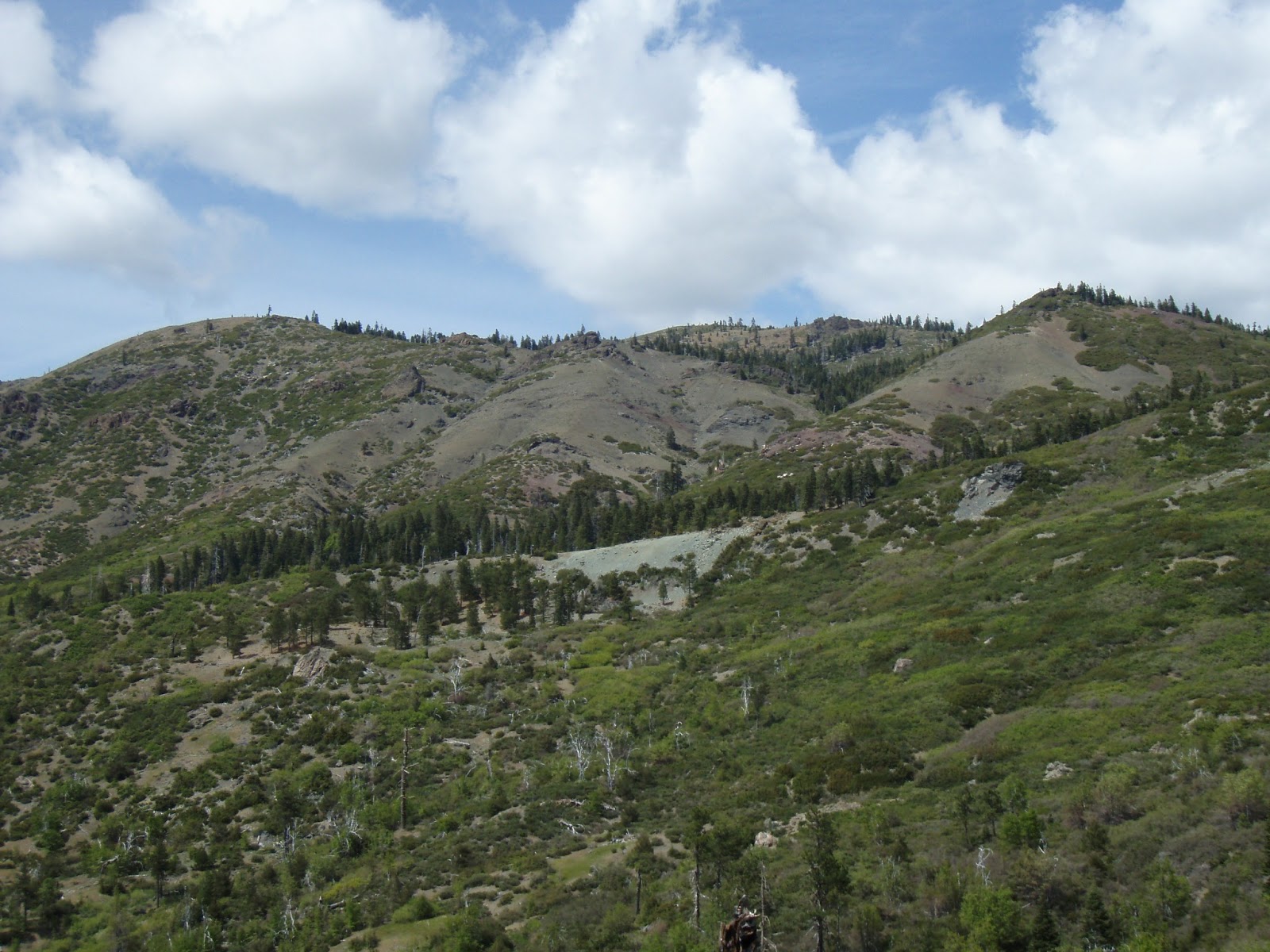 |
| The light green looking clearing in the center is a serpentine outcrop |
 |
| Serpentine |
After an awesome lunch, we headed to the trailhead around 2:45 for a 4 hour hike about the wilderness. We saw tons of really cool native flora and some awesome vistas. One set of really cool ecological features we saw were the serpentine outcropings. These unique geologic formations result in the very unique serpentine soils. These soils are the result of the erosion of metamorphic rocks which contain high levels of iron and magnesium. Due in part to the unique mineralogy of these rocks (and in part to some other ecological characteristics about which I am certainly not an expert), this soil has very characteristic properties and supports a specific group of native plants. The really cool thing about serpentine outcrops is that they represent small discreet patches of habitat for theses specialized communities. As a result, these soils and their associated flora and fauna have been used to study many ecological theories (island biogeography, meta-population structure, meta-community theory, just to name a few). Plus, these are just really pretty rocks.
 |
| Forest Frisbee |
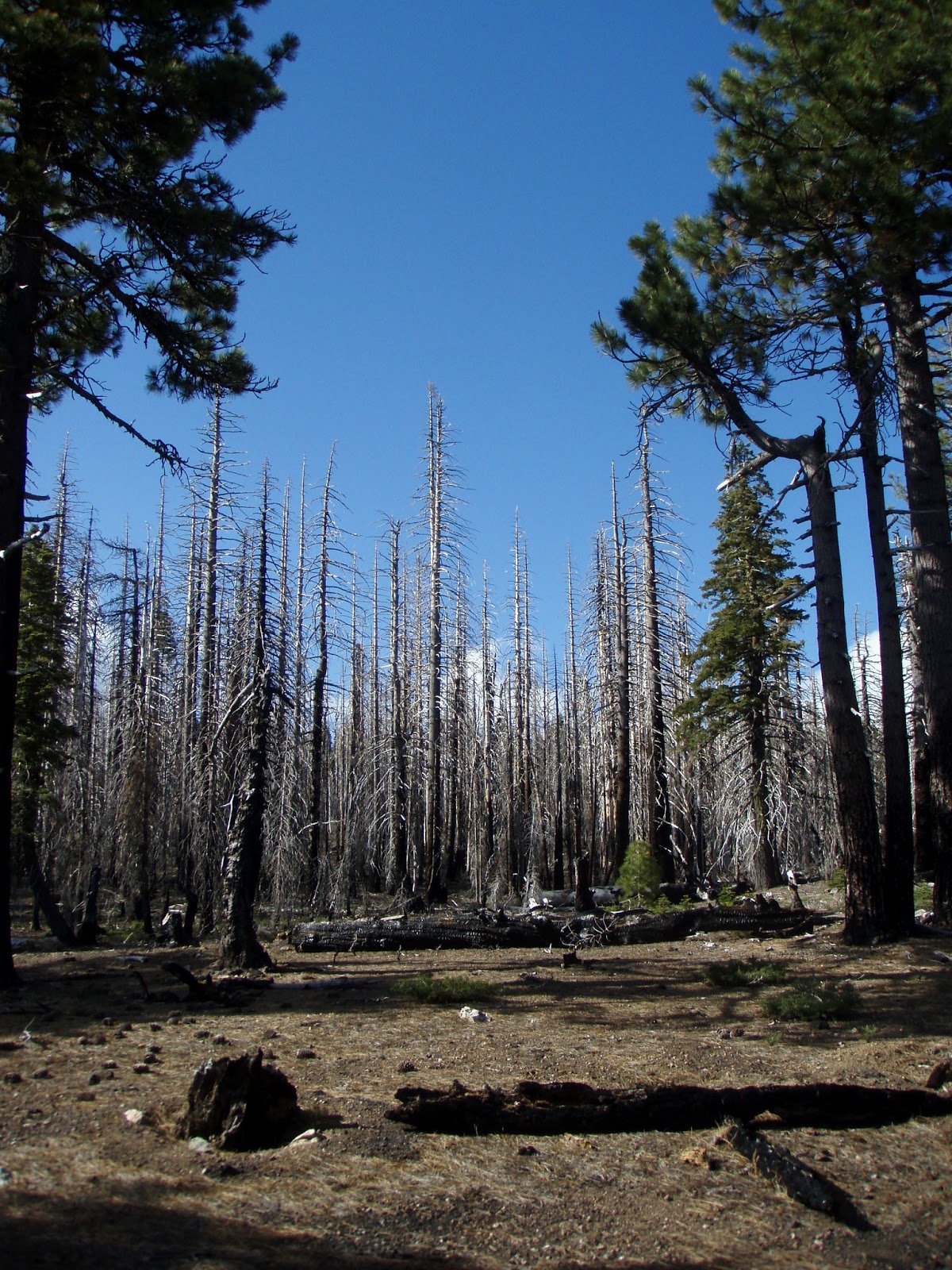 |
| Old Forest Fire |
We arrived at an open glade around 5:00 pm, and everyone was pretty ready to turn around and head back for dinner prep before we lost the light. A little game of frisbee broke out, and a few of us wandered a little past the open area, and around a meadow to attempt to get another good view. Meadows are really cool ecosystems as well. A lot like wetlands, they are periodically wet and walking through them can cause subtle changes in elevation, which alter hydrology and can impact the native species. Public service announcement: when you are hiking, always walk around a meadow. We found our final view, which was a great glimpse of the valley and part of the Coast Range, and we also passed through another, older (according to A) forest fire. Seeing all the burned trees standing there, stark white, with little saplings popping up underneath was really cool and moving for me. Seeing the natural cycles of nature, and feeling like I understand even a small part of what is going on is humbling and exciting. We headed back to camp, made an epic dinner, had an killer bonfire, drank some adult beverages, and ate (at least I did) one too many s’mores. As the night wound down, we dowsed our fire with a substantial amount of water, stirred the embers, and headed to bed.
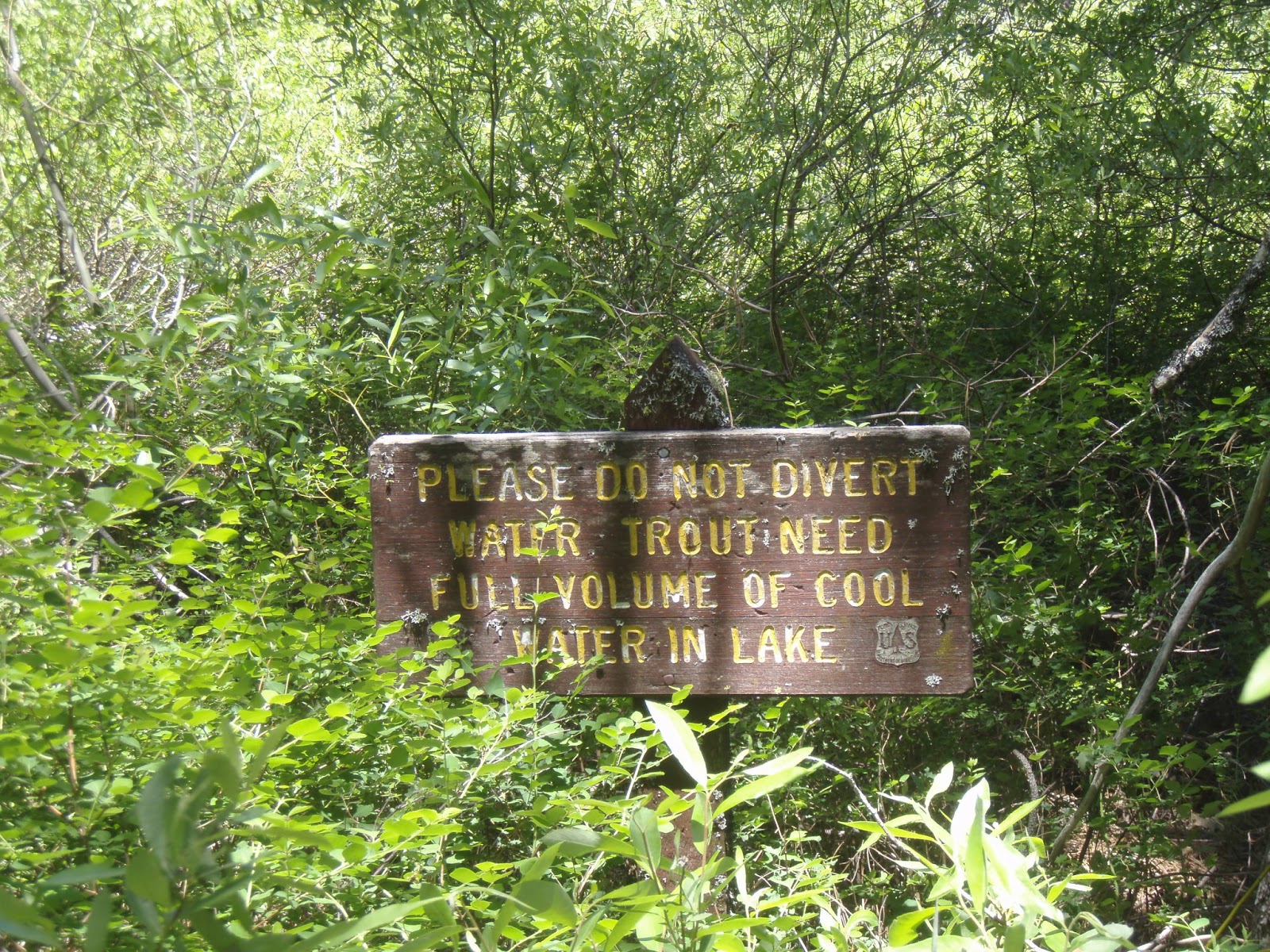 |
| Informative Sign |
The next morning after breakfast, we packed up our camp and headed back down the road. We wanted to get another short hike in, but weren’t sure where we wanted to go. One of our party had a really poor night’s sleep and another had long standing knee issues. After a full day of hiking the day before, we were looking for something low key. Luckily, on the way out, we passed a sign for Letts Lake. We snacked by the shore then took a short, hour long hike all the way around the shores of the lake. I, naturally, poked all around at the edge of the water and took a picture of the lake from every angle. I love ecology in general, but when you add water to it, I’m in my element. I saw some cool dragonfly exuvia on the emergent vegetation and a pretty interesting informative sign. I wish there had been a little more information as I could infer a lot from this sign, but I think the general public would have been interested in a bit more information.
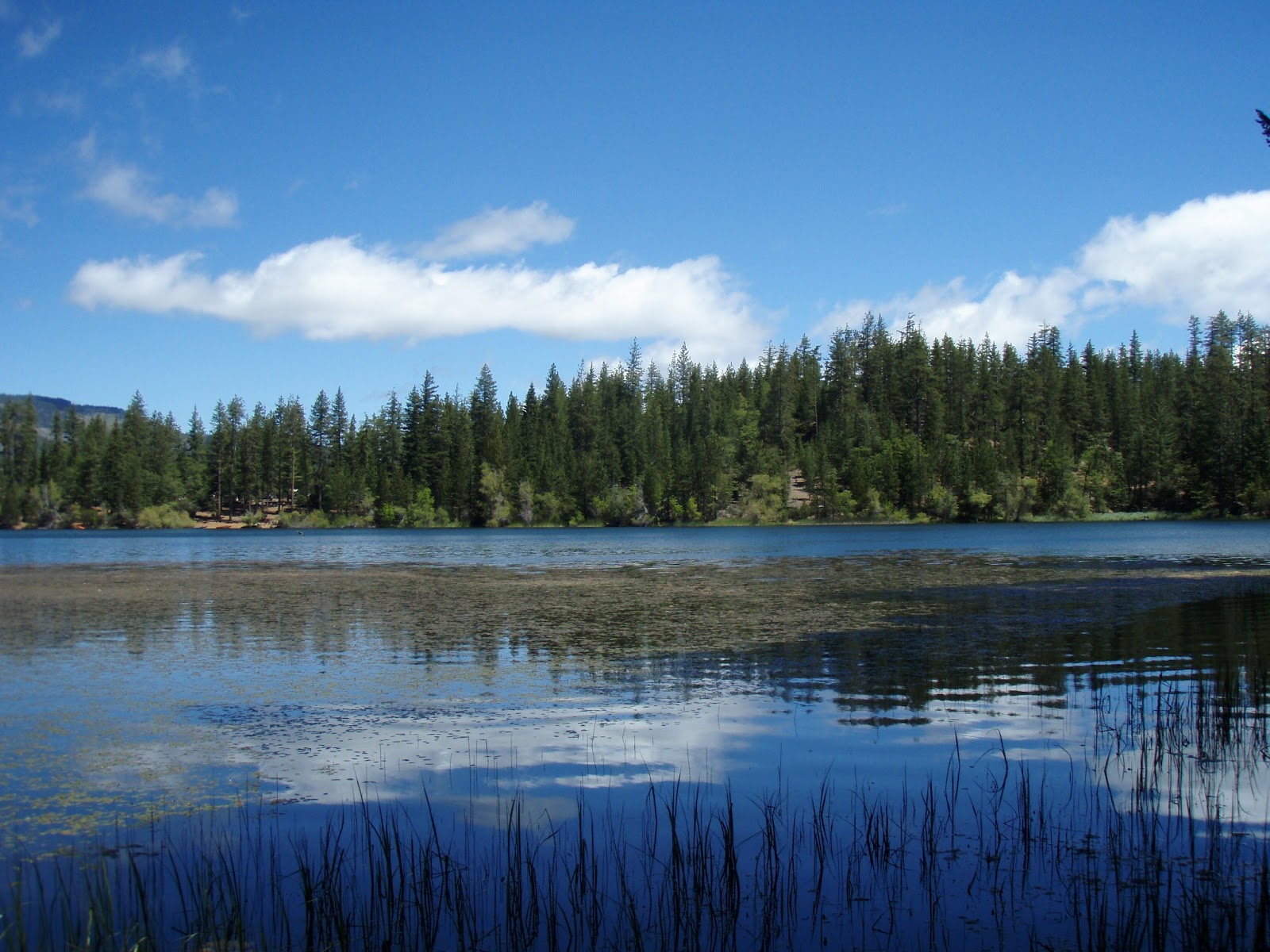 |
| Letts Lake |
And that was that. Adventure success. And, despite my initial shy-girl reservations, I had a great time with this group of people and think I will hang with them again in the future. It’s hard for me, but I always feel so great after making new connections or expanding on ones that are already in place. I’m excited to see what will happen in June as that will be the half way point for this new year’s resolution.
Last Word: After feeling sort of despondent after a few weeks of pretty intense work, getting out into nature totally recharged my batteries. As usual when traveling, I tried to make sure we took as few cars as possible. We brought and cooked almost all our own food (we stopped at a little Mexican joint on the way back out of the woods) and were careful to LNT (leave no trace) when we packed up our campsite. We also were very careful about our use of fire in the woods and made sure to get the proper permits. I also took lots of pictures and made sure to get thoroughly wow-ed by the natural splendor of the area. A very successful trip indeed.
 |
| This is me, glorying. |
What do you think? Do you get nervous going on trips with people who you don’t know super well? What are some of the best nature facts you’ve learned on the trail? Any awesome “wow, this is beautiful and makes me feel small, which is AWESOME!” moments to share?



 Sweet Tea, Science
/photo66837.htm&h=800&w=800&sz=200&tbnid=OD-hibsKPGEf3M:&tbnh=97&tbnw=97&zoom=1&usg=__1Du9PwWbP7LnOJAP2ZhabHVwSXA=&docid=O8XIihgPNczfjM&sa=X&ei=GMGjUZCRJcSeiQLas4H4Dw&ved=0CDYQ9QEwAQ&dur=4338)