Tricks of the Trade: LaTeX

Ok, guys. I’ve been studying as a baby statistician (scienctician? statscientist? ecologitician?)  for a little while now and I’m here to share some of their secrets. Before I started here at Penn State I had a couple ideas about what other grad students in my department would be like. First, everyone would be computer masters of any and all statistical programs: R, SAS, others that I hadn’t even heard of yet. Second, they’d all be completely on top of everything in all of our classes because they all would’ve completed undergraduate and master’s programs also in statistics. And thirdly, it’d be really hard to relate to other students because of my background in biology and my love for the outdoors (because clearly they’d all prefer sitting inside in front of their computers, right?). Thankfully, I was way off base and not only am I not left in the educational dust, but my cohort is full of awesome students with a wide variety of strengths and abilities. And I must collect them all. Yea, my new goal is to be like some sort of awesome Anna-Paquin-as-Rogue statistician and glean all of the amazing abilities and knowledge while I can. Except I think I’ll stick to taking the time to learn and practice things…instead of the whole touchy hurty thing she does. One of my absolute favorite new acquires is the ability to write code in LaTeX.


Another one of my pre-stats misconceptions was that whenever you saw an equation in a journal article it was created with Word’s super difficult equation editor.  Hopefully I’m not the only one who thought this, because now I feel really silly (Editor’s Note: I assumed mathematical witchcraft, so joke’s on me really.). LaTeX is a document preparation system for high-quality typesetting often used for technical or scientific documents. Long story short, you could be creating completely badass documents with lots of equations and badassery like these: [Homework with R Code, Homework with crazy stat stuff!]. I received my intro to LaTeX during one of the Cohort Workshops I have been arranging on Fridays for my department. Another grad student gave us a very brief introduction and showed us some of the basics. A few downloads, a bunch of googling, and several hours of practice later (not to mention an uninstall and redownload…) I was really starting to get the hang of it! Anyone who’s learning to program knows that you experience some of the most frustrating moments during that initial learning curve. WHY WON’T YOU JUST COMPILE AND SHOW ME A PDF OF MY NAME AND ‘HELLO WORLD’? I DID EXACTLY WHAT YOU TOLD ME…*deletes comma* Oh…well then. BEHOLD MY BRILLIANCE! FOR I HATH CREATED A MASTERPIECE!

I would like to encourage everyone to give it a go! I can answer basic questions, but I’ve found that the vast majority of my own beginner’s questions have been accomplished through a few key resources, including the Great Googily Moogily. Behold your starting point!

What to Download
  1. Tex – LaTeX is actually a sub-entity of Tex, sort of like Git and Github (which I also am just beginning to understand!) So you’ll actually need to download Tex in order to run LaTeX. Unfortunately, there are slightly different versions for Windows and Mac users but both deal with the same underlying program (if you run anything else, my apologies for being completely unaware of how to guide you).
  2. An Editor – The Tex download comes with everything you absolutely need, but I like using an editor for extra pretty colors and the option to code for other programming languages. I like working in Aquamacs, which is the Mac version of Emacs. (Update: I now use Sublime Text because Aquamacs kept giving me unhelpful error messages and I wasn’t having none of that.)
IMG_4569
Full disclosure: this took me a WHILE!
What to Try First
  1. Hello, World! – Your first task is to just compile and create a PDF file with the most basic of greetings. I used this website at Art of Problem Solving. Even still I spent way too long before I got my first code to compile and PDF produced. It’s a glorious achievement!
  2. Do a Homework in LaTeX – This is not applicable to everyone and for all classes. But if you have a math or stats course where the homework isn’t too intensive consider completing it in LaTeX! One of my professors even wrote lots of handy coding tips on one of my homeworks that helped me a lot the next time around. I love being able to feel accomplished at writing up a nice, clean looking final version even if the homework is crazy difficult. Helps me keep those imposter thoughts at bay!


Next Level Stuff
  1. Update your CV – This was one of my recommendations for our Motivation blog post last week. I used this one from Bradley P Carlin and you can check out my final form!
  2. Write and submit your next manuscript using LaTeX! – Now, I’m nowhere near this stage of my program but I’d wager that quite a few templates or style formatting guidelines available for submitting a paper using LaTeX! Go, go, go!
  3. Combine with RStudio to work with knitr and sweave to produce LaTeX documents with R code  and results spliced in!


Basically part of my grand PhD scheme is to master a lot of the computing and presentation side of statistics so that I will be a valuable asset and worthy of ALL the jobs. At least a few options after graduating will be worth the toiling away finding that stray comma or misspelled command. Now that you’ve heard my favorite new tool I’ve learned so far please share yours! Or even if your favorite is also LaTeX tell me all the little tricks  you’ve picked up! I want all the tricks!

Getting a Motivation Makeover

Last week, doing anything was a struggle.  Literally all I wanted to do was watch cartoons, eat burritos, and perform the bare minimum tasks I could get away with doing (Editor’s note: This is me. Always).  Admitting these sorts of things is what makes the idea of an anonymous blog very appealing on occasion.  It’s not because I have a super exciting secret life or anything (spoiler alert: I find my own life very exciting on the whole), but because I think a lot of the things I struggle with as a scientist in training are widely felt but often actively overlooked.  Graduate school is where you learn how to learn (because as a scientist, the learning never stops), hone key skills, and net a set of accomplishments that will make you stand out in the job market.  It’s a place where people who are fired up about things go to dive deep into problems, and it’s no surprise that so many great innovations are the result of doctoral dissertations.  And I’d say, about 50 weeks out of the year, I feel fired up about science.  About conservation.  About freaking adorable invertebrates and gnarly invasive plants.  


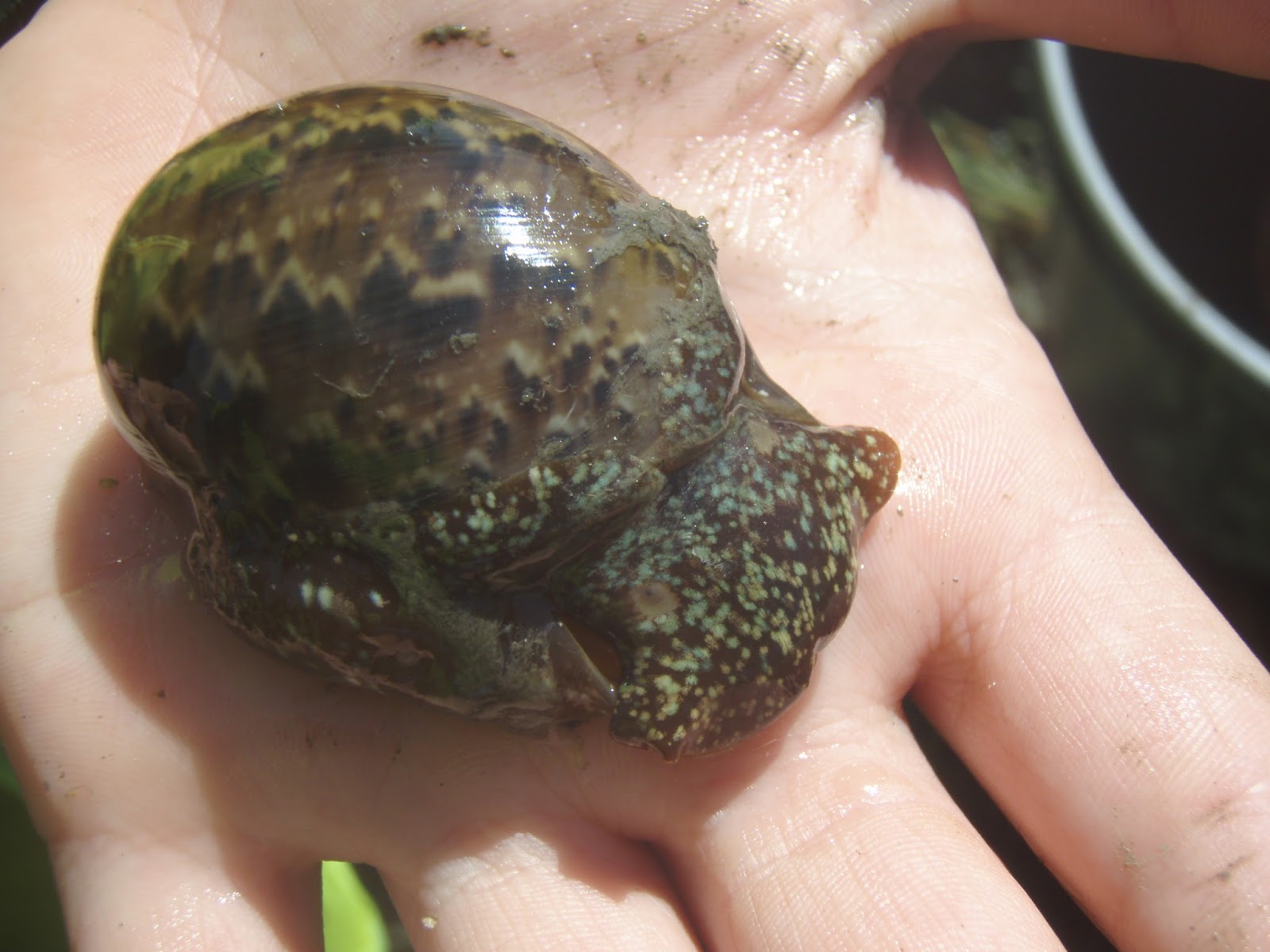
Adorbs.
I’ve been in graduate school for over 5 years, 3 years for my Master’s and 2 full years of PhD work.  It would be disingenuous and unhelpful for me to say that, over the past 5 years, I haven’t had motivational slumps.  Do I believe there are people who are 100% juiced up all the time, who never have to search for a reason to get reignited over their work?  I really do.  And I wish I was one of them, but I’m not.  Further, I think there are plenty of graduate students who struggle from time to time with motivation.  There are a lot of reasons:  personal issues, burnout, loss of interest in a project, imposter syndrome.  The thing is, I think we are taught to pretend this isn’t happening.  I have stock advice I give to all new graduate students when we are chatting, “Anyone who pretends they have their act together is faking it.  Everyone is freaking out.”  I think I need to do a bit of taking my own advice.  I’m probably not the only one who occasionally sits at their desk and goes “blah.”  I don’t think feeling a periodic lack of motivation makes me (or you) a bad scientist.  I don’t think it indicates a lack of passion.  I think pretending it isn’t happening is less than authentic.  I think refusing to yield to these periods and rekindling your fire speaks volumes of capability, passion, and drive.      


So here is my truth, as I’ve experienced it on several occasions.  I’m sailing along fine, killing it in the lab, balancing several projects, keeping my little fingers tippy-tapping on my writing projects.  A large milestone approaches.  I start to feel like I’m not doing enough (ironically, these sorts of thought progressions usually happen after 8pm in the lab…) and a little touch of imposter syndrome starts to kick up.  How rude!  I make plans for how to attack said milestone, I budget out my time, I feel like I can totally do this!  Then I’m motionless for a stressful span of days, absolutely sure that as soon as I begin I’ll realize the task is impossible.  Things spiral, I consume an unnatural amount of peanut butter, then some action or event clicks things back into place and I’m sprinting again.  In the spirit of honestly, it’s absolutely frustrating to look at yourself in the mirror and say aloud, “What’s wrong with me this week?”  But, in the end, it’s almost like fighting with your best friend.  It’s going to happen at some point, and if you take the time to learn something about them and yourself in the process, you can come out the other side closer than ever.


After that overly honest preamble, I’ll present my non-exhaustive, in no particular order list of things that have gotten my butt back in gear in the past.  This is how I kiss and make-up with science when I’ve been neglecting it.   


  1. Take in some inspirational media (of the non-scholarly variety).  Here are my go-tos, but your milage may vary
    1. This essay about how science is SUPPOSED to make you feel stupid, dummy.
    2. This poem, always and forever.  “Practice resurrection.”
    3. This essay by Aldo Leopold on extinction.
    4. This poem that will make you want to be a better person.  “If you’re handing out flashlights in the night, start handing out stars.”
  2. Make a plan. I know, you had a plan before, but make a new one.  The old one obviously wasn’t working.
  3. Screen Shot 2014-10-20 at 9.57.58 PM.png
    Mer’s Plan involves detailed time breakdowns. 
    Kill the distractions. Is an ill family member nagging at your mind?  Call them and ease your worries.  Do some large batch cooking so you don’t have to worry about the dishes or food for the rest of the week.  For goodness sake, get off Facebook, Twitter, Instagram, and all the other good things to do with the internet.
  4. What helps you focus?  Do that. Exercise?  Yoga?  A good night’s sleep?  Get those things.  Trust yourself.  Trust that you know the difference between procrastination and positive self-care.   
  5. Talk to inspired people.  You are a very cool person with very cool friends.  Find the one who is the most lite up by their current project and parasitize their enthusiasm .  I had a super uplifting talk about education leadership with a friend earlier this month.  Obviously, I’m not an education scholar, but their passion was infectious (Editor’s note: Rach and I talked about this during our Productivity Meeting last week. Unfortunately, I was in the middle of my first PhD midterms and was NOT available for enthusiasm! I suppose on the flip side of this, when you are feeling on top of your game then you should share your enthusiasm with those who might needs a little extra.).
  6. My moral support.
    Freaking talk about it.  Get a coffee with your gradschool best friend, call your sister, Skype with your mom, chat with your cat, or anyone else who cares about you.  It’s great to be internally motivated and sure of your inherent worth or whatever, but when your best accomplishment from the last two days was getting your inbox to zero, you need someone else to remind you of the bigger picture of yourself.       
  7. Update your CV.  This seems like a time suck, right?  It can be, but adding all your most recent accomplishments to your resume will remind you of times when all your hard work has paid off for you.  The only thing better than having someone else remind you that you are awesome is reminding yourself.    
  8. Hey, you, this is your JOB, remember? Either someone is paying you to do this work or you are paying for the experience yourself.  Hopefully it’s the former.  Here’s to hoping we never dip below the minimum job performance we need to maintain.  Beyond that, would you give you a raise or a promotion?  Put on some business casual attire and go sit in your workspace.  Put yourself on the clock.  
  9. Make a vision board, write an affirmation. Am I really that much of a hippie?  Apparently so.  I’ve made some pretty impressive vision boards in my day.  First of all, it’s crafting, which is relaxing.  Second, if you put it somewhere where you are forced to stare at it everyday, you’ll be surprised how you realign your actions to start actually working toward your goals.  If you’re not into pictures and glue sticks, write an affirmation of your intentions and put it on your bathroom mirror, or the fridge, or wherever else you will see it everyday.  The important thing is to see it everyday.
  10. Take an actual break. No, don’t start reading fanfiction at 2am when the whole purpose of drinking that cup of coffee was to get some real work done.  I’m talking take a mental health day.  Draw a bubble bath, go for a hike, and eat all the freaking burritos.  Give yourself a break for goodness sake, then rally rally rally.


Don’t worry, get muddy.
Thanks for letting me share something real.  Authentic living feels so good.  I hope it helps someone else!  Anyone else have tips and tricks for snapping out of a funk?  I would love to hear them.  Until next time, I have some precious inverts to read about.
 

Editor’s Note: I think a big takeaway from this blog post is that while graduate school can be a huge undertaking that commands a lot of your time, that doesn’t mean you have to let to rule your entire life. Prioritize yourself and those important people in your life that you want to spend time with. You could work on Grad School Things all day and all night long and never really reach a stopping point. If you wait until you’re completely caught up on everything you want to do, then you’ll run out of hours in the day.  However, if you schedule yourself some Real Life Time along with your Productivity Time you’ll be able to enjoy some of what keeps you motivated and happy. I have been hyper-scheduling my days using my Mac’s iCal program, and I find it helps me stay on track while still allowing myself time to chill doing Life Things without feeling guilty about things I could be working on instead. Don’t let the fear and the guilt get you down or keep you from enjoying life.

STS and the Super Science Side of Tumblr TA Tips for Teaching

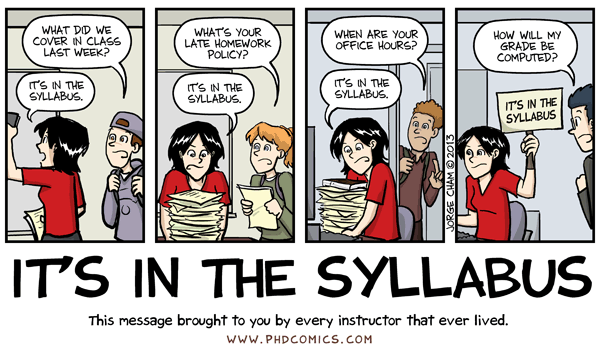
We here at STS have TAed a lot.  We both taught lab sections when we were juniors and seniors in undergrad and then we taught more sections during our master’s work.  I also taught during my first year in PhD land.  As a graduate student, TAing is often non-optional (gotta’ pay those bills), exciting (young minds!  oh golly!), frustrating (it’s ON THE SYLLABUS!), and intimidating (wait, so I have to be in charge of 20+ other legal adults for an hour or more?).  So, what are some of the most efficient ways to increase the fun and excitement of teaching, while minimizing the stresses?  Back at the beginning of the term, Meridith was going through orientation for her new grad school adventure and part of that orientation involved TA training.  She posted on our STS Tumblr, and asked the Science Side for their TAing tips and tricks.  The response was great!  So great, we decided we needed to bring all the responses together and archive them here on our blog.  
If you’re a new graduate student, we hope this helps you put some tools in your forming TA tool belt.  Remember, people have personal teaching approaches, so everything doesn’t work for everyone!  If you’re an undergraduate or high school student, maybe this will give you some insight into what your instructors are thinking.  I promise, we are all actually working really hard to try and make this a good experience for all of us.  If you’re a senior graduate student, maybe you have some tips and tricks of your own that aren’t included in this post.  Share them with us in the comments!     
Head over to http://phdcomics.com/comics.php for more amazing funnies like this one!

STS and Science Side of Tumblr TA Tips

It’s orientation week for me! Today the focus is on the roles we have as TAs, whether grading or instructing. How many if you have taught before and what are some of your tips?
I’ll report more later but my go to teaching tip is that it is ok to admit you don’t know the answer to a students question! It’s a great opportunity to discuss how to find the answer.
Edit: I’m going to reblog the tips from the reblogs and replies, but I’ll also add them all here and maintain a master list of teaching tip! This was inspired by graduate student teaching, but by all means I’d love to hear your tips if you teach other levels as well. Any topic, too!
DO NOT fall behind on grading. Just do it. It’s a pain, but procrastinating will make it worse. And your students will NOT be happy if you take forever.  For yourself, keep a list of wacky answers on quizzes/exams/homeworks. It can help brighten a long grading session or just a bad day. Share with TA friends if it’s crazy enough.
Answer emails in a timely fashion.
Be nice, but don’t be TOO chummy with your students. Keep that professional line drawn at all times. If you want to be friends, wait til the end of the semester. Nothing ruins a reputation faster than whispers of favoritism or any other unprofessional conduct. 
When giving back marks, tell students that if they have questions/arguments/challenges with their grade, to e-mail you to set up a time to talk about it. Don’t field lots of angry questions 5 min after returning assignments. It’s overwhelming!
Via engrprof:
Write learning objectives for each class – it makes it easier to keep on track.  Don’t do any one thing for more than 15 minutes – break it up. Students will retain more.
I’m not a TA but I love doing this with kids. I try to phrase it as how exciting science is that we are always learning things, and that maybe they can find out the answer!
Don’t take their bad grades too personally. It can be really easy to think that you’re a terrible TA, especially if it’s your first time. Don’t! Remember that it might not be your fault (especially if no one goes to office hours), it might not have anything to do with you. Definitely look for any trends and try to address them if you can, but remember that personal issues happen and undergrads don’t always like to study.
Even though it wasn’t a requirement for my labs I always made “handout” to give them. Even if it’s just a list of the figures or terms to know that you already told them about,  having something physical in front of them helps you keep everyone on the same page and helps you keep your sanity when they start saying “you told us not to know that etc.” when trying to get out of answering a question wrong. 
Also, grade with a bottle of wine or a few beers handy especially if it’s a rough session. 
The first person Mer and I ever TAed for as undergrads.

Via nonlinearfluctuations

I actually just was on a panel for TA tips so I will say some of the things we discussed.
-Try to be clear with how the students are to be graded/what’s expected of them right in the beginning. It save you a lot of trouble arguing with students later on (especially if you have it written down on paper or your website) and for those following directions, it makes grading easier since they are more likely to do it right (such as the case with including units, standard error etc)
-Learn names asap. It’s really important. I think that students are more likely to listen to you and respect you if you know their name.
-Definitely agree with you about admitting when you don’t know the answer. If they student keeps pushing, you can stay that you will get back to them later (so they know you are thinking about the problem and care), or you can ask the class if anyone else has the answer.
-Time management is really important. Don’t wait until the end of the semester to grade everything! Try to keep on top of it.
-Even if you feel like you know the material, take a little extra time reviewing before hand. You’d be surprised how much of the little details you forget…
-Depending on the type of course you are TAing for and how much feedom you have, try to make the class as interactive as possible (I have students volunteer to work problems on the board. I try not to force any student that doesn’t want to, but will push a little explaining that we all make mistakes so there is nothing to worry about). After a classes, it will build their confidence about asking questions and trying things out.
I love, love, love TAing and have done it enough now to have a few dos and don’ts.
1. TAing is fantastic, but it can easily become a time sink. Remember that you have your own research/coursework/life that needs attention. By all means put your best effort into teaching, but in the end, TAing is not the reason you’re in grad school. Don’t spend five hours putting together the bestest best lesson plan ever when you could have made a great lesson plan in one hour or, in a pinch, a good enough plan in half an hour.
2. Students appreciate a TA who is nice, but they are in your class to learn. The best TA’s are effective teachers who challenge their students. Avoid the impulse to be your students’ friend. You are an authority figure so while you can be very friendly, you need your students respect and attention. Be assertive and, when necessary, tough.
3. Keep in mind that if you do something at the start of the semester, students will expect the same throughout the semester. For instance, my first time teacher, I held extra office hours right before the first quiz. Big mistake! I was really busy with my own work around the time of the second quiz but had a class full of students asking when my extra office hours would be. Not a good situation to be in because I had to choose between neglecting my own work or disappointing my students.
4. Create a unified professor/TA front. Students will general feel more comfortable around you than the professor. While it’s ok to commiserate with your students, resist the urge to gripe about the professor. Even if you share some of the students complaints, gabbing behind the professor’s back will weaken both your and the professor’s authority.
5. That being said, don’t be afraid to occasionally bend the rules. For example, the rule: the assignment is due at the begin of class. Period. Any late assignments will not be accepted. The situation: one student runs in crying ten minutes into class because they commute and got stuck in traffic or their alarm didn’t go off, or whatever. What to do? My first semester TAing, I’d email the professor, wait three days for a response saying yes, accept the assignment, and then finally accept the assignment. Now? I just accept the assignment. Some students purposefully try to get away with stuff but most are honest, and I’ve certain had enough, “Oh no! I hope my teacher is understanding :s” moments to justify being lenient on a student having a rough day.
6. Grading can be a soul-sucking ordeal. So, treat yourself 🙂 Get some nice snacks and beer (or whatever your beverage of choice is). Listen to music. If you like, arrange to grade together with other TAs. Solidarity!
7. If you make mistakes (everyone does!), just own up to them and move on. It’s tough being the one at the front of the class! But it can also be a lot of fun! Just don’t be too hard on yourself if anything goes wrong.
Keep organized ESPECIALLY if you teach a lab. Nothing makes you seem more unreliable than not knowing where things are or not having things labeled correctly.
I always start my lab with a ten minute introduction about background information that may be helpful for any new protocols and to address any housekeeping issues so that the entire class is on track.
Also, quickly realize that you cannot care about a student’s grade more than the student. I make it clear at the beginning of the quarter that I will work as hard as they do to help them understand the material and make the grade.
Via @nikzstar:
I did two semesters as an Undergraduate TA.  Stay up with your grading.  The kids will sometimes even email you two days later wanting to know how they did on X assignment, more so if a test or quiz is coming up related to that topic.  Even if you’re only teaching the lab portion of a course, keep up with what they are covering in the lecture side you will get asked questions about it.  Realize that your grad TA you work with is just as swamped as you and try to share the work as much as possible.
I taught two different class lab sections.  For our basic class they made us powerpoints to go over what needed to be covered, realize if your school does this for you it is a godsend and USE IT!  It saves you a lot of time.  Don’t assume your students did the reading they were supposed to to be prepared, but also don’t assume that no one did it.  So do a very brief go through of what you’re going to be doing for the whole class and then help those that didn’t read.  Don’t let this get to you, soon you will know exactly which of the students are which and how much freedom or help to give them.  Realize that those that don’t read will always require a lot more help in class and don’t let them frustrate you.  Always hold office hours and offer study help, most of the time they will not take you up on it, but you need to be there anyways in case they do need and actually come to you for help.  Be sure to have your own work with you during office hours so that if no one shows you aren’t sitting there wasting your valuable time, get your work done if no one shows up.
Realize that you will get some serious gems as answers to questions on assignments and quizzes.  I can still remember and laugh at some 3 years later.  Treasure these instead of thinking you’re a horrible TA, you can’t force them to learn.
I find that hitting them hard on the first day with an incomprehensible double-shot of unbridled science enthusiasm and excitement, plus a terrifying rundown of policies and procedures with arbitrary and draconian consequences works WONDERS. Be a baffling combination of a manic pixie dream science teacher who encourages open questioning and voyages of discovery, and an apex predator who eats undergrads for breakfast. Make them wonder if you’re a little unhinged. Drop casual hints about past careers as a rollergirl or a bounty hunter (note: try this only if you actually have these past careers, because there’s no need to lie). Above all else, scare the SHIT out of them. 
This serves several purposes:
1) the weak will be weeded out of your section. 2) the number of times you have to growl IT’S ON THE SYLLABUS will be drastically reduced. 3) any time they actually have the courage to ask you to bend your ridiculous “no exceptions” policies, it is more likely to be legitimate. Plus they’ll think you’re reasonable and understanding for letting them be the only special snowflake who got a rule bent for them, when in fact you intended on bending that rule in the first place for people who needed it.
i’ve been a TA & teacher, & found this very important when lecturing — make an idiot of yourself! use silly examples & analogies. students LOVE it, laugh, & actually can grasp/recall concepts. & then use an activity that shows them after you tell them. 🙂
Via stemtacuar:
Do little things that keep the morale up! Ex. If your section falls on a holiday do something fun for it! I TA’d the lab portion of a course, 6-9PM, and one of our sections fell on Halloween. The last thing people want to do is lab work on Halloween night. To keep the spirits up I showed up to teach in a super legit Chewbacca costume (lab coat and goggles included), and passed out candy after people finished up (no food in the lab!). Everyone was instantly in a good mood and I gained the much-coveted title of “best TA ever”. I also allowed the students to use the classroom speakers to play music that everyone agreed on to help time pass (some of the labs required lots of repetitive tasks, and the last thing you want to do is pipet, or screen animals in absolute dead silence).

Via @RachelWigginton

If you have a fear of public speaking practice a lecture before you give it.  Practice does not mean click through your slides, it means stand up and give the talk at a normal volume.  This is my best advice after 11 years of competitive speech and debate.  It will never get easier or better unless you give it a serious run-through.
– Don’t hand back grades on a day when teaching evaluations will be given out
– About 80% of the time (or more), it’s really not you
– If it’s important, repeat it at least three times
– Take every opportunity to apply things to real life situations or issues about which you care deeply.  Your passion will come through and make your students more engaged. 
– Dressing nicer doesn’t make you uptight.  As a lady on the younger side of my 20s when I started TAing, I noticed a BIG difference in how I was treated by my students when I looked more professional. 
– Pair your constructive criticism with genuine praise

Follow my blog with Bloglovin