Questions to Ask when Choosing a Graduate Adviser

A few weeks back, my graduate group had its prospective student weekend, where all the top ranked applicants get to come and meet professors and current students.  Meeting and greeting all these hopeful students got me and a few others thinking about the process of choosing a graduate adviser.  STS wrote a bit about how to find and contact prospective PIs in the past, but that post doesn’t touch on how to make a decision once you have a few professors interested in working with you.  In many academic fields, your relationship with your major professor is the most important professional relationship you will have for many, many years.  Even when you earn your degree, a prospective employer will still want to know what your mentor thought of you.  So, it’s crucial to choose a person who you feel will not only aid your academic growth, but who you are generally compatible with on a personal level.  You don’t need to be BFFs, but things like having drastically mismatched communication styles, academic expectations, or assumptions about levels of involvement can make the road to degree completion much more hazardous.  And, on a broader scale, it’s really not worth it to work with Bigshot-Publishes-Yearly-In-Nature if they are unkind, unhelpful, or unavailable.


Below, I’ve compiled a list of pretty well every question I have ever asked, been asked, or wished I’d asked during the process of choosing a graduate mentor.  I’ve divided it into three main groups:  questions to ask the professor, questions to ask graduate students in their lab, and questions to ask any graduate student in the program.  You certainly don’t have to ask all these things, but do a little soul searching beforehand and think about what really matters to you.  You are making a commitment to work with someone regularly for the next several years.  Sure, they are interviewing you, but you are also interviewing them.    


Despite the fact that this list is long, it’s obviously not exhaustive.  Give more suggestions in the comments below!        


Questions to Ask the Professor


Okay, it’s time to put your big-person pants on and get serious.  Asking thoughtful questions will make you more memorable, and nothing is worse than getting to that point in the interview when they ask, “Do you have any questions for me?” and coming up dry. Plus, this is going to be one of the most important people in your life for the next 4-6 years. When I was having these talks before choosing a PhD program, I compared it to going on lots of first dates.


What can I expect from you/the program as far as funding and support?
I know it’s awkward, but it’s very important and it shows you mean business when you ask about money, so just do it. Make sure and think long term.  Don’t just worry about year one, ask how you might expect to be funded for the entire duration of your degree.  Answers like, “I expect my students to apply for external fellowships.” are normal, but it’s good to know that sort of thing up front.   
What can I expect as far as lab or field support?  Do they employ technicians or undergraduates?  Are these employees tied to certain projects exclusively?
It’s nice to know if there is a lab manager who knows where all the equipment is kept and what sort of condition it’s in currently.  You also want to feel out the availability of undergraduate employees and volunteers.  
How would you describe your mentoring style?
Are they hands on; are they hands off; do they view themselves as more of a boss or someone who is working with other (albeit young) professionals?  You can compare how they describe themselves with how their students describe them.
How many students do you plan on concurrently mentoring?
Code for, “How much time will you have to support me when I need you?” or “How many other people do I have to fight for your money?”
What are your day-to-day expectations?  
Some advisers want to meet once a week, some once a month, some only when you need them.  Some people expect to see your face everyday and to know where to find you from 9-5 at the least.  Others will be fine with you working from home.  This is another chance to see if your personal style matches with this professor’s.
What type of skills do you expect me to come in knowing or expect me to learn during my time in your lab?
If they expect you to know R, SAS, ArcGIS, or a set of field skills and lab techniques before you begin, that’s important information.  It’s likely they would have weeded you out via some of these things, but if not you need to be aware. Also, if you didn’t already know what they expect during your degree, you can see if those expectations align with your interest and goals. Bonus points if you ask what resources are available in the lab/program/University for acquiring these skills.
How often and when in their graduate careers do students in the lab publish papers?  What are your views about authorship on papers with students?
Are they first author on everything to come out of the lab?  Are there big lab projects that everyone is involved in and get’s to be part of writing up?  This is also another good gauge of the PI’s expectations of you as a student.
Thank you for meeting with me.  What are the next steps I can expect?
So, you liked them.  It’s fair to ask when you might hear something, or what contingencies acceptance of your application might depends on, such as departmental funding or pending grant applications.


Questions to Ask Graduate Students in the Lab:


This is equally as important as talking to the professor themselves.  A few pro-tips.  Talk on the phone or in person.  People are more likely to be honest and candid when they don’t have to write it down.  If you can, try to talk to students who have graduated; they have nothing to lose by keeping it real. Just like PIs, graduate students will ask you what you’re interested in and what your experience is. Have something intelligent prepared to say (remember, your expressed interests are not a binding contract!); sometimes professors ask members of their labs for opinions about you later.
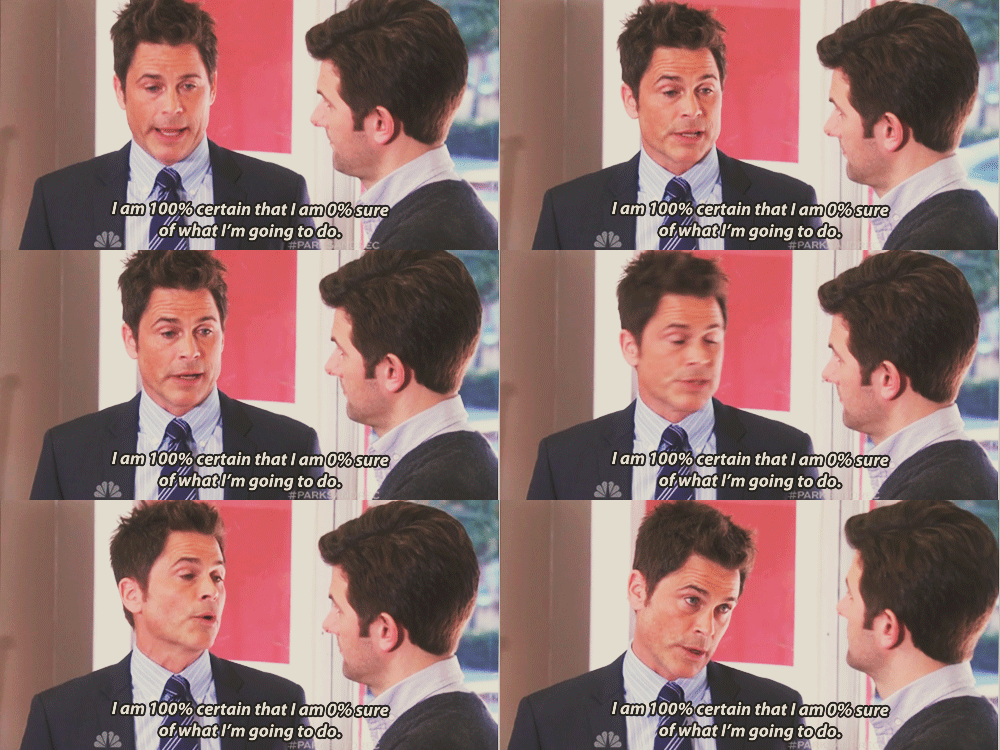
Don’t be this Rob Lowe. 
Can you describe your research?  How do you feel fits in with the PI’s research program?
This is a polite question to ask, and it will help you gauge other questions this student might have specific insights about for you.  It can also give you hints about lab structure.  Does the PI only choose students who study things closely related to their own work, or are they more open?  
What is the PI’s advising style?
Are they hands on; are they hands off; do they view themselves as more of a boss or someone who is working with other (albeit young) professionals?  You can compare how the students describe them to how they describe themselves.
How would you describe your working relationship with the PI?  With other students in the lab?
You want to find out if people collaborate in the lab group, if the PI is active in providing feedback, and if that feedback is generally helpful and constructive.  Similarly, in graduate school, you learn just as much, if not more, from your peers.  So, do other students in the lab collaborate or work share?  Do they give helpful feedback on your ideas and work?
Do you find the PI to be approachable?  
True story.  Four days before my QE exam I tapped on my mentors door and had an unannounced, mini- breakdown, minus the tears thank God.  I think I might have actually exploded if I hadn’t felt I could go to him for reassurance and support.  It doesn’t have to be that extreme, but you do want to know if students feel comfortable approaching their major professor.  You need someone you aren’t afraid to feel stupid in front of, because feeling stupid is what grad school is all about (spoiler).  
How does the major professor deal with conflict?
Are they direct and reasonable?  Are they passive aggressive or bat shit?  This is very, very important.  
How often do students start in the lab and not complete their degrees (they choose not to continue in the program, change labs, change programs, etc.)?
If the last three PhD students have moved on without getting their degrees, it might not be a problem with the students.
What is the lab culture like?  How often do you have lab meetings, and what are they like?
You want to know if students are competitive with one another, which can be a good thing or a bad thing depending on what you like.  You want to find out how much lab members collaborate, hang out, or work share.  Asking about lab meetings can be a good way to gauge how the lab interacts as a whole.
Did you TA/RA?  How difficult is it to secure TA/RA positions?
This will depend on the answer the PI gives you about funding, but if you’re going to need to TA or RA, it’s good to know how difficult it is to get those positions.  It’s also a good idea to ask about the application process, because you’ll generally have to do this for your first year before you even arrive on campus.
How often do members of the lab travel to workshops or conferences?  Which ones do you generally attend?  Is there lab/program/University support for travel?
Have I mentioned that knowing about money is important?  Here is another example of that fact.  Conferences are important to your professional development, so you want to know the conferences lab members are attending and how they pay to get there.  


Questions to Ask Graduate Students from the Program at Large:


In my view, who you work for is the most important choice, and the reputation of the program is secondary.  However, there are some things students outside of the lab you are applying with can tell you that can be very helpful in making a final decision.


Do you know students in Professor So-and-So’s lab?  How do they seem to like it?
It’s unlikely that an outside student will be really honest with you concerning their views of other professors.  But, they might give helpful feedback about the general mental state of students in that lab.  I’ve heard this question answered as “They seem happy,” “It seems like that professor has really high expectations,” or “Students in that lab are very productive!”
How would they describe the culture of students within the program?  
Are students within the program competitive with one another, or is the atmosphere collegial?  My own opinion is that you want to come out of your graduate education with a bunch of smart colleagues, not a bunch of people you have been trying to outdo for 4-6 years.     
How would you describe the attitude of professors toward students in the program?  
Are professors within the program competitive with one another, or is the atmosphere collegial?  This will obviously influence the attitude of the students in the program.  You also want to gauge how easy it is to collaborate or meet with professors other than your major professor.  Is there an open door policy?  Do professors generally make time for students?    
How would you describe the administrative and University support available to the program?
Is there a great office staffer who knows all about all the paperwork?  Is the person who administers grants for your graduate group super helpful, or not?  If students generally feel like they struggle to find answers for programmatic questions, that will be a pain you should be prepared to deal with if you choose that program.  
Is there an active student group for the program or for graduate students at large on the campus?
Ideally, you want there to be a feedback mechanism between the students in the program and the faculty, staff, and administration.  A good student group provides this.  A situation where you have a voice is always a better situation.  
What is the social scene within the program?
Sometimes, graduate school will make you feel like a cotton-headed ninny muggins. If students get together for happy hour, play intramural sports together, or love game nights, it will give you a chance to check in with other people who are sharing your experience.  Because you are not a cotton-headed ninny muggins. 

  

Part 3 – And Now for Something Completely Different


How We Came to be Here – A Story in Three Parts This week STS will be sharing stories of coming to careers in STEM fields.  We hope we can offer three different perspectives on finding your career path, navigating higher education, and deciding how and when your journey needs to change.  We’d love to hear any and all of your stories about finding your calling or your struggles/victories if you’re still trying to figure it out right now.  Please share!  It’s important for all of us (especially those in high school and undergrad) to know that there is no single, best way to approach this crazy adventure.  For Part 1, which is Rachel’s story, click here. For Part 2, which is Chelsea’s story, click here.
67597_10150096372975761_2997582_n
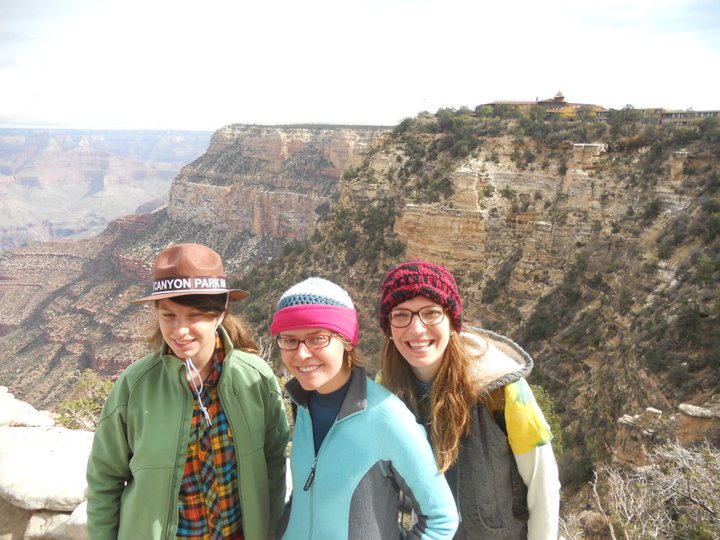
Proof that I am six years old. But that’s, Junior Ranger Six-Year-Old to you. 

I have some impressive posts to follow! I am very lucky to have two wildly inspirational best friends that are both doing such amazing things with their lives. I suppose it’s time for my story. Unlike Rachel and Chelsea, after graduating from WKU in 2009 I took an academic year off to reconsider my options for moving forward. I’d had lots of wonderful experiences during my undergraduate years thanks to my mentor, Dr. Albert Meier. At that point I had done research, internships, studying abroad, an honors thesis, but even with all of this involvement, I still was terribly intimidated by the prospect of graduate school. Albert often reassured me that I could go straight into a PhD program, but to me that seemed like rushing the process. During the time I was working on applications to different programs I was living at home and working at a Red Robin to save money. A lot of my friends had already been accepted and moved onto graduate programs while I still had a giant pile of uncertainty in my future. This was a pretty bleak time for me.

For a while it seemed like every potential path was quickly met with disappointment. I thought I had a position lined up as a research assistant in Costa Rica for a short time, but I believe that graduate student ended up employing a friend instead. A professor that I had been talking to at UC Santa Barbara (close to where Rachel was at the time!), but again disappointment arrived as he informed me he was departing for a different university. It was getting late in the grad school search season and I was scouring the Ecolog listserv and Texas A&M Wildlife Job Board  for any PhD or MS listing that was even remotely interesting at this point. Thankfully, I came across a listing for a fully funded MS level grad program focused on algal research at a Fish and Wildlife department in New Mexico. Now the cogs were really falling into place.

312594_10100104533850532_824709187_n-2
Plus, Chelsea was in New Mexico too!

Within 11 days I went from inquiring about the posting, to interviewing, to applying to NMSU, to acceptance. All of a sudden I had a plan and only a few months before moving across the country to start working on research that summer. Sure, it was intimidating going from spending most of my time in bed watching Netflix to leading a team of undergrads in designing and conducting experiments, but it sure was just what I needed to jump start my enthusiasm and motivation! I cannot say enough good things about my academic experience during my Master’s. I had a supportive advisor who taught me to be more confident and self reliant as a researcher. I found time to travel and attend conferences. I started taking more and more applied statistics courses which opened my eyes how useful such knowledge was to scientists. By the time I finished 2 ½ years later, I was emerging a much more self-assured, competent scientist.

My research and coursework left me with lots of new questions and motivation, and I was sure of wanting to return for a PhD. However, I once more went the route of gap year, this time with a much clearer vision of how to proceed. While my time in New Mexico was academically fulfilling, I was left a bit drained on a more personal and emotional level. I knew I needed to devote time to myself away from school and thanks to very supportive parents and the low cost of living in Las Cruces, I was able to travel for three months through Europe on my own during the summer of 2013. Even now I’m surprised at the extent that this trip has left such a lasting impression on me. I believe that the double dose of academic and interpersonal confidence was crucial for my next steps towards finding a PhD program.

944710_10100884552951002_453504884_n-2.jpg
Some epic CouchSurfing festival Highland games in Edinburgh during my travels.

While searching for programs I was eager to incorporate my newfound interest in statistics with my established background in biology/ecology. I sent applications to Biostatistics, Biomathematics, Ecology, and Statistics programs, unsure of exactly what path I wanted to take, or even what was available. I even applied to a program at UC Davis which had the added appeal of Rachel’s lovely presence! Penn State piqued my interest when I stumbled across this site for a Center for Statistical Ecology and Environmental Statistics. Oddly enough, this center no longer exists, but I had already applied and been accepted when I found out! I was reluctant initially to accept a position in a purely statistical department, but talking to the graduate advisors, current students, and several professors during my recruitment visit that reassured me that I would have ample opportunity to incorporate an interdisciplinary approach. This was exactly what I needed to solidify my decision. Now I’m in my second semester as a statistics grad student with no regrets about my switch in fields.

I hope everyone has enjoyed our series on our respective paths to where we are now. Navigating life, school, and careers can be rough and we want you to know that lots of people struggle with finding a path. If you would like to share your own experiences, or even guest post for us, let us know! Until next time, check out these pictures of my besties and me at Mount St Helen’s.

Part 2: Money isn’t Everything – or – Breaking up with Science

How We Came to be Here – A Story in Three Parts

This week STS will be sharing stories of coming to careers in STEM fields.  We hope we can offer three different perspectives on finding your career path, navigating higher education, and deciding how and when your journey needs to change.  We’d love to hear any and all of your stories about finding your calling or your struggles/victories if you’re still trying to figure it out right now.  Please share!  It’s important for all of us (especially those in high school and undergrad) to know that there is no single, best way to approach this crazy adventure. For Part 1, which is Rachel’s story, click here.  


My name is Chelsea. I have known Meridith since I moved to Kentucky in 1996. That was 19 year ago! Before anything else, I would like to use this guest post as a forum to show some funny pictures of us together, and then I will talk about science.

image04 (1)
Photographic evidence of Meridith and Chelsea’s especially long friendship. Taken at Meridith’s house in 1997.

Glad I got that out of the way. Next, I want to share my story of taking a break from my relationship with science to find what matters to me. I am writing this for those who might be feeling burnt out or unsure about their path. In all stages of life these are completely normal feelings.

I am an American living in Japan where I work as an assistant language teacher (ALT) for the Japanese Exchange & Teaching (JET) program. In Japan I teach English to freshman high school students. But it was not always this way; I used to be a geologist.

In 2009 I graduated with my BS in geology from Western Kentucky University (Editor’s Note: For those keeping track at home, this is another proud WKY alumna).That year I moved to Albuquerque, NM where I began my M.S. in geochemistry at the University of New Mexico. I hit the ground running in graduate school with a M.S. research project that was big and sexy and would bring a major elaboration on something that very few groups had managed to achieve (foreshadowing). My proposal involved locating nano-scale grains of stardust from ancient, long-dead stars locked away in meteorites on Earth.

Sadly, my original M.S. project was a big sexy dud. I spent almost a year and a half failing at isolating stardust grains and generally not knowing what to do about it. The failures were not my fault, but I internalized and agonized over every one of them. At the time, I didn’t realize how common failed projects are, and that science wouldn’t quite work without the failures! However, it felt like every day I trudged wearily into the dark lab, put in my time, and got nothing in return. I was at a motivation low and the stars were just not with me (quite literally, it seems). Finally I had the conversation with my adviser that it was time to cut our losses.

We salvaged the materials that we could and spun the thesis on a different axis and I still managed to scrape together a M.S.-worthy project from the dust (not stardust) of the original project. I graduated from a two-year M.S. program in three years’ time (Editor’s Note: To all you other overachievers, 3 years on a M.S. isn’t really super uncommon. That’s how long it took me (Rachel)).

In 2012, with a freshly conferred M.S. degree and little regard for what actually made me tick, I began slinging resumes into the black hole of internet job posts. I aimed for anything labeled “junior geologist” or “geologist I”. Through fluke and recommendation, I landed a job with a uranium mining company in Albuquerque as a staff geologist, even though I had never before considered mining as a career. After my first month, I discovered that my opportunities for projects and professional growth in that company were limited. Disappointingly, I garnered from tacit clues that the short ceiling was due to my gender. In fact, once an aging male superior spent 20 minutes imploring me to bring proper footwear into the field, as if I were going to go clip-clopping around abandoned mine sites while wearing stilettos because I was young and female… I only lasted 9 months before I found another job.

image04 (1)
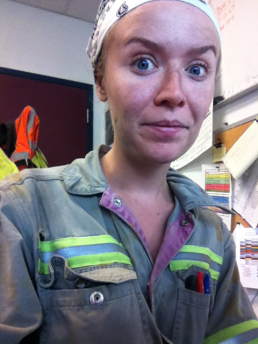
A photo of me at my job as a mining geologist in Nevada.

My next job, still in mining, brought me to work for one of the world’s largest gold producers. Impatient for the next step in the progression of things I felt I was supposed to be doing, I signed on. Suddenly I was 2000 feet underground every day, in a stifling
hot, bustling mine. I was bursting at the seams with an eagerness to excel in this role, taking on extra duties and project whenever possible. But this job, too, was disproportionately dominated by males. My knowledge and recommendations were frequently challenged, for perceivably no other reason than it was difficult to gain acceptance as a woman operating in a scientific capacity. I could never prove myself, as I was always asked to jump arbitrary hurdles that my male counterparts were never expected to clear.

I lasted two years in mining job number two.

I liked being a scientist, but I’ve got to say it can be difficult lasting in the field as a woman. I was doing everything that I was supposed to do; I was in a good job with good benefits. Yet my happiness and direction in life were very low.

Like the end of a bad relationship, I felt something changing inside of me. In the past, I had a clear vision of how science could be my vehicle for learning and change, but I no longer knew why I was doing what I was doing. I needed out, and, as this is a real break-up story and not a romcom, I had to save myself. I took out a piece of paper and wrote down the things that made me happy. This may sound childish, but it can be difficult to remember every day why you are doing what you are doing.

The biggest member of my happiness brainstorm was science; I have always loved concrete explanations of the natural world. Next was teaching. In graduate school I taught an intro geology lab that I adored. I later taught at the local aquarium as a docent. I loved the electrifying energy I felt when standing in front of a group of elementary students or a Girl Scout troop, guiding them towards understanding of the world around them. Also on my list was the country of Japan. I had visited Japan in 2008 for a conference, and I was positively itching to return.

It may seem obvious, but it took me roughly 26 years to understand what to do next. I began to search for career opportunities that would incorporate all of the things I loved the most. I learned about the JET program, which allows foreigners with little Japanese ability to teach conversational English in Japanese K-12 schools.While admittedly light on science, JET gave me an avenue to combine my love for teaching with my love for Japan. In April 2014 I was accepted for a position in the rural Shimane prefecture. Leaving the comfort, security, and paycheck of my job in mining, I dropped everything and moved to Japan. This is one of the most difficult and rewarding things I have ever done.

Now it’s February 2015, and it has been almost a year since I admitted to myself that I couldn’t envision myself in a scientific career for the rest of my life. Currently I am happily living and working in Japan. I don’t make much money, I don’t speak very much Japanese yet, and this job is only guaranteed for one year at a time. But I am the happiest I have been in a long time. Intriguingly, science has worked its way back into my life. I now live in a country with a drastically declining birth rate where women are feeling more pressure than ever to stay home and have babies. The UNESCO 2007 UIS database (UN statistics division) estimates that women make up just 25% of tertiary science enrolment at Japanese universities. Females in this country have very little encouragement to get involved in STEM fields, and Japan has the lowest number of registered female scientists out of any OECD country.

My past success in science places me squarely in an unintended science advocate role in my Japanese school. I am known among my local JET cohort as “the scientist”and at school, even outside of classes, I often speak about science and career opportunities in science with my senior high school students and staff members. I have several science-minded community activities up my sleeve. Recently I’ve had the opportunity to coach high-profile Japanese scientists in a nearby materials science laboratory about how to give the best scientific presentations in English. And I’m having a blast.

It took extreme career upheaval and a trans-Pacific move, but science is suddenly fun again. Science and I did have a connection; it just wasn’t the one I was trying to force it to be. Our connection was embedded in one of the other things that make me most happy: education. I am enjoying my time in Japan so much that I signed on for a second year with JET, and when I get back to the US I plan to begin my PhD in science education.