Gardening with a Toddler

Editor’s Note: Today will be the first guest blog in STS history!  Both Meridith and I had guest bloggers on our individual blogs, and we love the additional insights added voices give to our topics of discussion.  Those who follow us on Instagram or Tumblr know that I have started a vegetable garden this year, and I have been having a blast.  I’m constantly amazed at how I, a person who presumably knows quite a bit about plants, keep learning new things through this process.  I was discussing this with my friend Christal recently, and we got to talking about how she had started a container garden with her 2-year-old son.  Adorable and educational?  I had to know more, so I asked her to write a post about the experience of gardening with her son, and what she thinks he has gotten out of the activity.  Here is what she shared!  
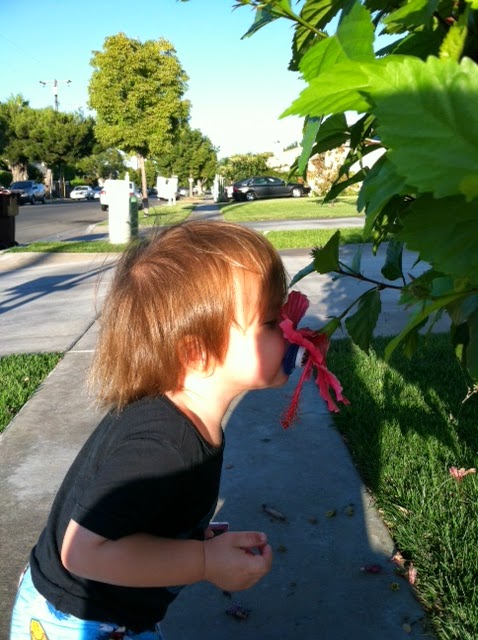
This kid is totally a STS kindred spirit!


They say everything starts with an idea. Gardening with my son started like this, but the funny thing was the idea wasn’t mine. It all started with a simple request from his father. It was a normal Saturday, we had just come from our son’s swim lesson and we were doing our weekly shopping trip to Target. Our first stop is always the dollar bin, usually for a small treat for the baby.  This time, his dad saw a cilantro growing-kit and asked if it would be OK to keep it at my place and grow cilantro with our son, like he did with his Mom. Of course! Our little bug, as we call him, loves being outdoors and playing in the dirt, examining plants and insects.  Why not try this?
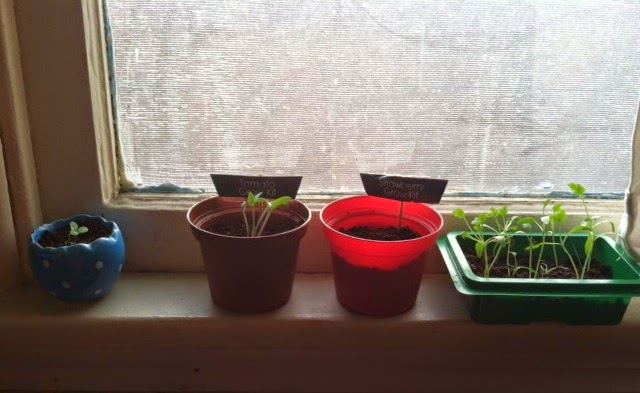
Early stages of the garden
Bug loved it so much our one, little cilantro plant quickly turned into a small window sill garden containing cilantro, a tomato, some strawberry plants, and a daisy. It became a daily ritual to water and check on all our little plants. Bug was the main caretaker, making sure he reminded Mom, Dad, or grandma (whomever was home) that he needed to water the plants. As they got bigger, we decided it was time to transplant them outside. In the past, before I had my son, this usually meant death for all my plants.  Out of sight out of mind.  Not this time!  My baby bug reminds me that we have to go water the plants (even if they don’t need it!). He has his own watering can and gardening gloves (I love The Dollar Tree for cheap gardening tools my two-year-old can use).


Transplanted outside
What started out as a simple project with his Dad has turned into so much more. He is constantly asking for new things to add to our garden. Decorations, plants, rocks, you name it.  When he is out with his Dad or grandma, he tells them Mommy needs more flowers for the house. Our newest additions have been an Easter lily his Dad got for us and a chili plant that my Mom gave him from her own garden. And it’s not only a love for plants that my son has gotten out of this, but also a sense of responsibility by taking care of something.  He sees the results of feeding and watering his little plants, discovers new “friends” that come and inhabit our garden, and enjoys the perks of spending time outside rather than being glued to the TV all day.


I love watching my son’s interest in nature grow. He now catches caterpillars, and we feed and keep them, so he can watch them transform into moths and butterflies. Recently he found his first grasshopper and spent the better part of the afternoon chasing it around the backyard with his Dad. These are memories that I cherish. They are ones that are filled with love and wonder, but they teach him as well. His love for all things outdoors has grown to us purchasing a season pass to our local zoo, as well as day trips to our local parks to see the squirrels and ducks. He constantly asks when we can go see the animals and fishes. Our family activities are centered around this growing interest our son has in plants and animals.  
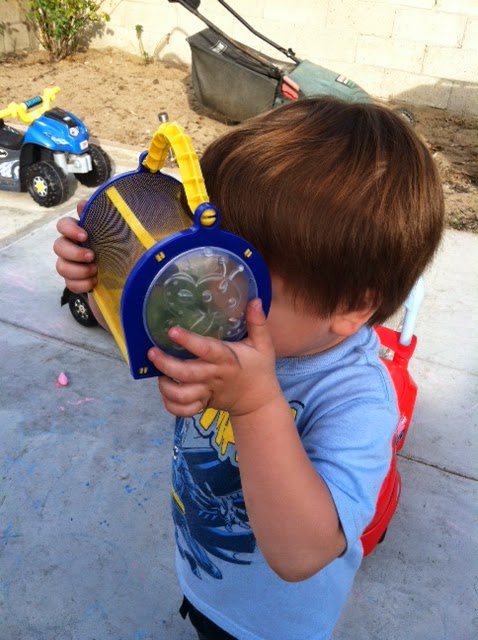
Keeping an eye on his caterpillar
Literally, can’t let them out of your sight!


He is the happiest kid I know (and though that sounds biased, it is also true!) and I know a lot of it comes from the quality time he spends with me and his Dad doing things that are engaging and memorable. All the things he learns from our little garden also come up in our other day to day activities. When we are grocery shopping he loves to help identify and pick out the fruit and vegetables. He asks questions like “What is this?” when he sees something he doesn’t know or “What does it taste like?” or “What color is it?”.  When I am preparing our meals, he brings his step stool in to stand next to me and ask me “What doing Mama?” and “You putting ‘matos in the pasta?”. He is becoming aware of how we can use what we grow or buy, and it gets his curiosity going. He asks to smell or taste various fruits and veggies that we buy or grow.


Every day I am amazed at my son’s curiosity and how much he has learned and remembers. It’s been almost a month since he chased that grasshopper, but he asked his Dad yesterday in the car if he remembered how bouncy that grasshopper they found was. If he sees a plant, animal or insect in one of his children’s shows, he has to come grab me and tell me about it and associates it with where else we use or see them. My son’s vocabulary has exploded since we incorporated all these family outing and projects. He can sit and tell you about things from tomatoes to narwhals. And it all started with a $1 cilantro grow-kit and a request to share a memory with my son.


Closing Thoughts from Rachel and Meridith:  We were super inspired by Christal’s insight into how simple outdoor activities really activate curiosity in children.  This really illustrates the point that you don’t need to take a child to a far off National Park (though that is rad!) to instill a love and respect for the natural world.  We were also really interested in the developmental changes Christal noticed after the family gardening projects began.  Responsibility, thoughtful questioning, increased vocabulary, all coming to her at the very low price of a little time and effort.  Rachel was also struck by the similarities between the things she has learned from gardening and what two-year-olds can learn.  She feels like she learns new horticulture terms every week now, and she is certainly asking new questions all the time (Why is this eggplant so sad?  Is this the right type of soil for chili plants?)!  These sorts of activities are the basis of scientific thinking!  


We are curious about the experiences of readers.  Have you gardened yourself, and what have you learned?  Have you ever gardened with a child?  Do you think gardening teaches skills that are relevant to future scientific education?


About Christal:  Christal works in the entertainment industry both as a performer and backstage technician, and she is also a single mom. Her work can be physically intense and injury prevention is essential to having a long term career. Her love for fitness started in high school when she took weight-lifting classes. There she learned about the anatomy of the body and what exercises were best to strengthen each area. Her passion for fitness continued in college where she minored in dance and tool as many nutrition courses as she could, including Healthy American Cooking. She is currently working two gigs, one as the shift manager at a southern California amusement park and another as a fitness coach through Team Beachbody.  Looking for a fitness coach?  Check out Christal’s websiteFacebook, or on Instagram.  Christal’s goal is to encourage others, especially her fellow moms, to be as physically fit and healthy as they can and feel good about themselves!  She is also passionate about the health and fitness of the next generation (specifically her son!).

Making Time for Nature

One of my favorite environmental quotations goes as follows:

“One final paragraph of advice: do not burn yourselves out. Be as I am — a reluctant enthusiast… a part-time crusader, a half-hearted fanatic. Save the other half of yourselves and your lives for pleasure and adventure. It is not enough to fight for the land; it is even more important to enjoy it. While you can. While it’s still here. So get out there and hunt and fish and mess around with your friends, ramble out yonder and explore the forests, climb the mountains, bag the peaks, run the rivers, breathe deep of that yet sweet and lucid air, sit quietly for a while and contemplate the precious stillness, the lovely, mysterious, and awesome space. Enjoy yourselves, keep your brain in your head and your head firmly attached to the body, the body active and alive…”  ~Edward Abbey*

These are the words of wisdom I try to remind myself of when I am having a moral crisis over what sort of salad dressing to buy at the grocery store (Plastic vs. Glass??  High Fructose Corn Syrup vs. Palm Oil??  Too many decisions!).  While I absolutely want to work as hard as I can to understand and conserve the natural world, I also want to take time to walk around in the woods!  When I am working out in the field, I try and remind myself to stick my toes in the water or gush over a particularly adorable weevil.  This helps keep the balance in my life.  

Lett Lake, Snow Mt. Wilderness Area, 

Not everyone is fortunate enough to have a job that requires as much outdoor time as mine does.  Heck, even for those of us that work outside, having unstructured outdoor play time is really important.  Remember, just because you are playing, doesn’t mean you aren’t learning or growing.  How do you think kids learn?  Through play, naturally.  Playing in nature, whatever play means to you, is a great first step to exploration, questioning, and eventual understanding.  The question becomes, how do we fit hours into our busy schedules for outdoor recreation and soul-feeding fresh air?  I am currently on a quest to answer this question in my own busy life.  In an effort to make it happen, my partner and I (editor’s note: Meridith and her partner, too!) have committed to hiking once a week every week.  The life experiment is set to run for the summer (May thru August).  For us, there are no rules aside from “get outside and walk!”  I’m hoping to see some new places and explore spaces nearby that I have under appreciated or overlooked.  As of today, we have gone on a walk-about all but one of the weeks we intended! Not bad overall, and we are only getting started! Would you like to get your outdoor adventure one?  Here are my strategies for making it happen!

     
STS Guide to Making Time for Nature

Schedule Your Nature Time
You schedule your classes, your work week, and time to hang out with friends.  As busy people, most of us know that if an activity doesn’t merit a spot in our calendars, it isn’t likely to happen.  So, pick a time and place and pencil in your next outdoor adventure now!  

Multitask (sort of)
Meridith likes to multitask by visiting
 Joshua Tree NP AND looking fabulous.

No, I don’t mean you should be checking your email while you are out on the trail.  I do mean you should make this time do double duty in your life.  Have you been wanting to read that novel, but cannot find the time?  Bring along an audio book and headphones on your next hike. Heck, you can even listen to a sweet science podcast! Have a friend with whom you need to have a life update?  Bring them with you on your evening walk!  Been meaning to find quiet time alone for yourself?  Do a little yoga or meditation by the lake, or, you know, just sit and watch the bugs on the grass.  I think this could be an especially useful tactic for the busy parents in the crowd.  Spend time with your kids and get them tuckered out simultaneously!  Your time in nature can be just nature time, but it can also be friend time, family time, personal development time, or just you time.

Don’t Get Preoccupied with Exercise
I am 100% completely guilty of this sometimes.  I think this is obvious based on my own personal goal to “hike once each week.”  Exercise keeps me centered, and this is often how I multitask my nature time.  And, sure, getting out into nature can be a wonderful way to get some exercise and breath some fresh air.  Is hiking to the top of a mountain superior to driving out to a lake and having a picnic?  I don’t think so.  It really depends on what you like and what you are trying to get out of this time.  Importantly, you can get different things out of nature at different times.  Sometimes it’s a calorie burn and sometimes its a peaceful nap.

Our local spot:  Stebbins Cold Canyon, UC NRS
Think Local
National Parks are amazing, and there is a reason that Ken Burns called them “America’s Best Idea.”  I’m sure Ken would agree that America has had some other really good ideas, like these cookies,(most) of these famous internet cats, and the numerous state and regional parks across the great ol’ US of A.  Just Google “State parks of (your state name here)” and you will be well on your way!  You can also go straight to Google Maps and type in “State Park.”  Don’t forget to do a little internet sleuthing about regional parks, open space areas, land trust zones, wildlife areas, or Bureau of Land Management Areas (BLM Areas).  Meridith and I particularly love finding new BLM areas because these are public lands, meaning when you find one designated for recreation, you can camp for free!  You might find a gem you didn’t even know about within your 20 mile radius.  That is totally within striking distance, even for the most over-committed weekend warrior!    

Expand Your Concept of Nature
Take the suggestion above, and go even further.  Sure, nothing really beats being in a large natural area like a park (national or otherwise).  However, the green belt running through my town is beautiful, and I love walking and running along it.  Does your town have a green belt?  Do you even know what a green belt is?  You can also check out local arboretums and botanical gardens.  Find a local green space and play some Frisbee or lay in the grass!  Don’t get me wrong, if I could, I would be at Olympic National Park every single day, but I can’t.  I can, however, take a walk through the restored riparian area along the local drainage ditch anytime I want.  Even if you live right down the road from some great regional, state, or national parks, I would encourage you to take a little bit of time to explore these non-traditional nature experiences.

Build to Something Bigger
Point Reyes National Seashore, CA

Maybe it’s just my personality, but I am super goal oriented.  For me, setting a goal encourages me to do things I would never have made time for otherwise.  For example my 10-year goal to see all the US National Parks has resulted in numerous adventures that I’m not sure I would have facilitated otherwise.  Just two weeks ago, our household goal to hike once a week this summer lead us to take a short detour to Point Reyes National Seashore after attending a family graduation.  Giving your everyday actions context in the larger picture of you life gets you jazzed and propels you out the door.  And that, really, is what it’s all about.


**************************************************************

So there you have it! What are your plans for getting outside this summer? Any big outdoor oriented goals you want to share?


*Emphasis is my own

Finding a Graduate Advisor

This is a question for either of you to answer. Over the course of my last year in school I’ve had the most difficult time finding out how to go about seeking potential (M.S.) advisors for graduate school. Like, I’ve tried looking at schools I would like to go to, and looking at researchers there, but I have had little success in making conclusions when my interests are wide-spread. So, how the hell do I narrow down my interests, and what is a (possibly) better way of finding and approaching potential advisors? I am (mentally) paralyzed.


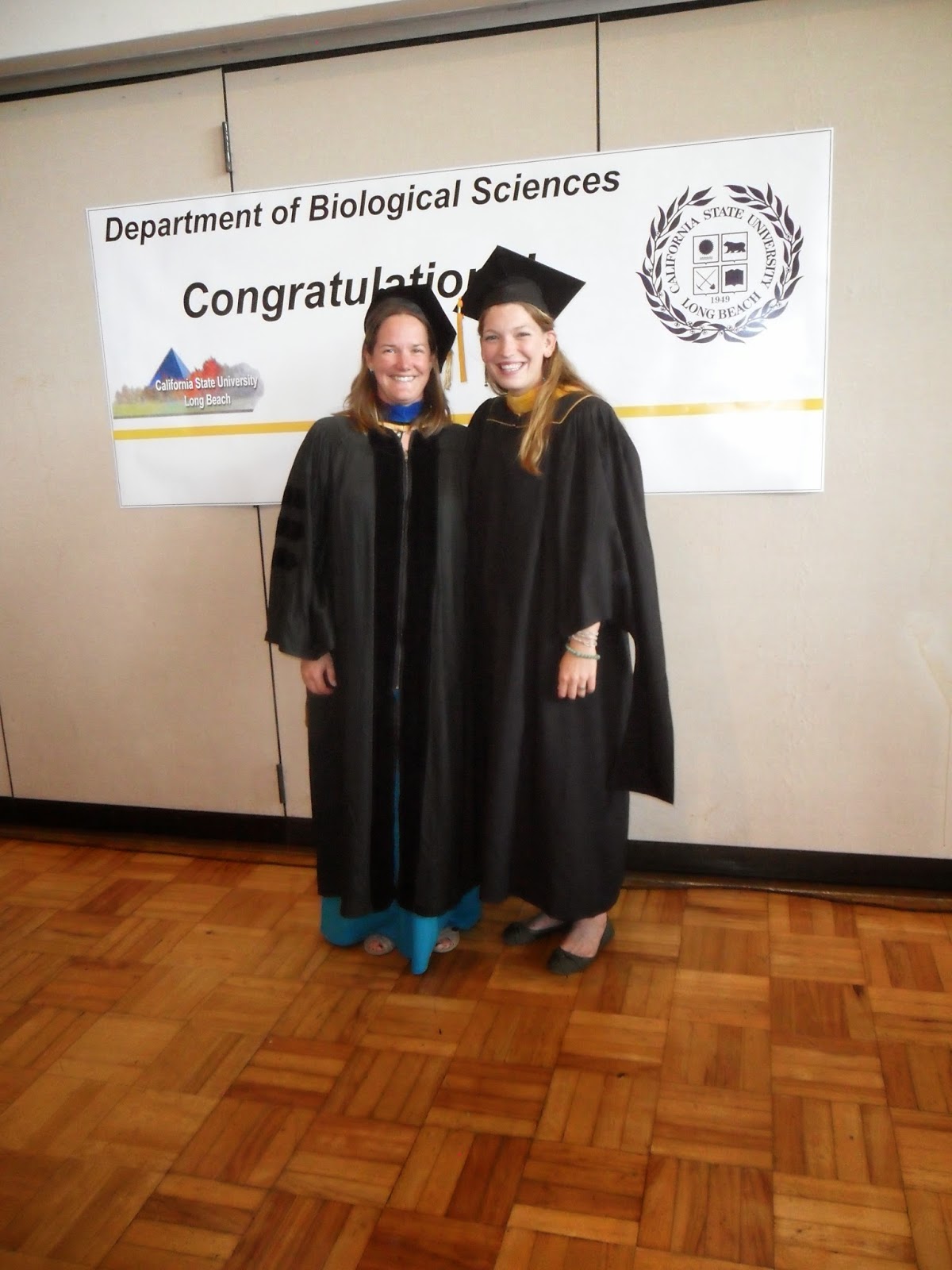
Thanks, freshlypluckedscientist, for the awesome post request! First off, it’s going to be ok! You are not the only one who has felt like this! I’m also fairly certain that we are not the only two who have felt like this! Rachel and I have both gone through this process twice (M.S. and PhD) and we understand how difficult and frustrating the entire process can be. Both times I tried to get a head start on the process and both times I felt like I was always behind schedule and running out of time! Before I even get started on any suggestions or tips, I’d like to reassure you that it’s completely ok to take a year off to figure things out and generally just chill. I took a year off after undergrad and nearly 2 years off after finishing my M.S. degree. I’m now going to be a few years older than the rest of my cohort, but I am going back fresh and excited and motivated!  Like so many big life decisions, you just have to do you.   


If you are looking for any sort of biological research program it can be nearly impossible to sift through departmental websites of universities you are interested in to find potential advisors. Yes, lots of them keep up-to-date websites with a convenient section for Potential Students, but many others do not. When I was looking for M.S. advisors I focused my search by perusing the EcoLog listserve and Texas A&M Job Board. You can keep an eye out for posts by advisors advertizing available positions instead of having to seek them out yourself. One plus to seeking an advisor in this way, if they are posting on a listserve or job board, they likely already have a project with some sort of funding available.  Keep an open mind and cast a wide net when you are finding potential advisors. Here is where you can let your varying interests guide you. Once you contact someone you can start to narrow your interests a bit.  Also, there is nothing wrong with narrowing your search based on where you actually want to live for the next few years of your life.  I know when Rachel was looking for graduate programs, she knew she wanted to live near the coast.  This initial choice actually lead her to studying tidal marshes (which she loves!) as opposed to the many other inland types of wetlands.

NMSU was a great place for my MS.

Write a basic cover letter and then customize it for each professor to whom you send it. Basically, you need to write a short introduction of yourself highlighting your best attributes and attach your CV and any other pertinent information they may have requested. I am working on a cover letter post for spottedsharkheart currently so more to come on the intricacies of that! If they reply, gauge their interest and try and set-up a time to have a phone or skype conversation to discuss your mutual interests. Not everyone is going to write back. Professors have a packed schedule and they are probably receiving many similar emails. Don’t be afraid to send a follow-up email reminding them of your inquiry. You can send more than one follow-up if you are extremely interested in working with an individual, but keep in mind that if they are too busy to reply to your email, they might not be a super good fit anyhow.  During this search and email phase, don’t be afraid to explore options outside of your comfort zone. My background is biology, and come fall I am entering a PhD program in Statistics. Granted, I hope to find research where I can apply my developing skill-set in stats to ecological problems, but you never know where your path may lead.


Once you are in contact with a potential advisor, this is the time when you need to show that you have focused interests that mesh well with their own, but keep in mind that you aren’t locked into anything you discuss initially. This also applies to those pesky essays you might need to write during the application process. I had the hardest time with these and Rachel had to tell me multiple times that I am not going to be contractually bound to anything I wrote in them! Narrowing your interests is a tough one. I honestly don’t know how to go about doing this particularly well. You can peruse MS Grad listings on to see what pops out at you. You may also want to consider specializing in a skill that can be applied to many different situations (GIS, Stats, etc) so you will be able to work in many different fields.  Having various interests also likely means you could be happy doing several different things!  There is nothing wrong with that, and it actually increases your odds of finding a cool graduate program that speaks to at least some of your passions.


Don’t let letdowns get you down. I had a rough time when searching for PhD programs. Sometimes, they just don’t ever respond. Sometimes, they responded a few times and then…..nothing?! Other times, you get as far as a skype conversation with a professor only to find out that it does not appear to be a good fit. It’s a little late in the year currently to find an advisor and join a program (not impossible). Ask current professors on your campus for help.They have been through this during their education and they have helped countless others through the same process.


Anyone else have amazing advice about applying to graduate programs?  I would love to hear about it in the comments sections.  It would be amazing to make this post a resource to refer others to in the future!