Cover Letters of Interest

Once you’ve gone through the process of finding potential grad school advisers, the next step is to contact them. It can be quite scary. That fear that you’ll craft a seemingly marvelous letter, attach your well-written CV, send it off, and then…hear back nothing. Or worse, you’ll hear back, but they aren’t interested in your obvious brilliance. Try not to get in your own head too much. Think of it more as the start of an epic journey towards the next step in your blossoming academic career. The professors that show the most interest in you are going to be the ones that are the best fit for your unique interests and skills. Writing about yourself is hard, but now is the time to brag on yourself a bit. Say it with me, “I am a badass science baller and all the profs want me.” Keep in mind that this letter does not need to be perfect. I just looked back at the cover letter I sent to my MS advisor (keep anything you write about yourself!) and it’s nearly 2 full pages long with way too much information. Thankfully, she wasn’t bored, and I had a wonderful, productive Master’s experience.

Say it again!

There’s a fine line between a letter of inquiry and a cover letter. Basically, if there is a posted opening with the advisor, then it is a cover letter. Otherwise, it’s a letter of inquiry, simple as that. The aim of such a letter, when writing to potential advisers, is to express your informed interest in them and their research, while also presenting a focused snapshot of yourself. Informed interest is important. Make sure you familiarize yourself with their work. Read their papers.  Brainstorm ideas for how your work could compliment theirs.  I’m not going to lie, this can be tough. I find it helps to remind yourself that you are not contractually bound to follow through with the ideas you come up with and present during your application process (Editors Note: This was my mantra to Meridith during her PhD application!  Glad to see it sunk it.). You just want to show that you are an intelligent being with a real interest in a similar field of research and that you can come up with relevant ideas.

To begin, you’ll want to state your interest in their lab and ongoing project(s). A common pitfall is to contact a professor about an area of research in which s/he is no longer active. Check the dates on those publications!  Additionally, some professors will be looking for more than one student to work on a several different projects. Clarify early why you are writing to them. They get numerous emails daily and the easier it is for them to read your email, the easier it will be for them to respond. Next, the second paragraph should be a self introduction. What are your recent experiences, and how would the skills you have benefit you if you were to join this person’s research group? The third paragraph should be dedicated to expressing your interests, goals, and ideas for research. The final paragraph is a little more general.  You can think of it as a summary:

I think my interests, skills, and future plans could potentially fit in well with your research program.  If you have room for a PhD student in the (interest term and year here), please let me know if you would be open to discussing my interests or experiences further. I have listed some of my major accomplishments below, but I have also attached my full CV if you would like further information about my past experiences and skills. I know you are very busy, so I appreciate any time you can give me.  Thank you very much.

I like to include a little bulleted list of notable accomplishments to whet their appetite. I wouldn’t advise giving them more than your “top 5.”  The goal here is to entice them to open your attached full CV.  Good achievements to mention are:

  • GPA
  • Grants or scholarships awarded (and how much $$ you were given)
  • Examples of academic excellence (exceptional GRE scores, special skills, unique courses taken with grade)
  • Evidence of research experience (REUs, internships, volunteer positions in research groups, etc.)
  • Publications (with links) or presentations/posters 

The internet already has loads of posts on this topic and plenty of sample letters to reference. Don’t rely on just this post!

Contemplative Mammoth’s Post
Dynamic Ecology’s Post
The Professor is In’s Post
Simple Sample Letter
In Depth Cover Letter Essentials

Please let us know if you have any other great cover letter references! We’d love to let this list grow and provide a wide array of recommendations for the future graduate students among us!
Eco-Life Hacks: Homemade Greek Yogurt

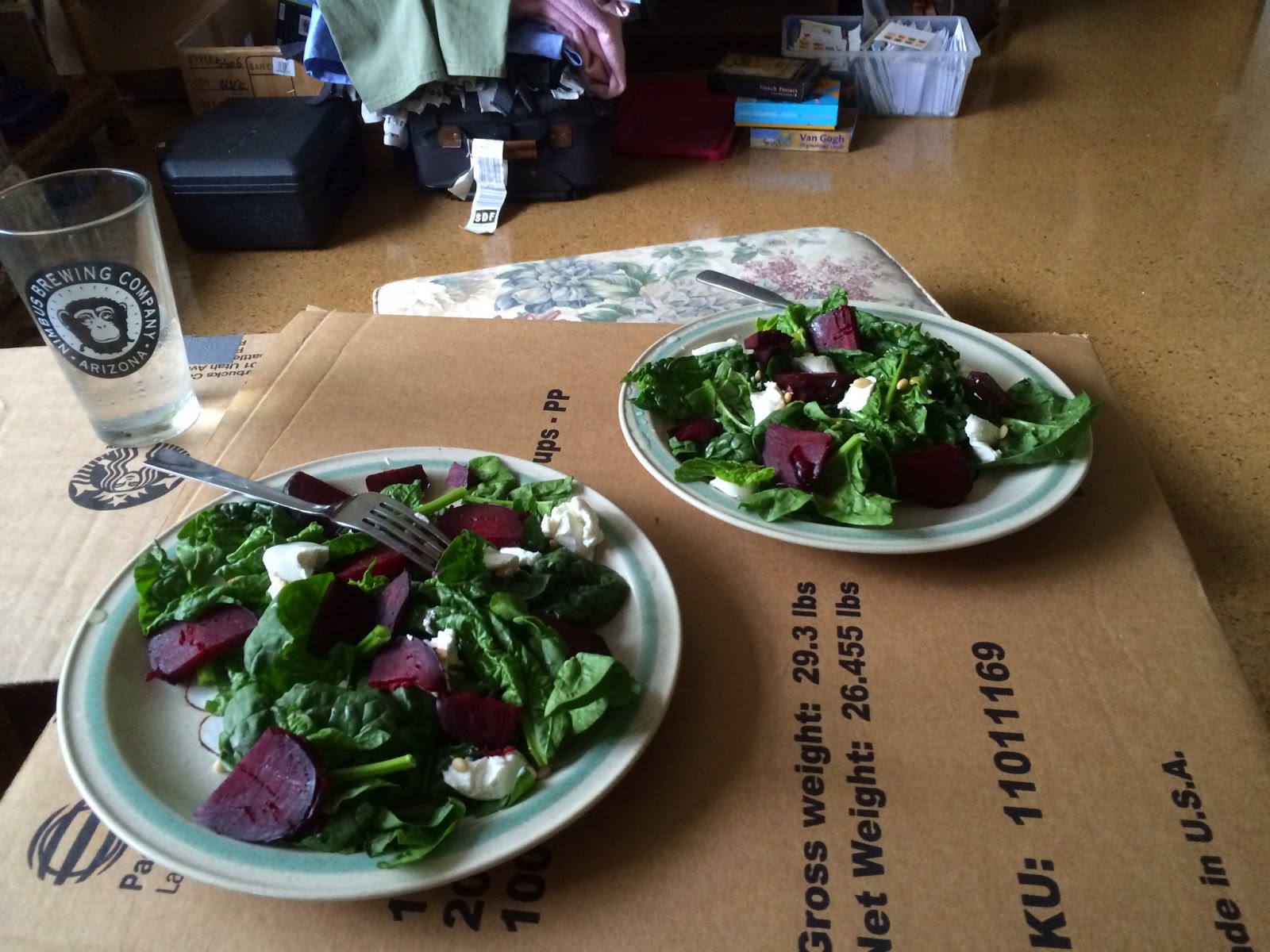
OK, you probably should be a little weary of
someone who eats as many beets as I do. Fair ’nuff.

Nearly two months into my life in State College and I’ve got a sneaking suspicion that I am already branded as the hippie chick. What do you expect from a biologist turned statistician?! I can’t help it though; if people bring up podcasts and DIY kitchen adventures, I’m going to be all up in that conversation. If you join me for dinner you’ll notice that my kitchen is fully set up while my dining table is a moving box. Priorities. If my apartment building doesn’t have a compost bin but there is one outside of my multivariable calculus course, then I am going to carry my compost to campus in a airtight container and dispose of it responsibly. If you invite me to watch the US/Ghana game, I’m definitely going to bring a healthy snack of veggies and hummus. And if you mention homemade yogurt, then I will get super excited and discuss my love for plain, Greek yogurt made by yours truly. Them’s just the facts.

Does anyone else remember inspecting their yogurt container from their lunch box and wondering what ‘live cultures’ meant? I think I was in denial for a while. This may have lead to my love/hate relationship with yogurt, until I finally fell for plain Greek yogurt. I just couldn’t stand the fruit booger filled yogurts (editor’s note: I second this opinion in my non-dairy based yogurt consumption!). But now, between my partner and I, we eat a lot of yogurt. Yogurt in smoothies. Yogurt with fruit. Yogurt with granola. Yogurt with protein powder. Yogurt with honey from my favorite farmer, buddy boy Matt Ak’s hive! *goes to eat a bowl of yogurt!* If you are on our level of yogurt consumption, you should consider making your own at home. It’s way easier than you’d think, and you’re rewarded with delicious yogurt containing no surprise ingredients. You should anticipate making yogurt fairly often (more than once per week if your schedule allows it) and buy milk accordingly. Did I mention it’s easier than you think?! 

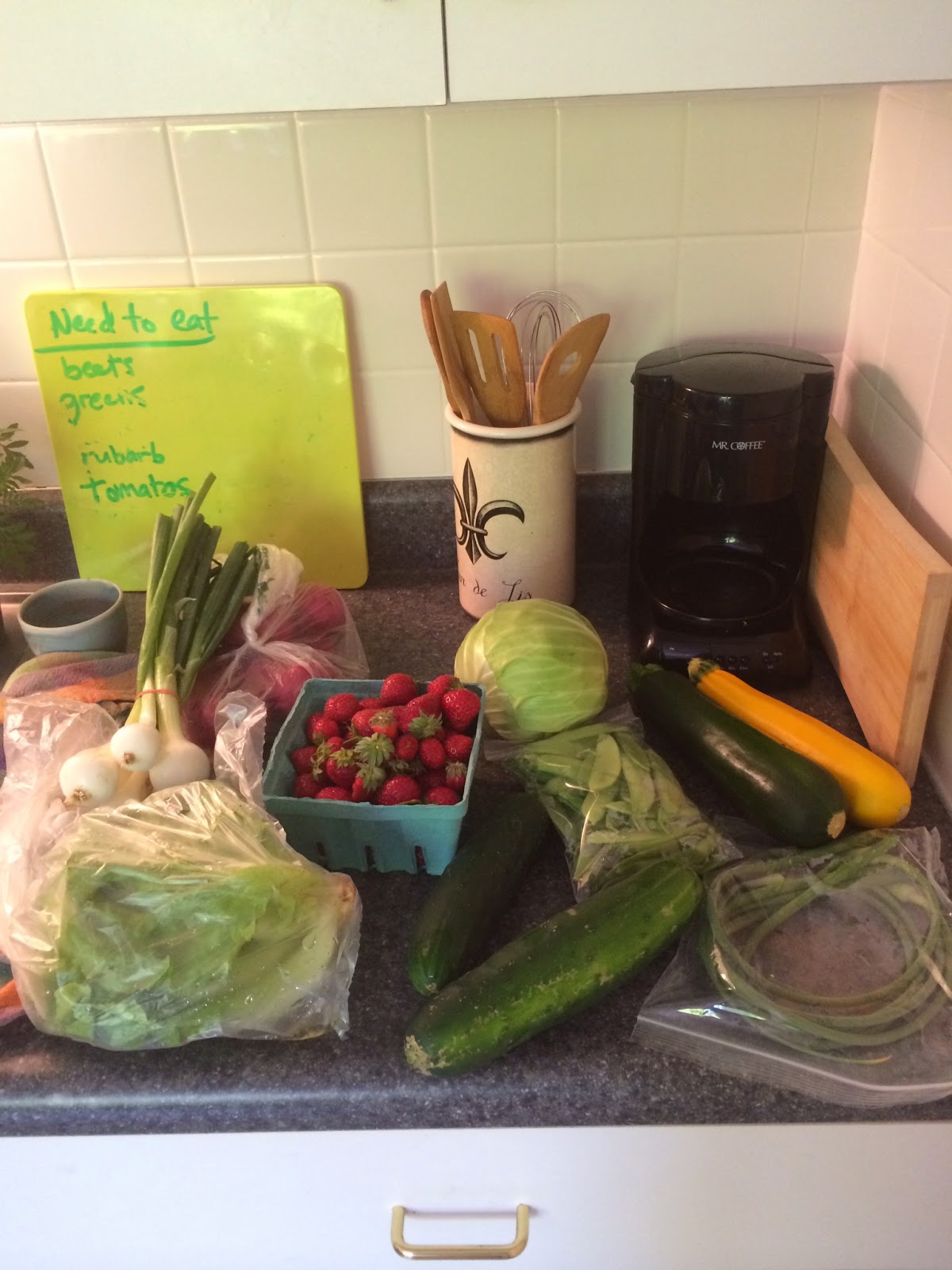
I can’t recommend CSAs enough. Look at all
the veggies I get in addition to a dairy
 share (milk, eggs, cheeses, etc).


To make yogurt you’ll just need: milk, thermometer, source yogurt, pot, cheese cloth, and (reused!) container(s). To add to our super sustainable lifestyle, we use local, whole, unpasteurized milk in returnable bottles. In Louisville, Kentucky, I’d found this type of milk at Earth Fare and a local food shop. Here, we have a dairy share with our CSA box and get a gallon of raw milk every so often, but it’s also available at the local farmer’s markets. Check around your area to see if local is an option. Sale of raw milk is totally legal in PA, but make sure and check your local laws about dairy sales. If you have a thermometer with an alarm you’ll be so very happy. We don’t, and every so often we don’t catch our creation before it passes the threshold temperature. If you let the milk boil, then usually your yogurt won’t turn out well. Cheesecloth is a solid investment for anyone who likes to DIY in the kitchen. Please don’t use it once and then throw it out. We’ve used the same cloth every time we’ve made yogurt and just given it a good cleaning after each use. Easy, healthy, delicious.

But what exactly is going on once you add the source yogurt in those 12 hours of sitting? Oh, no big deal, just the milk is being fermented via prokaryotic microorganisms which produce lactic acid causing milk proteins to solidify. Whaaaaaat? Not only that, but the bacteria in the yogurt is good bacteria, or probiotics, that help your tummy zoo keep away bad bacteria. Well…that sounds handy. The bacteria grow to a high enough concentration in the yogurt that they can even get past stomach acid. Safety in numbers! It’s great to replenish your internal micro-organismal environment, as it can be easily disturbed. Factors such as stress, sickness, antibacterial medicine, parasites, and daily excretions. Yogurt to the rescue!

Freshly made this week! I’m enjoying it with
some honey and blueberry granola!

Follow this easy recipe for your own plain, Greek yogurt! You’ll know exactly what ingredients go in and save money in the process. My recipe is based on a hodgepodge of different online recipes with some extra notes added. If you want regular yogurt, just skip the straining steps!

Ingredients:
1 Qt. Milk
5 oz. Source Yogurt

Tools:
Pot
Stove
Thermometer
Stirring apparatus
Cheese Cloth
Straining Setup

Recipe:

  1. Heat all milk save for a few ounces in large pot to 180˚. I keep the stove on a low setting so that it heats slowly and you don’t miss when it boils. On my stove this takes about 10-15 minutes, but it’ll vary. Set a timer the first time you make yogurt, then you’ll know for future endeavors!
  2. When milk reaches 180˚, remove from heat and keep an eye on it as it cools. Meanwhile, mix the source yogurt and the milk you didn’t heat together.
  3. When the milk reaches 115˚, add the yogurt mixture. Mix thoroughly. Some recipes say not to disturb the film on top, but I’ve never had any issue with it. The milk usually takes at least 30 minutes to cool, but keep a close eye!
  4. Turn on your oven to the lowest setting and let it warm up a bit. Place milk mixture into the oven. If necessary, pour into oven safe glass bowl. Turn the oven back off – it should stay warm. Place towel over top and let it be for 10-12 hours.
  5. The mixture should be thicker in texture after this time. Line a colander (strainer) with cheesecloth and pour the mixture in. Allow liquid to drain, squeezing if need be. 

Greek Yogurt achievement unlocked! Enjoy with your favorite toppings or on its own!

Resources:

http://science.howstuffworks.com/innovation/edible-innovations/yogurt2.htm  
http://www.scientificamerican.com/article/bring-science-home-yogurt-bacteria/
http://aboutyogurt.com/index.asp?bid=28#Q3
http://biology.clc.uc.edu/fankhauser/cheese/yogurt_making/yogurt2000.htm
http://www.health24.com/Diet-and-nutrition/Vitamins-minerals-and-supplements/Good-bacteria-vs-bad-bacteria-20120721
http://nourishedkitchen.com/troubleshooting-homemade-yogurt-questions/

Ten Tips for Tackling that Thesis!

Meridith and Rachel are both in PhD programs, which means dissertation writing will be in their future.  While dissertating will come with its own sets of challenges, they have both managed to survive the process of completing a Masters thesis!  Here are the top ten tips and tricks (in no particular order) they used to keep sane, be productive, and come out the other side.  

1. If you haven’t been productive in 15 minutes, then it’s time to change locations.

R: First I got work aversion to my desk, then I got work aversion in the stats lab (luckily, after I was done with stats).  I finished writing by visiting (almost) every coffee shop in Long Beach for a few days in a row before I had to move on to my next location.
M: Can someone figure out how to fix the mutual exclusivity of working outside on a sunny day and being able to see your computer screen?


2. Lists are your friend. Make yourself a timeline.

This timeline should be specific and broken down into small component parts.  If it takes more than two hours to finish a part, break it down.  First, marking things off a list feels amazing. Second, it is way easier to procrastinate “write thesis” than it is to put off “write field portion of methods.”

Two of Meridith’s three amazing Thesis Besties! 

3. Find a thesis buddy that will sympathize with all of your complaints, bemoans, trials, and tribulations, but will still help you stay on track.

Make sure you pay this forward!  Having coffee dates with your thesis pal where you talk about what you’ve done and plan to do will help you actually do those things.  Having to look another human being in the face and admit “I didn’t do any of that.” is not fun.  Bonus point if this person has a dog.  Dogs make thesis writing way better.

4. Pick some upbeat tunes.
M:  This is my solution to many, many things.


Thesis buddy dog. Important.

R:  I wanted to give Pandora an acknowledgement on my thesis.
5. Schedule at least a short block of time every day to write.  Just write something every, single, day.

No further explanation needed.

6. Make time to cook in big batches or get right in your head about eating frozen foods.  It’s just going to happen.

R:  I tried to resist this for so long and ended up with a backlog of cabbage from my CSA box, because I had no time to cook.  This culminated in my arrival at the lab at 7am on a Saturday with a large mason jar full of cabbage juice…because that seemed like a good decision at the time.  That night I bought a huge container of frozen burritos, and it was pretty much the best decision I made that month.  
M: I went through a phase where my working location was in the student center…really close to the on-campus Taco Bell. I’m not proud, but I love bean burritos.

7. Communicate with your advisor.

We would highly advise having a recurring meeting time each week.  This is like having a thesis buddy x1000.  These recurring meetings will insure you keep making consistent progress.  They will also keep you from spending too much time in the tall grass.  You’ll still have to redo your stats section 3 times, just get over that now.

8. Save. Save often. And save files all in multiple locations.


This does not imply that you can save things all willy nilly.  You should just have multiple backup copies.  Make sure to save things with a meaningful name in a meaningful locations (ex: bad → on your desktop a file called “Thesis_ish”; good → Folder “Masters”, subfolder “Thesis Drafts”, file name “Thesis_full version_draft 3”).  We would recommend you save to your hard drive, to the cloud, and do some sort of external device that you keep in a separate location.  

9. Stay away from time-sucking websites.

There are lots of applications you can add to your web browser, and you can set these to block you from accessing these sites to varying degrees.

10. Find your mantra.

R:  Mine was, “All my tasks are accomplishable.”
M: I had a few, but “Graduation or Death” was helpful.


Post thesis defense!  For the record, tiny bottles of liquor were purchased by a member of Rachel’s committee.