CSULB: Graduate Research Project

My time in Long Beach has come and is now fleeting with a speed that terrifies me. Does time speed up in the months before your defense? How cruel. I still have so much to do! A short, but very sweet, adventure has produced some fun posts. This will be my last Spring Break post and since I’m graduating soon, I don’t know when I’ll even have another Spring Break! Oh, Real World, you are trying to get a hold of me and I won’t let you!

We’ve talk about lab and field work in the previous posts and today I’ll wrap up the series with one more spotlight on research. My friend, Rachel, was kind enough to take time from her insect identifications to answer a few questions about her research. 
Rachel displaying proper bird handling.

Rachel’s Master’s Thesis research studies the impacts of an invasive weed species, Lepidium latifolium, on marsh food webs. For her, ‘the field’ is a brackish marsh on Rush Ranch Open Space Preserve, a component of San Francisco Delta Estuary. She measures environmental parameters of the vegetation, in addition to sampling birds (via blood and feathers), invertebrates (bird food), and plants (invertebrate food) for stable isotope analysis.      
                                                                                            More fancy science talk. Stable isotope analysis. This technique follows the notion that you are what you eat. Isotopes of certain elements (Carbon and Nitrogen, in Rachel’s research) get passed along when organisms are consumed and become incorporated into the predator’s tissue. Rachel can compare the plant, bug, and bird isotopes to figure out the food web.

Marsh at Rush Ranch Open Space Preserve. White 
plants are the invasive weed species she studies.
 Photo Credit: Christine Whitcraft

Rachel’s field component in the marsh requires a seven hour drive into northern California. With drives that long, she has to concentrate her efforts for the weekends. A typical outing includes measuring environmental parameters of vegetation, and the aforementioned sampling for isotope data. She has modified a leaf blower so now it serves as a ‘bug vacuum’ for collections. Her lab work consists of lots and lots of processing. According to Rachel, “It’s just the right amount of mix between the two, by the time I’m tired of being up at 4 am, it’s time to be in the lab for a while. When I’m sick of being indoors it’s time to go out to the field again.” In addition, she must also devote several hours per week with other graduate students in her lab working on the restoration efforts mentioned yesterday.


Questions of the Day: 
Do you know of any invasive species in your area?
Have they caused problems for the natural flora and fauna? 
Lab Visit: CSU Long Beach Wetlands Ecology Lab

Blog post ideas come to me in a variety of different ways. On the more frustrating days, I sit and ponder and worry and formulate and brainstorm until I have something. On pleasant days, such as today, the post  practically writes itself. My Long Beach friend, Rachel, let me tag along with her to work this week and I feel more like her annoying little sister, instead of a fellow graduate student friend.

“What does this do? Do you work with this thing? Can I touch every single thing in here? Oh, look at this cool thing! What kind of bug is this? And this one? What about this one?”

This is exactly the sort of passion and interest I want to share with my readers. Science involves some cool cool stuff. So I’d like to start a new tradition of exploring new labs that I visit and sharing with ye ol’ readers via a photo post!
California State University at Long Beach – Wetlands Ecology Lab
Researching within the Biological Sciences, you are going to be exposed to many types of working environments. Many projects require you to venture out ‘into the field’ for experiments, sample collections, or recording observations. But often, a lot of processing, identifying, and analyzing takes place back in the lab. Most labs are unique and reflect the diversity of research conducted by their members. 
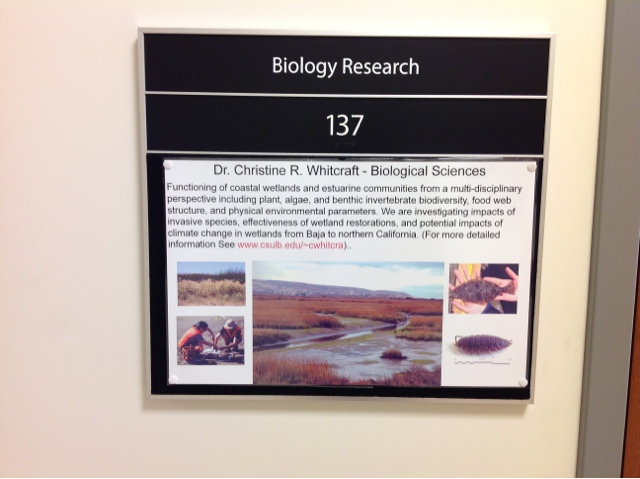
A brief bio of the lab’s Principle Investigator and their research. 

Questions of the Day:
What is your favorite part of the CSULB Wetlands Ecology Lab? 
What items would you like to know more about?
What would your lab’s mascot be?

Click the link below to see the rest of the photos!

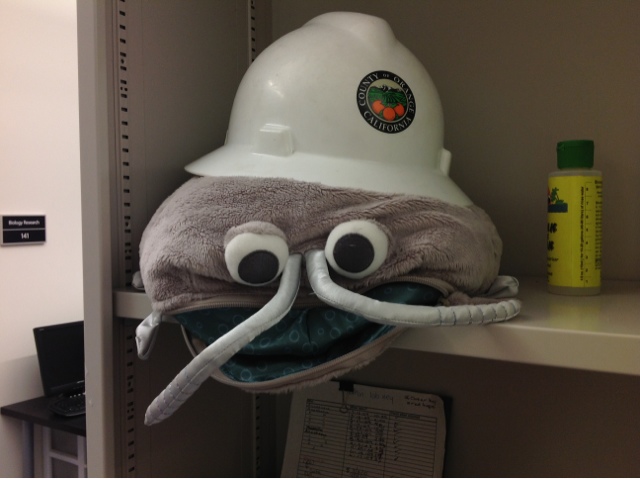
Some labs have mascots to represent the research conducted. Icky the Isopod keeps moral up during late nights in the lab.
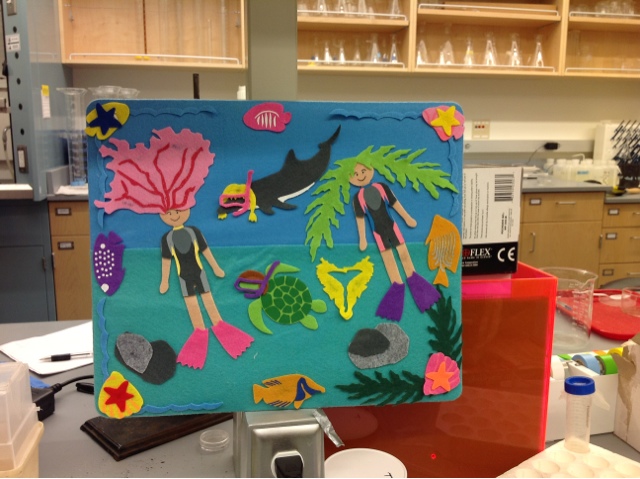
Rachel (left) and a fellow lab mate (right) use their creativity to design decorations for the lab.


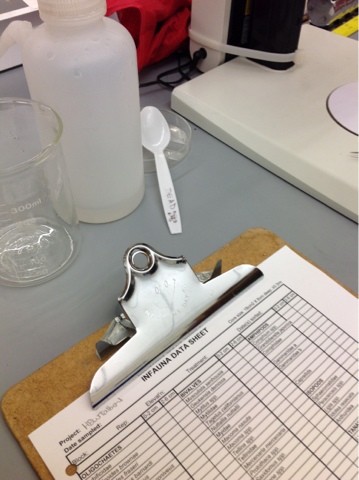
It is often very important to keep track of lab utensils. Some samples in this lab are preserved with certain chemicals, and would contaminate samples used for stable isotope analysis. This spoon is marked ‘Dead’ to denote that it should only be used on preserved samples. 
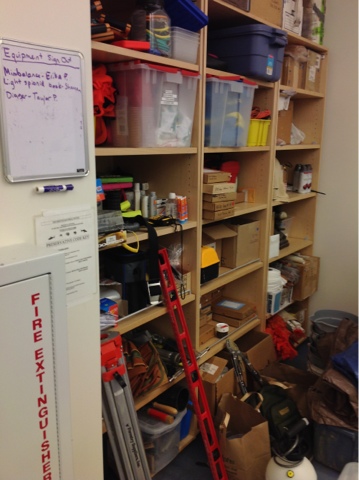
You never know what supplies you might need during your research. It’s also difficult to keep track of instruments and tools in busy labs if lots of students are in and out. An organized lab with a sign out sheet will run smoothly.
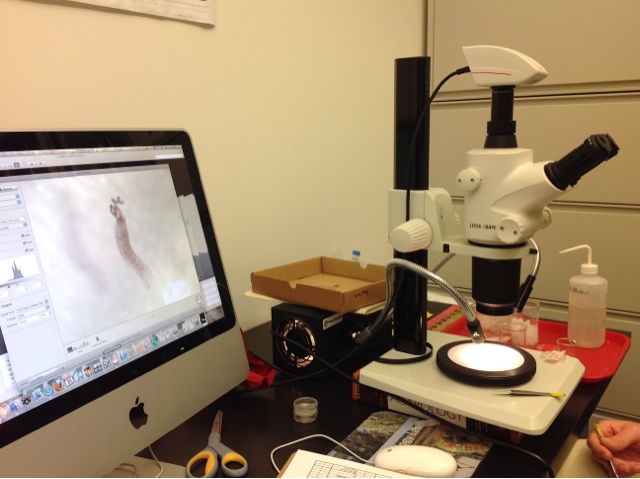
Macrofauna can be difficult to identify. Microscope time is vital, yet sometime straining. The ability to take pictures of samples help the identification process. Photos can be saved as references or sent to colleagues for confirmation. Shown is a polycheate. 
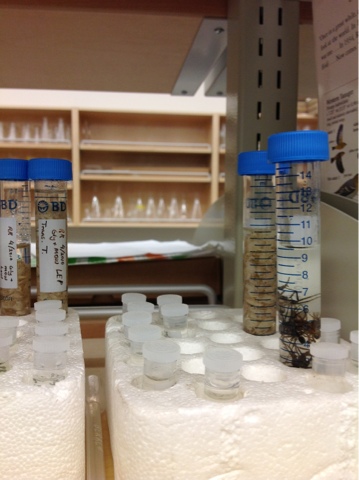
Infauna vouchers. (Invertebrates kept to use as a comparison for later identifications.)
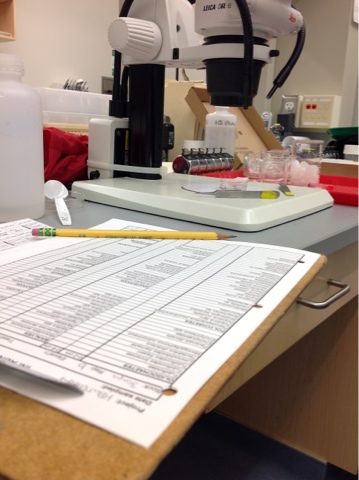
Meticulous record keeping is a good trait to master. Write everything down! You never know when you might need to look back over your notes. Trust me, you’ll forget things.
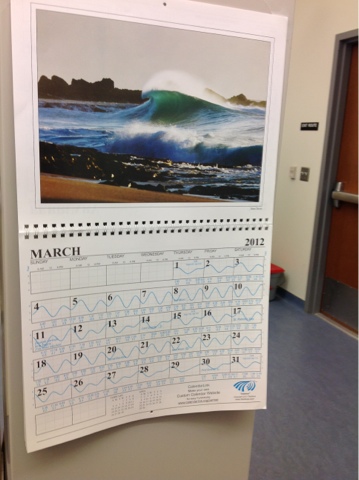
What marine focus lab would NOT have a calendar with tide charts?
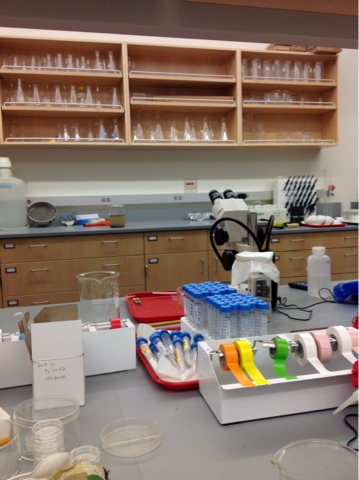
You don’t realize all of the different tools you’ll need during your research. I am sure I’ve used everything in this photo in some form back at my own lab.

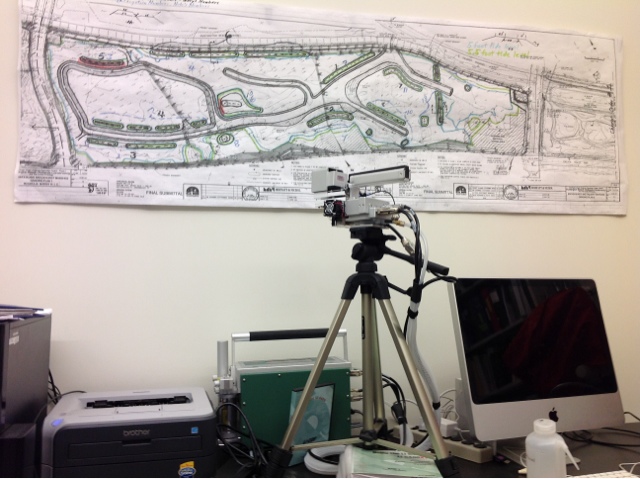
Cool toys are another perk of the science life. This unit takes light saturation points for leaves. The map shown above is of Huntington Beach Wetland Complex. This lab is monitoring restoration of this area. Tidal influences have been reintroduced to this area.

Working to Save the Planet

One of the many requirements for participants in this food study is a Bachelor’s degree from an accredited institution, preferably in engineering, biological or physical sciences, mathematics, or computer science. All applicants were required to propose research to be conducted during their time in the Mars Analog Habitat. For the results of the food study to be applicable, the working conditions of the participants must closely resemble those of astronauts who conduct research in space

I received my Bachelor’s of Science from Western Kentucky University, where I majored in Biological Sciences and minored in Mathematics.

Currently, I am a second year Masters student at New Mexico State University in the Fish, Wildlife, and Conservation Ecology department. I plan on defending my thesis and graduating this May (remember Zing Phrase #13? Graduation or Death!) Since the research I proposed to the Hi-SEAS review committee is a continuation of my present research, I feel it would be helpful to introduce you to the world of algae cultivation for biodiesel production. 

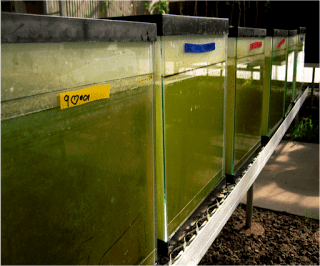
Nannochloropsis salina and other organisms

Perhaps you’ve heard of ethanol, or another source of renewable biofuel? The energy stored in algae lipids may be refined in a similar process to create biodiesel. Microalgae are ideal sources of energy because they are capable of year-round production, require less water than terrestrial crops, and produce valuable co-products.

The main goal of my project is to address limitations of algae cultivation methods through an aquatic ecology approach. Increasing lipid production in these systems while minimizing the invasion of non-target algae will improve the cost of algal biofuel. The simplest approach would be to manipulate environmental factors to simultaneously promote algal growth and limit competitor or predator growth.

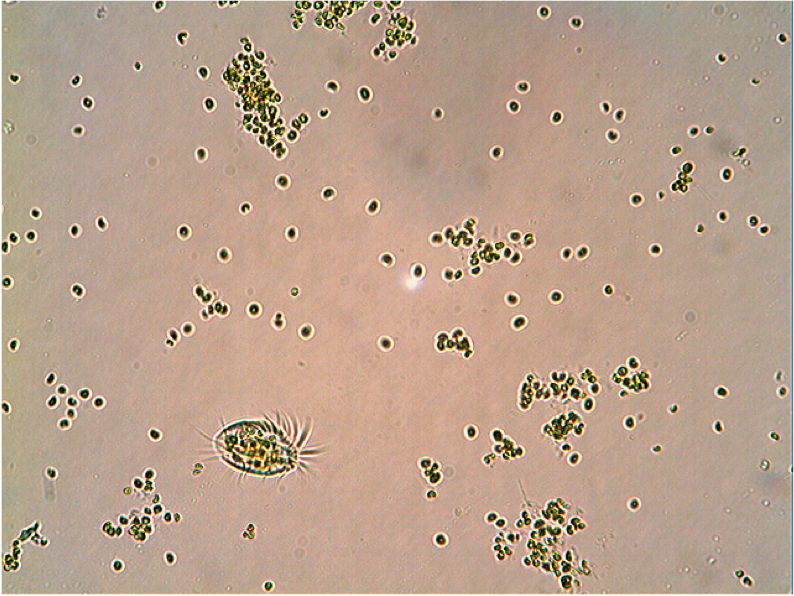
‘Invading organisms’ are usually dispersed by the wind (and right now New Mexico has plenty of that to go around) and can include diatoms, rotifers, ciliates, and cyanobacteria. They are pests to the algae industry when they munch all the nutrients meant for the target algae or munch the target algae themselves!

Our species, Nannochloropsis salina, was selected due to exhibit high growth rates, lipid productivity, and a wide tolerance range for different environmental parameters. Meaning, these guys might be small, but there is strength in numbers and they’ll be tough against competitors and predators. Salinity, pH, and temperature are valuable environmental parameters to utilize for our purposes. Each parameter is the focus of a pair of experiments:

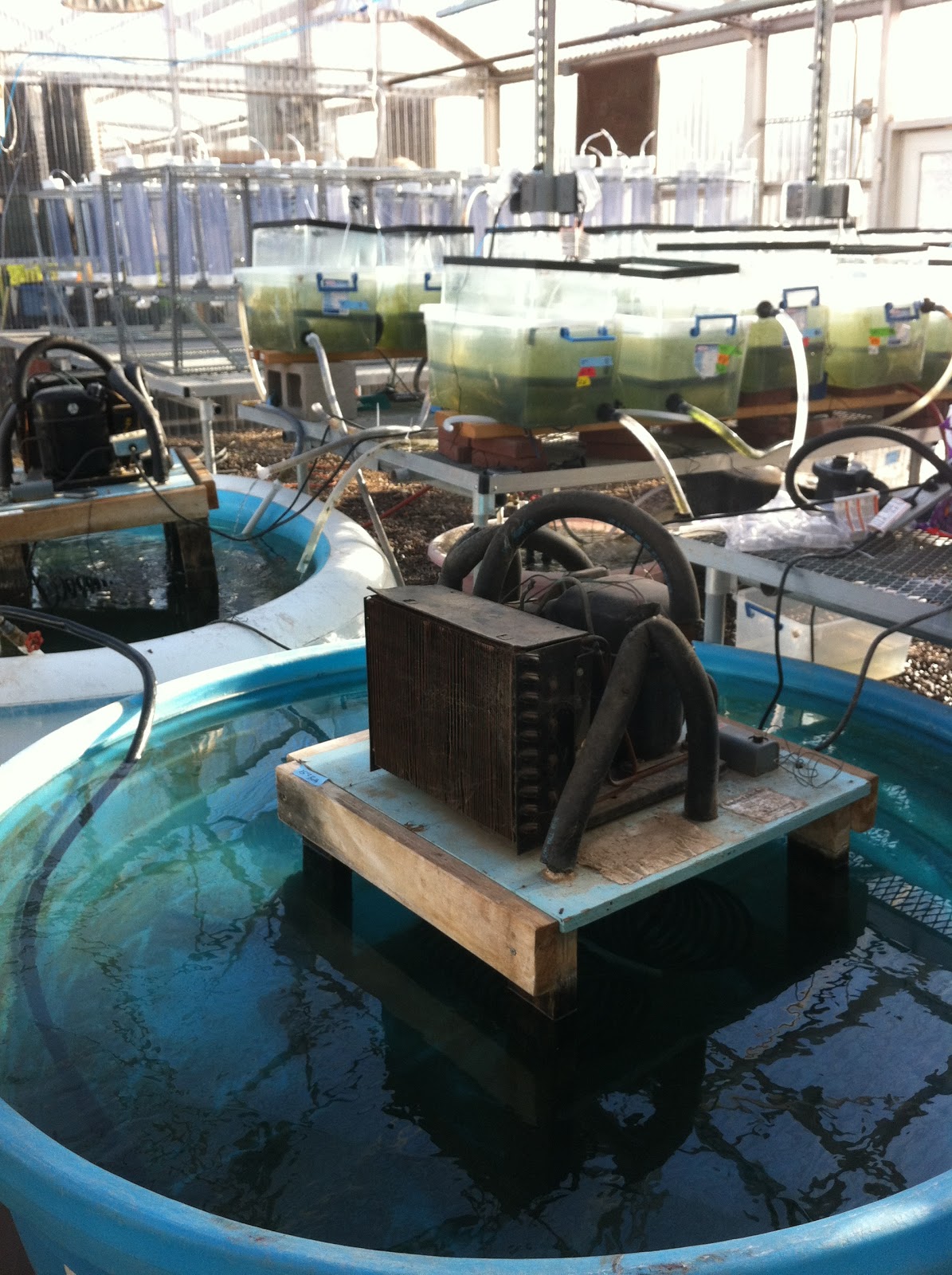
2012 Temperature Experiment

  1. Nannochloropsis Growth and Invading Organism Occurrence at Different Levels of [Salinity, pH, Temperature] 
  2.   Nannochloropsis Lipid Accumulation 

Samples from these experiments are later quantified by some very diligent and helpful undergraduate students. Imagine spending a few hours with your eyes glued to a microscope counting little green circles! (Note: I do not actually glue my undergrads to their microscope…yet.) Other samples are taken to a special lab on campus where I work with some very knowledgeable and helpful researchers to determine lipid accumulation. They even go a step further and investigate what different kinds of lipids are present!

2010 Salinity Experiment

Once experiments are completed and data is collected and analysed, there still remains the process of writing everything up into a concise and informative manuscript. When I am ready to defend I will have a thesis with three separate chapters that cover everything I have worked on during my time at NMSU. Before I may graduate my committee must read it all and I will present my findings in a 40 minutes presentation. Eventually, each of my three thesis chapter will be reformatted into journal articles that may be submitted for publication, along with other papers I may write with data from other research endeavors. 

I hope you now feel confident with your new algae cultivation knowledge. More important than being able to conduct research is being able to communicate the concepts and results to the public successfully. I hope I’ve been able to do that today. Please ask questions if you are interested in learning more!

I will try to speak more in depth about different aspects of the life of a graduate student. But for now, thanks for reading along with me. Please also check out my new ‘Experiences‘ tab for a taste of the fun life as a scientist can entail!

Question of the Day:
Was this post helpful and informative or do I need to work on my science communication skills?